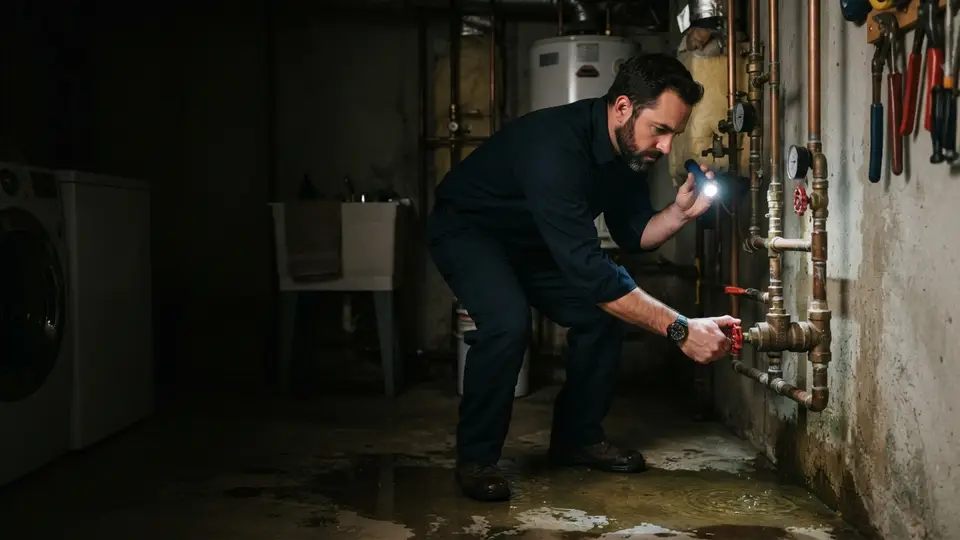
Burst pipe
What you do first: Close the main valve
What we do: Stop the leak and replace the section
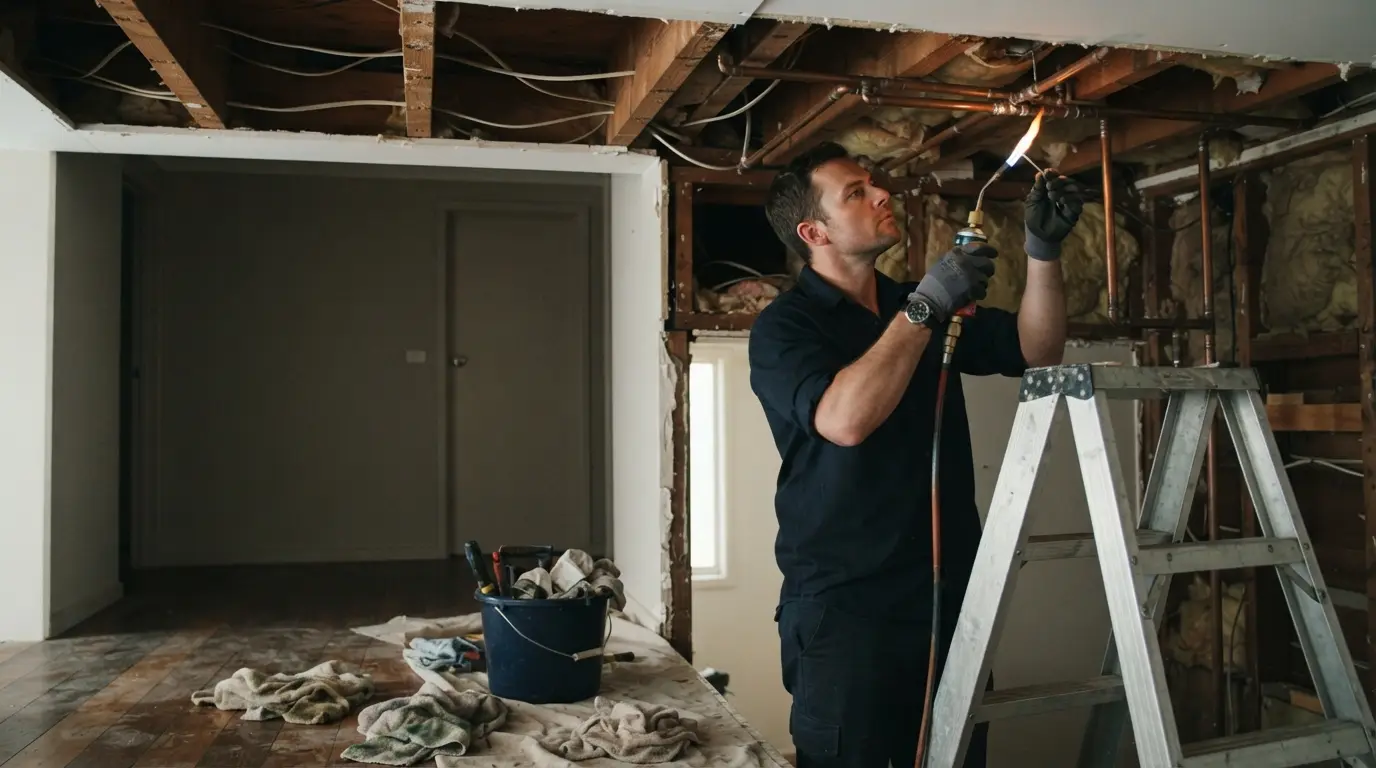
Pipe burst under the house in a cold snap, or sewage in the tub? We handle emergency plumbing in North Carolina. Our plumbers respond to burst pipes, sewage backups, homes with no water and gas or propane odors, and we tell you on the phone what to shut off while we arrange the visit. In North Carolina an emergency might be a frozen line in a crawl space after a rare deep freeze, a septic backup at a full beach rental, a well pump failure in the country or flood damage after a hurricane. We stop the damage first, then give you a written price for the full repair.
The service
North Carolina has 3,058,155 homes in our data, most over crawl spaces, about half on septic and millions served by private wells. Emergencies here often come from weather: sudden cold, tropical storms and floods. We sort calls by danger: gas and propane first, then sewage and flooding, then loss of water, so the most dangerous problems are handled first.
Emergencies and your first step
What you do first: Close the main valve
What we do: Stop the leak and replace the section
What you do first: Stop using water
What we do: Clear the line or check the septic tank
What you do first: Check the well breaker or utility
What we do: Find the frozen line, pump or break
What you do first: Leave and call from outside
What we do: Repair piping once it is safe
Why North Carolina
Pipes in uninsulated crawl spaces freeze during rare hard freezes.
Storms flood homes, overwhelm septic systems and cut power to well pumps.
Polybutylene fittings and corroded copper fail without warning.
Full houses at holidays and rentals push systems past their limit.
Warning signs
Our process
We confirm the water is off, find the split in the crawl space, wall or ceiling, replace the damaged length and check nearby lines exposed to the same cold.
We clear the blockage at the cleanout or check the septic tank level, then camera the line to find out what caused it.
We check the meter or well system, thaw frozen lines, test the pump, pressure switch and tank and repair breaks.
Once the utility or supplier has made the site safe, we find and repair the leak, pressure test and arrange to restore service.
Typical cost
Any figure before we see the problem is an estimate only. The main factors:
We stop the immediate danger, then give you a written price for the full repair.
Get a written price: (833) 733-2357Nights, weekends and holidays cost more.
One split or many.
Low crawl spaces and flooded areas.
Pumps, cameras and thawing gear.
Permanent fixes after the emergency.
Benefits
Water stops sooner.
Gas and sewage hazards handled properly.
You approve the full repair.
Notes and photos.
Most of the state has mild winters, so pipes under houses in Charlotte (399,305 homes), Raleigh and Greensboro are often uninsulated. When a hard freeze arrives, they split, and the leak may not show until the thaw. In the mountains around Boone and Asheville, cold is more frequent. We repair burst lines, insulate pipes and help owners close off crawl spaces before the next freeze.
Matthew and Florence flooded Kinston, Lumberton, New Bern and much of the east, and Helene devastated Asheville and the mountains in 2024, where homes went without public water for weeks. 57% of Lumberton homes predate 1980. Once floodwater drops and the power is safe, we restore water service, replace flooded water heaters and well pumps, clear sewer lines and check septic systems.
70% of Nags Head homes and 72% of Emerald Isle homes are vacant on a typical day, then fill with guests all summer. A septic backup or burst pipe on a Saturday turnover can cost a rental week. We work with property managers, clear backups, check septic pumps and alarms and make repairs between check-out and check-in when we can.
74% of Highlands homes and 75% of Blowing Rock homes are vacant on a typical day, and propane heats 42% of Blowing Rock homes. If the propane runs out or a heat pump fails, pipes freeze in an empty house. We shut off the water, repair the damage and set up temperature and leak alerts for owners.
For the many North Carolina homes on wells, no water usually means a tripped breaker, a failed pressure switch, a waterlogged tank or a worn pump, and storms that cut power stop the pump too. We test each part in order, restore water as quickly as the repair allows and can recommend a generator connection for the pump if outages are common where you live.
Close the main shutoff for any major leak. On a well, switch off the pump breaker. Turn off the water heater if water will be off a while.
Turn off power to wet areas if safe, move valuables and take photos. For gas, leave and call from outside. Then call us.
Emergency repairs can start right away. Where the permanent repair needs a permit, such as a water heater or gas line, we file it with your city or county inspections department afterward. Our work is done under North Carolina plumbing contractor licenses.
Why choose us
What you can count on every time one of our plumbers comes to your door.
Every job is handled by a plumber who holds the license your state or city requires, backed by liability insurance.
Our plumber explains the problem and the options, and you approve a written price before any work begins.
Burst pipes, sewage backups and failed water heaters get priority scheduling, including nights and weekends.
We pull permits when the job needs one and schedule the inspection, so the work holds up when you sell.
Repairs and installations come with a written warranty on labor, on top of the manufacturer's warranty on parts.
Our pages and plumbers account for your area's water, soil, climate and the age of the homes around you.
Service area
We handle plumbing emergencies in 776 North Carolina communities, including Fayetteville (91,985 homes) and Durham (136,837 homes). Find yours:
Yes. Calls at night, on weekends and on holidays cost more than scheduled work. We tell you before the visit so there are no surprises.
Yes. We stop the immediate danger first, then give you a written price for the permanent repair before we begin it.
Many policies cover sudden water damage but not wear or slow leaks. Flood damage usually needs separate flood insurance. We provide notes and photos.
We make sure water, gas or power is safely off, find the source and stop further damage before we plan the repair.
What is happening, where, whether water is near electrical outlets and whether you can reach the main shutoff or well breaker.
Usually, yes. If many lines froze or the pipe is polybutylene that keeps failing, we make it safe and schedule a larger repair.
Leave the house, then call your propane supplier or 911 from outside. Do not use switches or phones inside. We repair it once it is safe.
Yes. Sewage carries bacteria and viruses. Keep people and pets away, avoid contact and stop using water until the line is cleared.
We book the earliest time we can and put gas, sewage and flooding first. After major storms demand is high, and we keep you updated on timing.
Many are handled within a few hours. Flood damage and widespread freeze damage may need a second visit after the emergency is under control.
Insulate crawl space pipes, close vents and crawl space doors during hard freezes and disconnect garden hoses before winter.
Yes. Valves that are never used can stick. We can replace a seized main valve before you need it in an emergency.
Stay out until power is off and the area is safe. Then call us to check water lines, the water heater, sewer or septic and well equipment.
Check whether the pump breaker tripped or the power is out. If water does not return, call us to test the pump, switch and tank.
Call your water utility first, since a main break is their repair. If only your home is affected, call us.