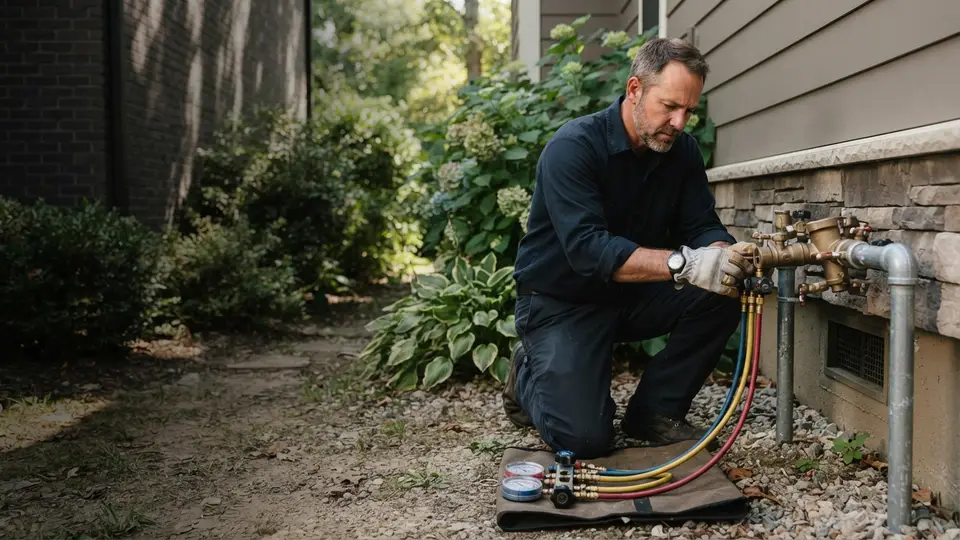
Reduced pressure zone (RPZ)
Typical use: Boilers, medical and dental offices, restaurants, labs
Notes: High hazard; relief valve discharges
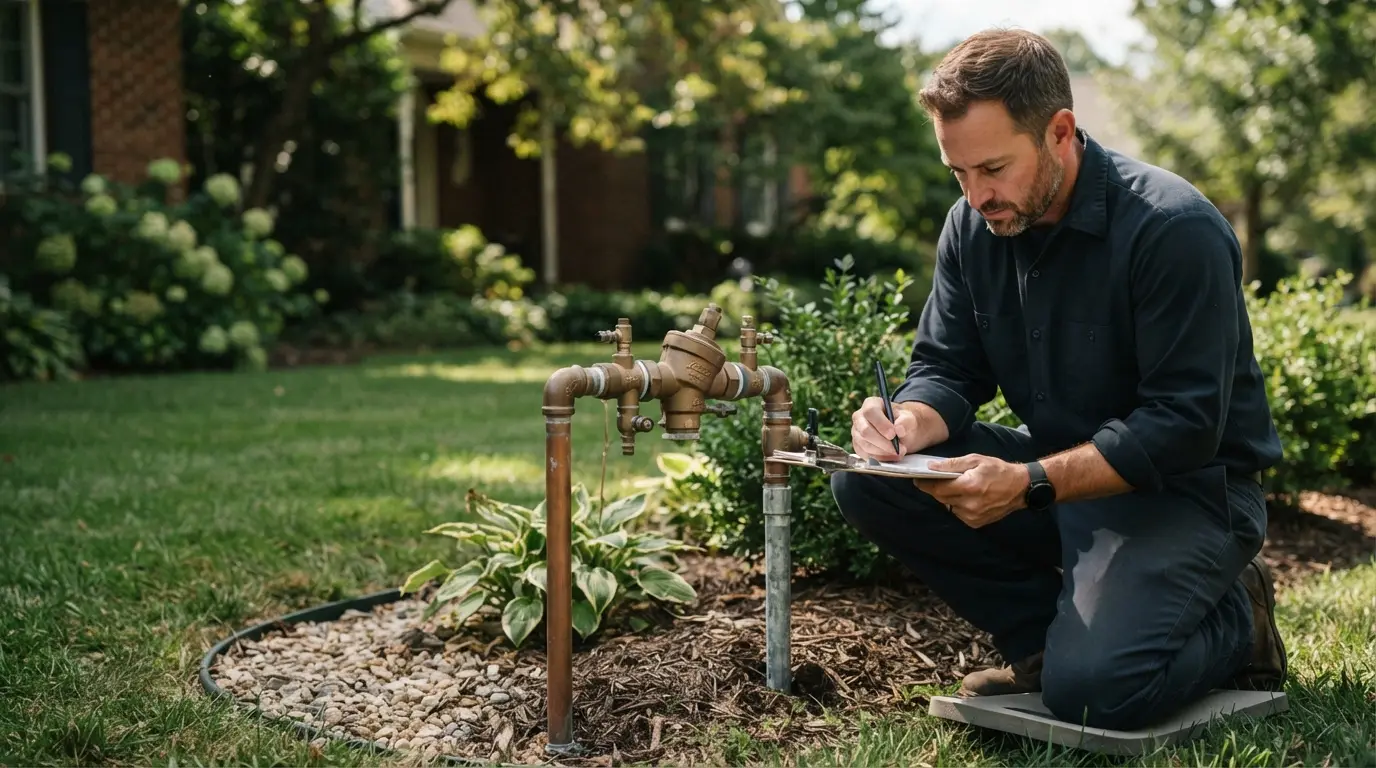
Test notice from DC Water, or an RPZ dripping in the mechanical room? We handle backflow testing and prevention in District of Columbia buildings and homes. Backflow devices keep water from fire sprinklers, boilers, irrigation and building equipment from flowing back into the public supply. DC Water runs a cross-connection control program, and testable devices must be checked by a certified tester on schedule. With so many apartment, office and mixed-use buildings in the city, most of our backflow work is commercial, but homes with irrigation or fire sprinklers need it too.
The service
Water should only flow from the main into the building. When main pressure drops during a break or heavy hydrant use, it can be pulled backward; booster pumps, boilers and fire systems can push it backward. Without protection, treated boiler water, stagnant sprinkler water or chemicals could enter the public supply.
A backflow preventer is a valve assembly with spring-loaded checks and, on some types, a relief valve. Because seals and springs wear, devices are tested on a schedule and after every repair.
Devices in DC buildings
Typical use: Boilers, medical and dental offices, restaurants, labs
Notes: High hazard; relief valve discharges
Typical use: Fire sprinkler services, domestic services
Notes: Common in building mechanical rooms
Typical use: Fire lines with a bypass meter
Notes: Detects unmetered use
Typical use: Lawn and garden irrigation
Notes: Outdoors; must be drained for winter
Why District of Columbia
42% of DC homes are in buildings with 20 or more units. Those buildings typically have backflow devices on domestic water, fire sprinklers and boiler fill lines, each with its own test schedule.
Many older DC buildings still heat with boilers filled from the domestic supply, often with treatment chemicals, which calls for protection on the fill line.
Food service, dental and medical offices and labs typically need RPZ devices.
Rowhouse gardens and building landscaping with automatic irrigation need devices that are drained before winter freezes.
Warning signs
Our process
Our certified tester connects a calibrated gauge to the test cocks, checks each valve against required readings and records the results. We submit the report to DC Water in the required form and give you a copy.
We install the device your hazard and DC Water require, in an accessible spot, with drainage sized for RPZ discharge so a relief event does not flood the mechanical room. New devices are tested at installation.
Most failures are fixed with a rebuild kit. Damaged or obsolete devices are replaced. Every repair is retested and reported.
Typical cost
You get a written price before testing or repairs.
Get a written price: (833) 733-2357Large RPZ and fire devices take longer.
Several on one visit lowers the cost of each.
Rebuild kits cost less than replacement.
New devices may need piping changes, drainage and a permit.
Tight mechanical rooms and devices up high add time.
Benefits
Working devices stop contamination at the building.
Missed tests can bring notices and possible service action under utility rules.
Testing finds worn parts before failure.
One provider tests, repairs and reports.
Buildings with several devices on domestic, fire and boiler lines can lose track of due dates. We keep an inventory with serial numbers, locations and test dates, test everything on one visit where schedules allow and file every report. For fire lines, we coordinate with your fire protection contractor so the system is never shut down without notice.
An RPZ can release a lot of water when a check fouls or pressure fluctuates. In a cramped DC basement mechanical room, that water needs somewhere to go. We size the air gap and drain for the device and route it to a floor drain or sump, so a relief event is an inconvenience instead of a flood.
Most DC rowhouses have no testable device. The exceptions are homes with garden irrigation, residential fire sprinklers in newer buildings, or boilers on the domestic supply. If DC Water sends a notice, it names the device and due date; we find it, test it and file the report.
Mid-rise and high-rise buildings use booster pumps to lift water to upper floors. A booster pushing against the main is a backpressure risk, so DC Water typically expects protection on those services. When we test or install devices in these buildings, we look at the whole arrangement of booster, domestic and fire services and make sure each one is protected and accessible for testing.
A storefront becoming a restaurant, dental office or salon changes the hazard on the water service. A device that was fine for an office may not be enough for food service or medical use. We review the new use with the owner and tenant, install the right protection during the build-out and test it before opening.
A new or repaired device must pass a test before it goes back into service, and DC Water wants that report on file even if this year's routine test is done. We test immediately after the work.
Rooftop pools, fountains and amenity decks on newer buildings need protection on their fill lines. We check these during building visits.
Make sure we can reach the device: unlock the mechanical room, clear storage and have the DC Water notice ready with the serial number and due date.
If an RPZ is discharging heavily, you can close its shutoffs, but that cuts water to whatever it serves, possibly a boiler fill or fire line. Do not remove or bypass a device. Call us.
DC Water sets which devices must be tested, how often and how reports are submitted under its cross-connection program. Our testers hold certifications recognized in the District, and our plumbers hold the licenses required for installation and repair. New installations generally need a permit from the DC Department of Buildings, which we pull.
Why choose us
What you can count on every time one of our plumbers comes to your door.
Every job is handled by a plumber who holds the license your state or city requires, backed by liability insurance.
Our plumber explains the problem and the options, and you approve a written price before any work begins.
Burst pipes, sewage backups and failed water heaters get priority scheduling, including nights and weekends.
We pull permits when the job needs one and schedule the inspection, so the work holds up when you sell.
Repairs and installations come with a written warranty on labor, on top of the manufacturer's warranty on parts.
Our pages and plumbers account for your area's water, soil, climate and the age of the homes around you.
Service area
We test and repair backflow devices throughout Washington, DC, a city of 361,014 homes and many commercial buildings.
It depends on the device type and size and how many we test on one visit. You get a written price before the test.
Many repairs need only a rebuild kit and labor. Damaged or obsolete devices need replacement, which costs more.
Yes. Testing all devices on one visit lowers the cost of each, which helps buildings with several.
Our certified tester attaches a calibrated gauge, tests each valve and records the results for DC Water.
Yes. We file them in the required format and give you copies.
Yes. We schedule with your fire protection contractor so the system is never shut down without notice.
Yes. During pressure drops, water from boilers, sprinklers or equipment can be drawn into the main without a working device.
No. Removing or bypassing a required device breaks DC Water rules and endangers the supply.
Most single tests take under an hour. Large buildings take longer.
Promptly after the test, so they reach DC Water before your due date.
DC Water sets the schedule; testable devices are commonly tested at least yearly and after repair.
Often a fouled check or pressure swings. We test, rebuild and check incoming pressure.
Close its shutoffs if safe and call us. We repair it and can improve the drainage.
Usually not, unless it has irrigation, a fire sprinkler system or a boiler on the domestic supply.
DC Water runs the cross-connection control program that sets device and testing requirements.