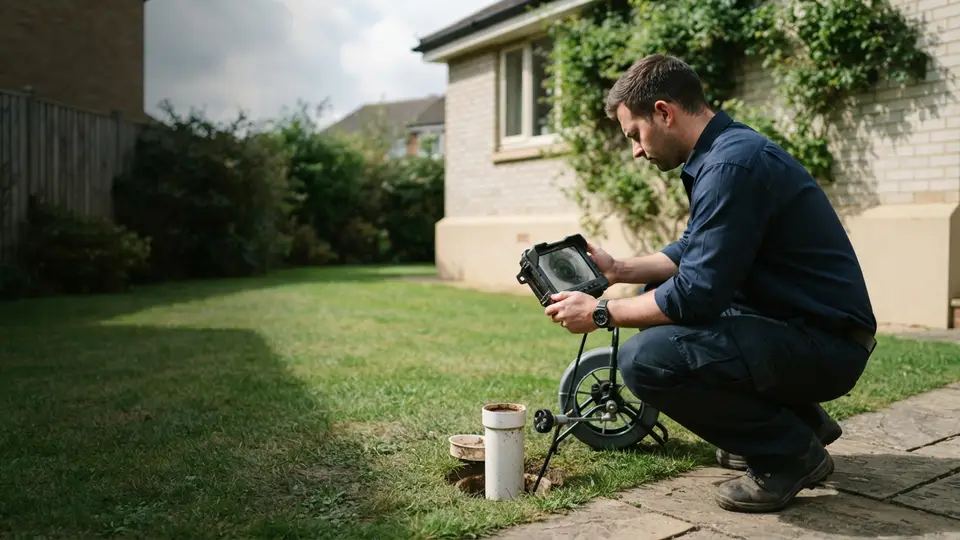
Spot repair
Best for: One broken joint or short section
What it involves: One excavation at the marked spot
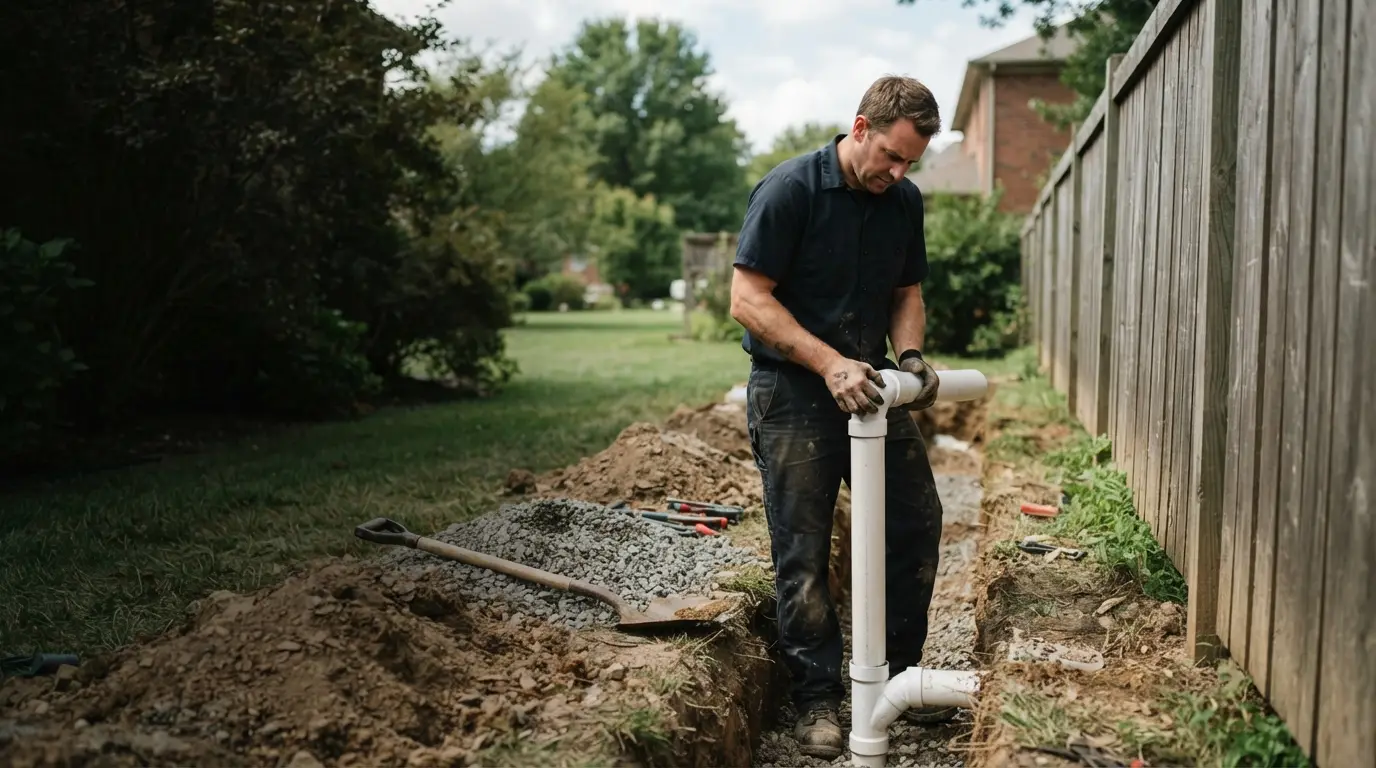
Roots back in the lateral, or cracked cast iron under the basement? We do sewer line repair and replacement in District of Columbia homes and buildings. Much of DC drains through clay laterals and cast iron building drains laid a century ago, under front yards, sidewalks and basement floors. Roots, settling and corrosion break them down. We record the line on video, show you the damage and give written prices for a spot repair, a liner or replacement, then handle the permits for work on private property and public space.
The service
A DC rowhouse or building has two parts to its sewer: the building drain under the basement floor and the lateral that runs under the front yard and often the sidewalk to the DC Water main in the street. Owners are generally responsible for the private portion, and the exact boundary depends on the property. We inspect, repair, line and replace both and add cleanouts.
Repair methods compared
Best for: One broken joint or short section
What it involves: One excavation at the marked spot
Best for: Cracked or root-filled pipe that is still round
What it involves: A resin liner forms a new pipe inside the old
Best for: Collapsed cast iron under the slab
What it involves: Cut the basement floor, replace pipe, patch
Best for: Collapsed or badly sagging lateral
What it involves: Excavate front yard and public space as permitted
Why District of Columbia
31% of DC homes were built before 1940. Clay laterals from that era have loosened joints, and cast iron building drains rust through on the bottom.
Roots from the trees in tree boxes and front yards grow into lateral joints and fill the pipe.
Decades of utility work, sidewalk repairs and nearby construction disturb soil around laterals, causing offsets and sags.
In older neighborhoods, the combined sewer can surcharge in heavy rain, and water forced back into weak laterals speeds their failure.
Warning signs
Our process
We record the building drain and lateral, noting distance and depth for each defect.
We mark the route on the floor and in the yard.
You see the footage and get written prices for each method that fits.
We obtain building permits, public space permits where the work reaches the sidewalk or street, and utility locates.
We complete the chosen repair and add a cleanout if the house lacks one.
A final camera run confirms the work; we backfill and restore surfaces as the permits require.
Typical cost
We give a written price for each option before you decide.
Get a written price: (833) 733-2357A joint costs far less than a full lateral.
Lining, floor cuts and excavation are priced differently.
Sidewalk and street work need extra permits and restoration.
Narrow lots, stoops and finished basements add time.
Deeper laterals take more excavation.
Building and public space permits add cost.
Benefits
Lined or new pipe has no open joints.
A sound drain keeps sewage out of lower units.
New pipe carries waste away reliably.
A cleanout speeds every later visit.
Excavating a DC lateral can mean digging up a front garden, brick walk and public sidewalk, with public space permits and restoration requirements. When the camera shows pipe that is cracked or root-filled but still round, lining it from inside avoids most of that. Collapsed sections still need excavation, and we explain the trade-offs with prices for each.
Homes with basement bathrooms or English basement apartments are most exposed when the combined sewer surcharges in heavy rain. A backwater valve on the building drain lets wastewater leave and closes when flow reverses. We install them during sewer repairs or on their own. DC Water has offered assistance programs for backflow prevention in some flood-prone areas; check with the utility for current programs.
In a city where so many homes are a century old, a sewer scope before buying is a sensible step. We record the building drain and lateral and give a written repair price, so you can negotiate or plan before closing.
Renters occupy 58% of DC homes, many in older apartment buildings where one building drain and lateral serve dozens of units. When that line fails, every unit is affected. We schedule repairs to keep outages short, coordinate notices with management, and where the building lacks one, add an exterior or basement cleanout so future service does not require entering a ground-floor unit. Larger buildings may have multiple laterals, which we trace and document.
When the front yard is already open for a lateral repair, it can make sense to replace an old galvanized or lead water service line at the same time. We price both together so you can decide, and coordinate with DC Water on any public-side work.
Front gardens, iron fences, brick walks and stoops in historic districts are hard to replace. Lining and careful hand excavation help us protect them, and we restore whatever we must disturb as closely to the original as the materials allow.
If sewage is backing up, stop using water throughout the building. Move belongings away from the basement drain and keep people out of the area.
Do not dig in the front yard or tree box yourself; utilities run close and public space needs a permit. Call us.
Sewer repairs on private property generally need a plumbing permit from the DC Department of Buildings, and work in sidewalks or streets needs a public space permit. Connections to the public sewer involve DC Water. Our plumbers hold the licenses the District requires, and we handle permits and inspections.
Why choose us
What you can count on every time one of our plumbers comes to your door.
Every job is handled by a plumber who holds the license your state or city requires, backed by liability insurance.
Our plumber explains the problem and the options, and you approve a written price before any work begins.
Burst pipes, sewage backups and failed water heaters get priority scheduling, including nights and weekends.
We pull permits when the job needs one and schedule the inspection, so the work holds up when you sell.
Repairs and installations come with a written warranty on labor, on top of the manufacturer's warranty on parts.
Our pages and plumbers account for your area's water, soil, climate and the age of the homes around you.
Service area
We repair sewer lines throughout Washington, DC, where the median home dates from 1958.
It depends on how much pipe is damaged, the method, public space work and permit fees. After the camera inspection, you get a written price for each option.
Often, because it avoids excavating gardens, brick walks and public sidewalk. Collapsed pipe may still need digging.
Sidewalk and street excavation needs separate permits, traffic or pedestrian protection and restoration to District standards.
It records the building drain and lateral, showing roots, cracks, holes, offsets and sags with distance and depth.
Yes. We record the line and give a written repair price if needed.
Yes. We obtain building and public space permits and coordinate with DC Water where needed.
It can be. Leaking sewage causes odors, attracts pests and can back up into basements. Call us promptly.
We advise against it. Utilities run close, and public space work requires permits.
Lining and spot repairs often take a day or two. Full replacement with public space work can take longer, plus inspections.
Not while the line is open. We tell you when to stop using water and keep that time short.
Modern PVC and properly installed liners are expected to last for decades.
Lined or new pipe has no open joints. Avoid planting new trees right over the lateral.
Stop all water use and call us. Sewer backups get priority scheduling.
The owner is generally responsible for the private portion; DC Water can confirm the boundary for your property.
If your basement has backed up during storms, yes. It closes when sewage flows back and protects basement fixtures.