Meter test and isolation
What it reveals: Whether water is escaping and from which branch
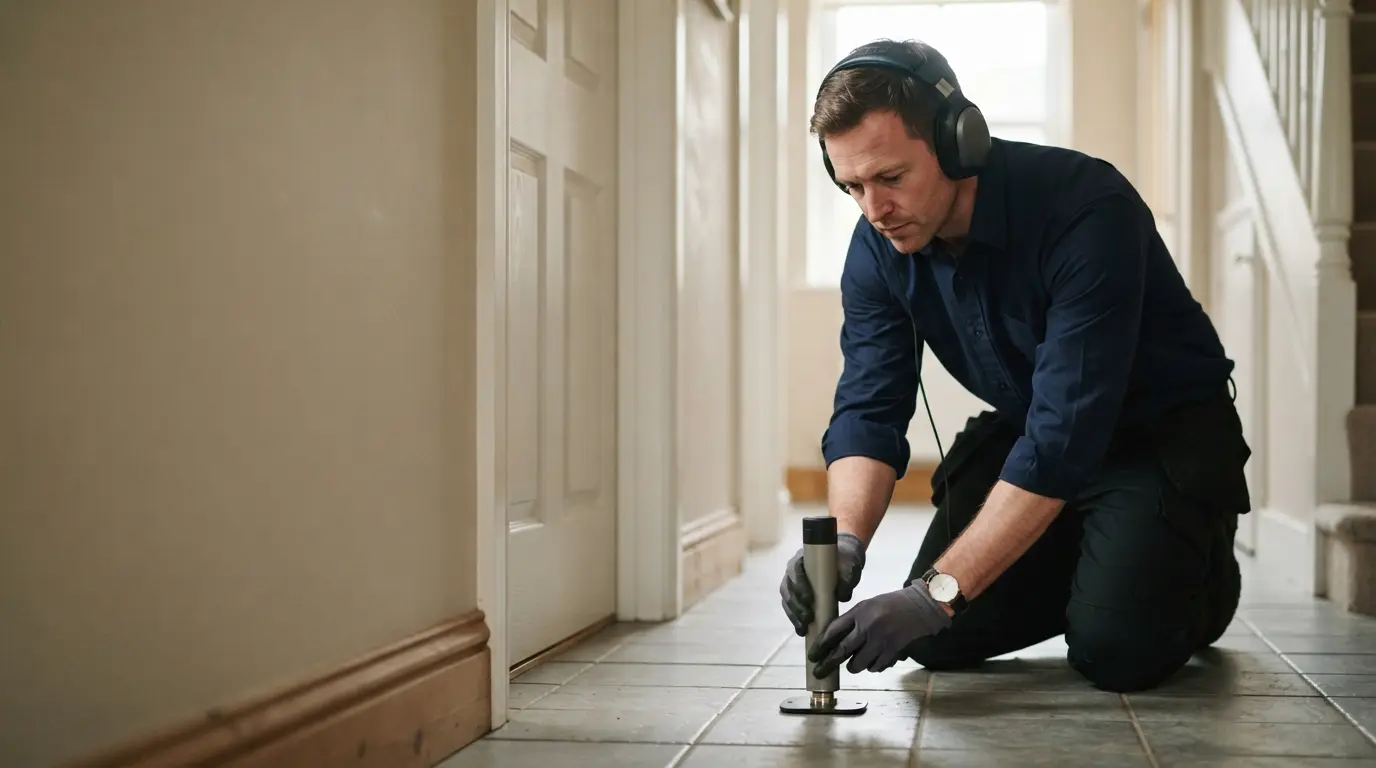
Water stain on the ceiling below, or a bill that jumped for no reason? We provide leak detection and repair in District of Columbia rowhouses, flats and condos. In DC, a leak rarely stays in one place: water from an upstairs bathroom shows up in the unit below, and a leak in a party wall can reach next door. Old galvanized and copper pipe, worn fixture connections, cast iron drains and pipes that freeze in rear additions are the usual sources. We pinpoint the leak, open as little as possible and repair it.
The service
We search for leaks in supply lines, drain lines and stacks, fixtures, water heaters, risers and the buried service line from the curb. Once found, we open only what is needed, repair it and confirm the fix with a pressure test and a meter check.
Tools and what they show
What it reveals: Whether water is escaping and from which branch
What it reveals: Escaping water inside plaster walls and floors
What it reveals: Temperature patterns from leaking hot or cold lines
What it reveals: How far water has spread in plaster, wood and drywall
What it reveals: Leaks from cracked cast iron stacks and drains
Why District of Columbia
With the median home built in 1958, many DC buildings still have galvanized steel or early copper that corrodes at joints and develops pinholes.
Worn supply tubes, toilet seals, tub overflows and shower pans leak slowly into the floor below, often for months before a ceiling stain appears.
Cracked cast iron stacks and drains leak each time water drains, staining walls and ceilings in lower floors.
Kitchens and baths in rear additions of rowhouses often have pipes in poorly insulated exterior walls that freeze during cold snaps.
Warning signs
Our process
We test the meter and decide whether it is a supply or drain leak.
Isolation tests and a drain camera tell us which line is leaking.
Acoustic and thermal tools locate it inside plaster or under floors.
You approve a written price before we open anything.
We fix the leak, test it and recheck the meter.
Typical cost
You approve a written price before work begins.
Get a written price: (833) 733-2357Basement pipe is quick; leaks in plaster walls or between floors take longer.
Plaster and tile cost more to open and patch.
Corroded pipe may need a longer section or a repipe.
Access to other units adds time.
After-hours calls cost more.
Benefits
Plaster ceilings and walls stay mostly intact.
Stopping leaks early protects the unit beneath.
Continuous leaks stop wasting water.
Documentation helps with neighbors and insurers.
During cold snaps, we find frozen sections, thaw them with controlled heat and check for splits before restoring pressure. For burst pipes, we shut off the water, replace the damaged section and check the rest of the run. In rowhouse additions, we often reroute pipe away from exterior walls or add insulation so it does not freeze again.
42% of DC homes are in buildings with 20 or more units, and 22% are attached rowhouses. A leak in one home often damages another. We trace the source to the right unit or shared pipe, coordinate access through management or the neighbor, and document the cause with photos and notes, which helps owners, associations and insurers sort out responsibility.
The line from the curb stop to the basement can be lead, galvanized or old copper. Leaks show up as water in the basement near where it enters or a meter that keeps turning. We locate the leak, repair the private side or replace it, and coordinate with DC Water for any public-side work.
Plaster ceilings, original trim and old floors are hard to repair. Precise location lets us make one small opening, and wherever possible we reach pipes from a closet, basement or access panel instead.
Water heaters squeezed into closets and under stairs in DC homes and condos leak from fittings, relief valves or the tank itself, and the water spreads under floors and into the unit below. We repair the leak and recommend a drain pan with a line to a safe location where possible, plus a leak sensor that alerts you before the damage spreads.
After two or three leaks in old galvanized or copper, the rest of the system is usually close behind. We price a repipe alongside the repair so you can compare the cost of fixing leaks one at a time with replacing the pipe once, routed through existing chases to protect plaster.
Policies often treat sudden bursts differently from slow leaks. Our photos and notes on cause and location give you what your insurer and your condo association ask for.
Close the fixture shutoff, or the main in the basement where the service enters. In a building, alert management and the unit below. Keep away from wet ceiling lights.
Put buckets under drips, move belongings and take photos. For a frozen pipe, open the faucet it serves. Never use a torch. Then call us.
Most leak repairs need no permit. Repiping and service line replacement usually do, from the DC Department of Buildings. Our plumbers hold the licenses the District requires, and we pull permits when needed.
Why choose us
What you can count on every time one of our plumbers comes to your door.
Every job is handled by a plumber who holds the license your state or city requires, backed by liability insurance.
Our plumber explains the problem and the options, and you approve a written price before any work begins.
Burst pipes, sewage backups and failed water heaters get priority scheduling, including nights and weekends.
We pull permits when the job needs one and schedule the inspection, so the work holds up when you sell.
Repairs and installations come with a written warranty on labor, on top of the manufacturer's warranty on parts.
Our pages and plumbers account for your area's water, soil, climate and the age of the homes around you.
Service area
We find and repair leaks throughout Washington, DC, in 361,014 homes from rowhouses to high-rises.
It depends on the building, where the leak is and the equipment needed. You receive a written price for the search before we begin.
Yes. After we locate the leak, we give you a written price for the repair options before opening anything.
Usually a little, since plaster takes more care to open and patch. Precise location keeps the opening small.
Usually, yes. We trace the source and document whether it is a fixture in a unit or a shared pipe.
Isolation tests and a drain camera narrow it down; acoustic and thermal tools locate it so we open one small spot.
Yes. Sensors alert you to water, and automatic valves close the supply when they detect a leak.
Shut off the main if the leak is yours, alert the unit above if not, keep away from wet light fixtures and call us.
No. Open flames can crack pipe and set old framing on fire. Open the faucet and let us thaw it.
Many leaks are found within one to two hours; complex buildings take longer.
Most repairs restore water the same visit, and we tell you how long it will be off first.
Keep heat on in rear additions, insulate pipes on exterior walls and open cabinets on cold nights.
Check the meter with all water off every few months and look under sinks and around the water heater.
Close your main or fixture valve and call us. Active leaks get priority scheduling.
Rowhouses and apartment buildings stack bathrooms and kitchens, so water travels down through floors and walls.
If water appears where the line enters the basement or the meter keeps turning, it may be. We locate and repair it.