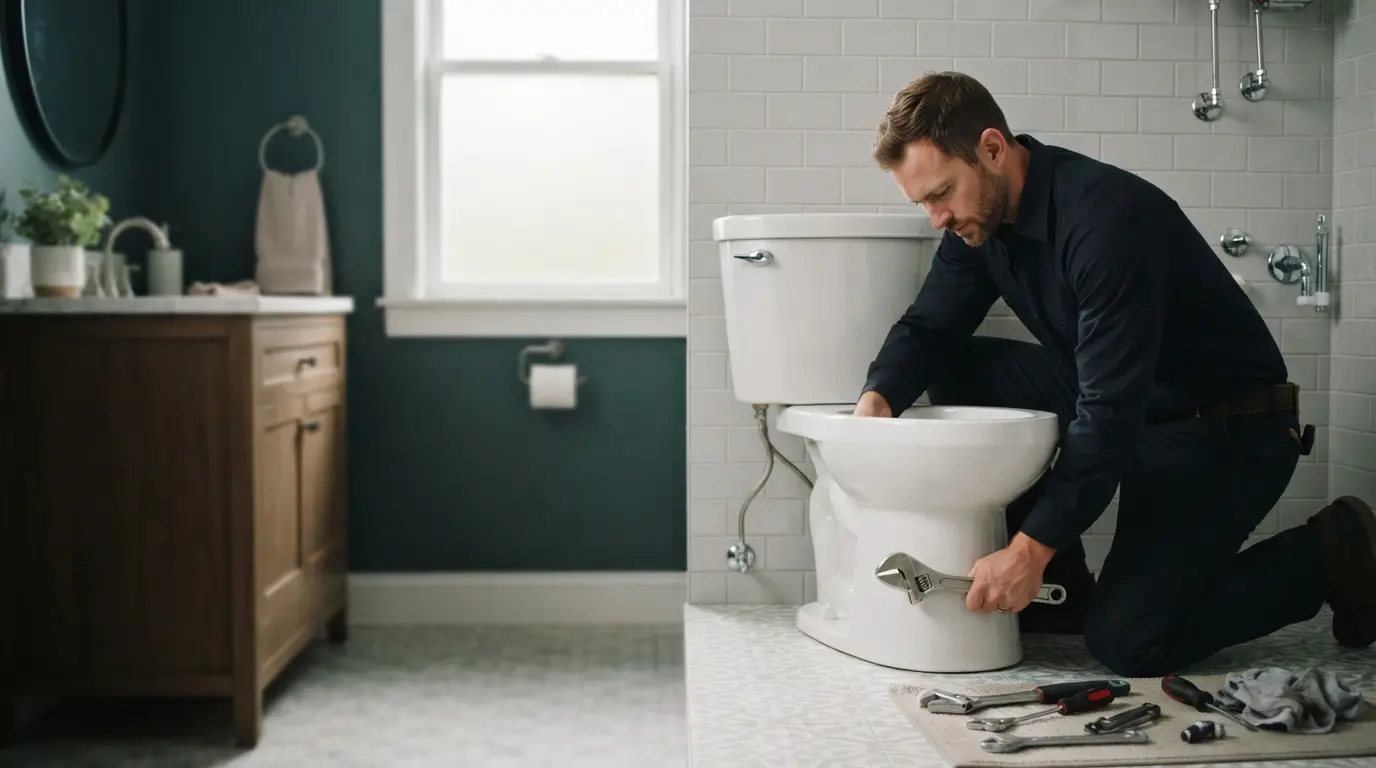
Toilet
Typical problem: Runs, rocks, leaks at the base
Usual fix: Flapper or fill valve, new seal, or replacement
Toilet running all night, or a shower valve dripping into the unit below? We do toilet, faucet and fixture repair in District of Columbia homes and condos. In a city where so many homes are a century old, fixtures range from clawfoot tubs and pedestal sinks worth saving to worn two-handle valves no one makes parts for. Small leaks matter more here, because the next ceiling down often belongs to a neighbor. We repair or replace toilets, faucets, sinks, showers, tubs and disposals and handle plumbing for kitchen and bath renovations.
The service
We work on every fixture and the valves and supply lines behind it. You can supply your own fixtures or choose from options we recommend. In older DC homes, many original fixtures are worth keeping: we rebuild valves on clawfoot tubs, re-hang pedestal sinks and fit modern parts to vintage fixtures where possible.
Common fixture work
Typical problem: Runs, rocks, leaks at the base
Usual fix: Flapper or fill valve, new seal, or replacement
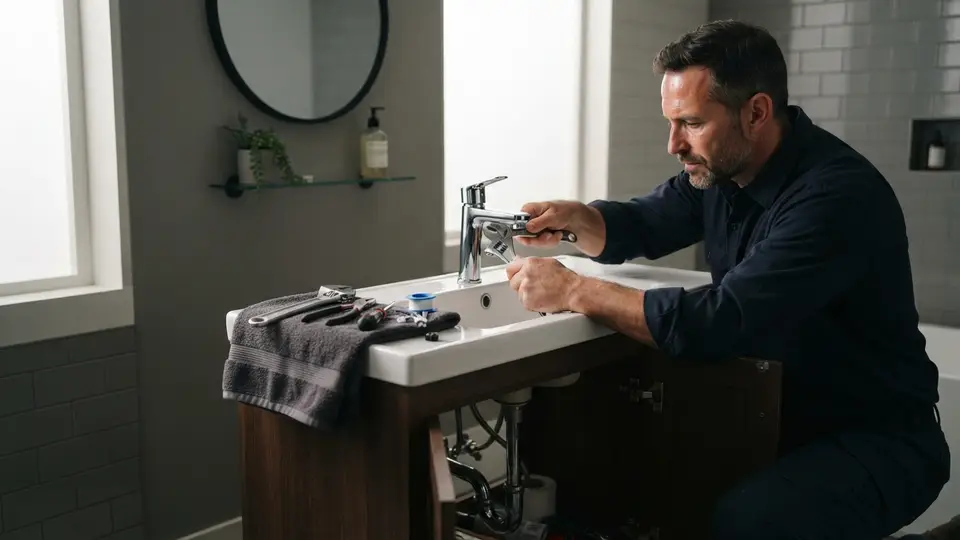
Typical problem: Drips, stiff handles
Usual fix: Stems, washers or cartridge, or a new faucet
Typical problem: Drips, temperature swings
Usual fix: Rebuild or pressure-balancing valve
Typical problem: Leaking drain or supply
Usual fix: New drain, overflow and supply set
Typical problem: Jammed, humming, leaking
Usual fix: Clear, reset or replace
Why District of Columbia
31% of DC homes were built before 1940. Original two-handle valves, compression faucets and old toilets wear out, and some parts are no longer made.
42% of DC homes are in buildings with 20 or more units, and rowhouses stack baths on each floor. A slow drip at a toilet seal or tub overflow shows up in the ceiling below.
Old stop valves often have not been turned in decades. They seize or leak when finally needed, which complicates every repair.
Renters occupy 58% of DC homes, and fixtures in rentals see heavy use and frequent turnover repairs.
Warning signs
Our process
We replace flappers, fill and flush valves, reset toilets on new seals after checking the flange and subfloor, and install new water-efficient toilets with new supply lines and shutoffs.
We rebuild compression faucets, replace cartridges and fix leaks under sinks. New faucets go in with braided supply lines.
We rebuild or replace shower valves, upgrade to pressure-balancing valves, service tub drains and overflows, and re-hang loose wall sinks.
We clear jams, fix leaks and install new units, checking that old kitchen drains can handle the disposal.
We relocate and add drains, vents and supply lines, set valves, pass inspection and set fixtures after finishes, coordinating with condo rules where they apply.
Typical cost
You approve a written price before we begin.
Get a written price: (833) 733-2357Parts cost less than new fixtures.
Prices vary widely.
Seized stops often need replacing first.
Rotted subfloor or wet plaster adds work.
Riser shutdowns and condo requirements add coordination.
Benefits
Small leaks stop before they reach the unit below.
Running toilets waste water around the clock.
Pressure-balancing valves prevent scalding.
New stops make future repairs simple.
Condo fixture work often needs a working stop at each fixture so the building riser does not have to be shut off. Where stops are missing or seized, we coordinate a brief riser shutdown with management, install new quarter-turn stops and restore water quickly. Many associations set work hours and ask for insurance certificates, which we provide.
Clawfoot tubs, pedestal sinks and cast iron kitchen sinks are part of the character of many DC homes. We replace their worn drains, supplies and valves with compatible parts, so you keep the fixture and lose the leak.
English basement units often have bathrooms added decades after the house was built, sometimes below the level of the sewer line. Their toilets and showers may drain to an ejector pump, so flushing anything other than toilet paper can stop the whole bathroom. We repair these fixtures, check the ejector pump while we are there, and give landlords and tenants simple guidance that keeps the system running.
Narrow rowhouse bathrooms can be hard to use as people age. We install comfort-height toilets, lever faucets, handheld showers on slide bars and low-threshold showers in place of old tubs, moving drains and valves to fit the tight footprint. Thermostatic and pressure-balancing valves keep water at a steady, safe temperature.
New toilets, faucets and showerheads use far less water than fixtures from decades ago. In old rowhouses with long cast iron drains, we check the drain before installing a low-flow toilet so it clears properly every time.
A good fixture with a worn part is worth fixing; a cracked toilet or corroded valve body is not. We price both choices so you can decide, and we never push a replacement you do not need.
Rear-yard and front spigots on rowhouses split inside the wall when hoses are left connected through a hard freeze, and the leak appears in the basement in spring. We replace them with frost-free models and add interior shutoffs so they can be drained each fall.
Old plastic and rubber connectors under sinks and toilets crack with age and cause sudden floods. During any fixture visit, we check them and swap in braided stainless lines with quarter-turn stops.
Close the stop under the sink or behind the toilet. If it will not turn, do not force it; close the main or call building management. For an overflowing toilet, press the flapper down inside the tank.
Turn off a jammed disposal and never reach inside. If water is reaching the unit below, let your neighbor or manager know. Then call us.
Like-for-like fixture replacements usually need no permit. Renovations that move drains or add fixtures generally do, from the DC Department of Buildings. Our plumbers hold the licenses the District requires, and we pull permits when needed.
Why choose us
What you can count on every time one of our plumbers comes to your door.
Every job is handled by a plumber who holds the license your state or city requires, backed by liability insurance.
Our plumber explains the problem and the options, and you approve a written price before any work begins.
Burst pipes, sewage backups and failed water heaters get priority scheduling, including nights and weekends.
We pull permits when the job needs one and schedule the inspection, so the work holds up when you sell.
Repairs and installations come with a written warranty on labor, on top of the manufacturer's warranty on parts.
Our pages and plumbers account for your area's water, soil, climate and the age of the homes around you.
Service area
We repair and install fixtures throughout Washington, DC, in 361,014 homes from rowhouses to high-rise condos.
Most toilet repairs need one inexpensive part, so labor is most of the cost. Flange or subfloor damage adds to it. You get a written price first.
Often, if parts exist. If not, we replace it with a pressure-balancing valve and price both choices.
Yes. We replace the drain, overflow and supplies and keep the tub.
Yes. We install customer-supplied fixtures and check that all parts are present first.
Yes. We follow association rules, provide insurance certificates and coordinate any riser shutdowns.
Yes. We do rough-in, pass inspection and set fixtures after finishes.
Older valves do not balance pressure. A pressure-balancing valve keeps the temperature steady.
No. Turn it off and use the hex key under the unit, or call us.
Usually one to two hours, longer if old stops must be replaced.
Rough-in often takes one to three days plus inspection; fixtures are set after finishes.
Fix running toilets and drips quickly, keep tub and shower seals in good shape and replace old supply tubes.
When they stick, leak or will not close. Many older DC homes still have original stops.
Close the valve behind it or press the flapper shut. If water keeps rising, close the main and call us.
Often a toilet seal, tub overflow or shower pan leak. We find the source and fix it.
Yes. We schedule around tenants and document repairs for owners.