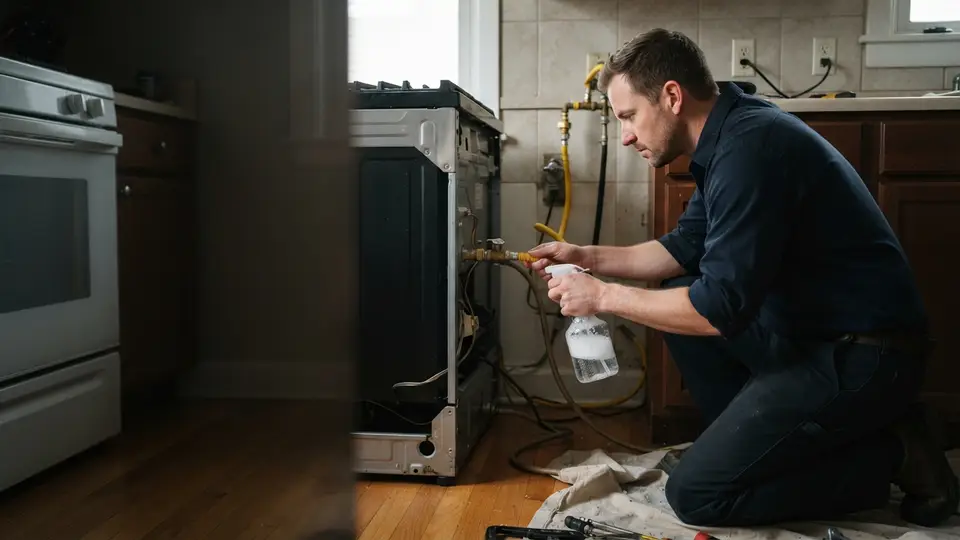
Gas leak repair
What it covers: Locating leaks and replacing failed pipe, valves, unions and connectors
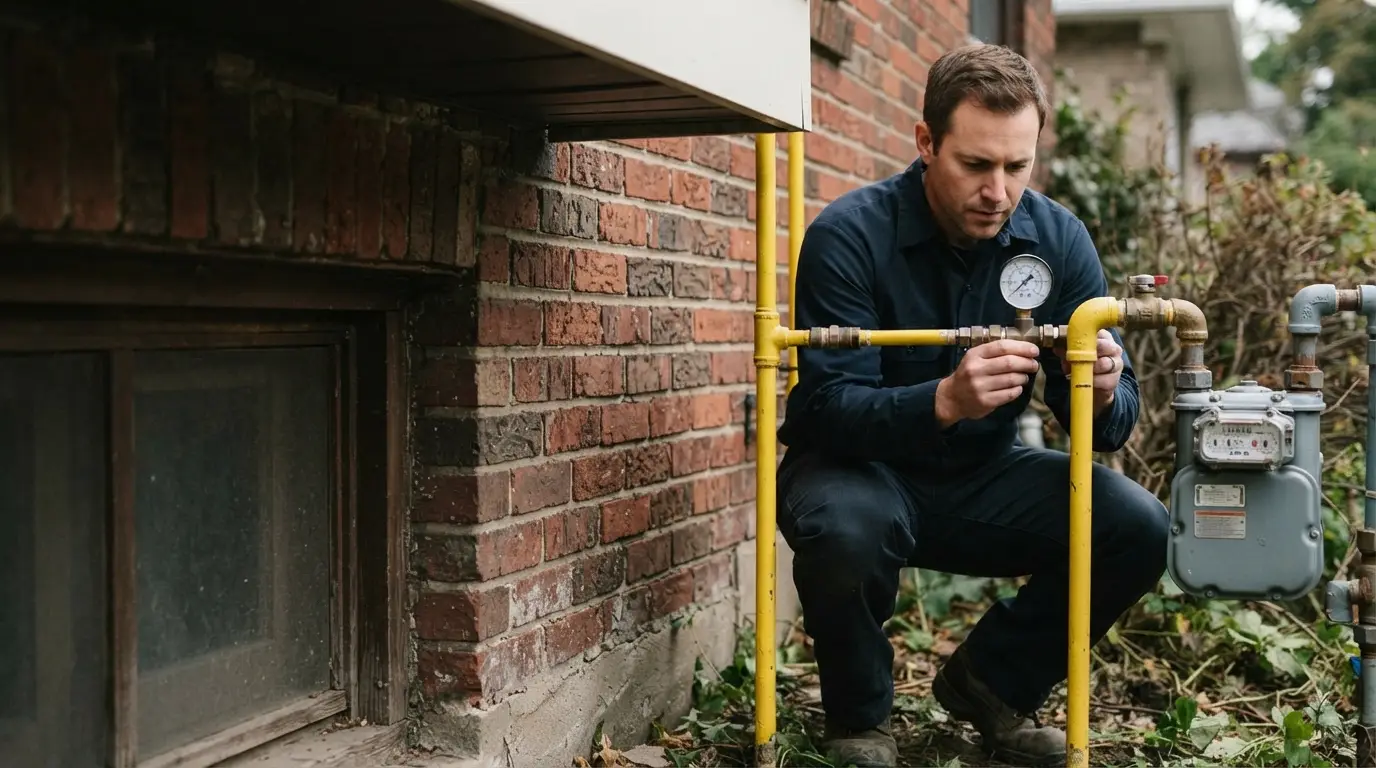
Gas smell by the basement meter, or a new range waiting? We provide gas line repair and installation in District of Columbia homes and buildings. Nearly half of DC homes heat with gas, and many more cook with it. Rowhouse basements hold decades of black iron pipe, extended room by room, with old valves and connectors along the way. Multi-unit buildings add separate meters and long runs to each unit. We find and repair leaks, run new lines, hook up appliances and handle permits and pressure tests.
The service
In our Census data, 48% of DC homes heat with utility gas. The gas company owns the service line and meter; the piping after the meter belongs to the owner, and that is the system we repair and extend, from a single range hookup to piping for every unit in a small building.
Our gas services
What it covers: Locating leaks and replacing failed pipe, valves, unions and connectors
What it covers: New piping for kitchens, additions, dryers, fireplaces and grills
What it covers: Ranges, dryers, water heaters, furnaces and boilers with shutoffs and listed connectors
What it covers: Tracing, labeling and correcting piping between meters and units
Why District of Columbia
31% of DC homes were built before 1940. Gas piping in those houses has been extended for new kitchens, dryers and heaters over generations, often with abandoned stubs left behind in walls and floors.
Black iron running along damp basement walls rusts on the outside, and old unions and valves start to seep.
Uncoated brass appliance connectors from decades past can crack. We replace any we find.
10% of DC homes are in two- to four-unit buildings, many converted rowhouses with several meters and lines that cross between units.
Warning signs
Our process
Once the gas company has made the building safe, we put the piping under test, trace the loss to a fitting or connector with a detector and solution, and replace what failed. The line must hold its test before service is restored, and then we relight every appliance.
We add up the demand of each appliance, size the pipe for the run, and install black iron or coated flexible tubing, supported and bonded, then test it for the inspector.
Each appliance gets a shutoff it can be reached from, a listed connector and a drip leg where required. We check the flame and venting before we leave.
Typical cost
You get a written price before work begins.
Get a written price: (833) 733-2357Runs through finished walls in rowhouses take more time.
Black iron takes more labor than flexible tubing.
Untangling shared piping adds hours.
Large appliances may need larger pipe or a meter upgrade.
Required for most gas work.
After-hours repairs cost more.
Benefits
Correct fittings and testing prevent leaks.
Labeled meters and capped stubs avoid future confusion.
Correct sizing feeds every burner.
Permits protect you with insurers and buyers.
In converted rowhouses and small apartment buildings, it is common to find a unit's range fed from another unit's meter, or lines that no one can identify. We trace each meter to its appliances, correct cross-connections, cap abandoned lines, and label meters and shutoffs, so every household knows what it controls and billing matches use.
Some DC owners are adding gas ranges during renovations, while others are switching appliances to electric. Either way, we size or reroute the gas piping to match, and when an appliance is removed, we cap its line properly at the source rather than leaving a live stub in the wall.
Many DC rowhouses and older apartment buildings still heat with gas boilers and radiators. The gas side of a boiler, from the meter to the burner, is part of the piping we maintain. When a boiler is replaced with a high-efficiency model, the gas line may need to be resized and the old chimney connection removed, and the water heater that shared the chimney may need new venting. We handle the gas piping and coordinate with your heating contractor.
Home inspections in DC often flag old connectors, unsupported pipe, missing drip legs or abandoned stubs. We evaluate those items, test the system and give you a written price to correct them before or after closing, so nothing is left to guesswork.
Rowhouse patios and rooftop decks often get gas grills or heaters. We run properly sized, supported lines with a shutoff and correct clearances, and protect exposed piping outdoors.
Adding a large range or tankless heater can exceed an older meter. We calculate the total load and, if needed, ask the gas company for an upgrade before the new appliance goes in, so every burner in the house still gets enough gas on a cold night.
If you smell gas, get everyone out and call the gas company first. Do not search for the leak or relight pilots. If the company locks your meter, tell us so we can coordinate restoring service.
For new work, gather appliance model numbers and locations so we can size the line.
Gas piping work in DC generally needs a permit and inspection from the DC Department of Buildings, and new piping must pass a pressure test. Our plumbers hold the licenses the District requires for gas work. We pull permits, run tests, schedule inspections and coordinate with the gas company.
Why choose us
What you can count on every time one of our plumbers comes to your door.
Every job is handled by a plumber who holds the license your state or city requires, backed by liability insurance.
Our plumber explains the problem and the options, and you approve a written price before any work begins.
Burst pipes, sewage backups and failed water heaters get priority scheduling, including nights and weekends.
We pull permits when the job needs one and schedule the inspection, so the work holds up when you sell.
Repairs and installations come with a written warranty on labor, on top of the manufacturer's warranty on parts.
Our pages and plumbers account for your area's water, soil, climate and the age of the homes around you.
Service area
We repair and install gas lines throughout Washington, DC, across 361,014 homes.
It depends on where the leak is, how much pipe or how many fittings need replacing, access and permits. You get a written price after we locate the leak.
Distance from the existing pipe, the route through walls and the material set the price. We quote it in writing first.
Tracing meters, correcting cross-connections and labeling lines takes time, but it prevents billing and safety problems.
We put the piping under test pressure and use a detector and bubble solution on each joint until we find it.
Yes. We cap abandoned lines properly at the source so no live stub is left behind.
Yes, for meter work and restoring service after repairs.
Leave, avoid switches and phones inside and call the gas company or 911 from outside.
Get everyone into fresh air and call 911. Once cleared, we inspect the boiler, furnace and water heater.
Many repairs take a few hours. Longer runs and multi-unit work can take a day or more, plus inspection.
Once the piping holds its test and any inspection is signed off; we arrange the restart.
Usually yearly for boilers, furnaces and water heaters, with connectors checked at the same visit.
Yes. Bare brass connectors can crack with age; coated stainless connectors are the safe replacement.
Call us. After we repair and test the piping, the meter can be unlocked and we relight appliances.
Our Census data shows close to half of DC homes heat with utility gas.
Generally, yes. We pull it from the DC Department of Buildings and schedule the inspection.