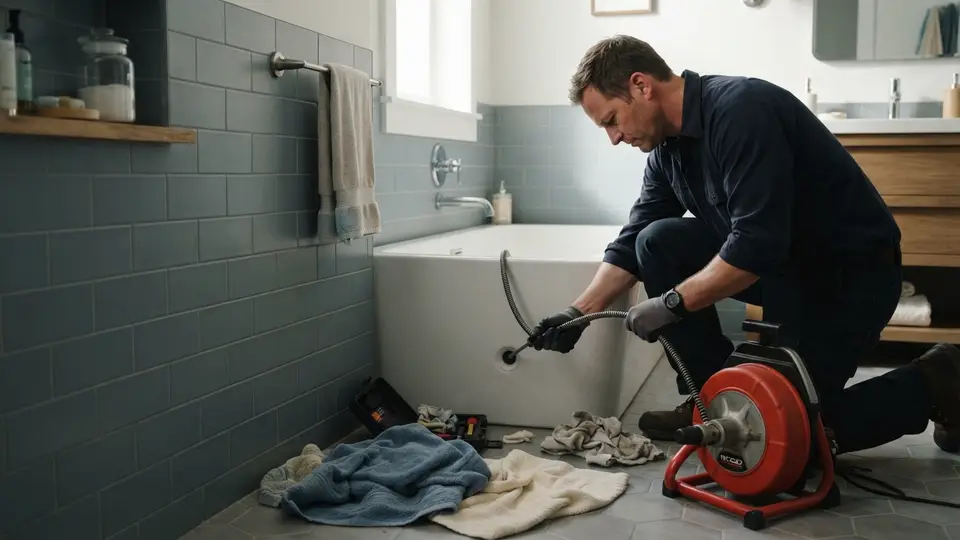
One fixture drains slowly
Likely cause: Hair, soap or grease near the trap
How we clear it: Hand auger or small machine
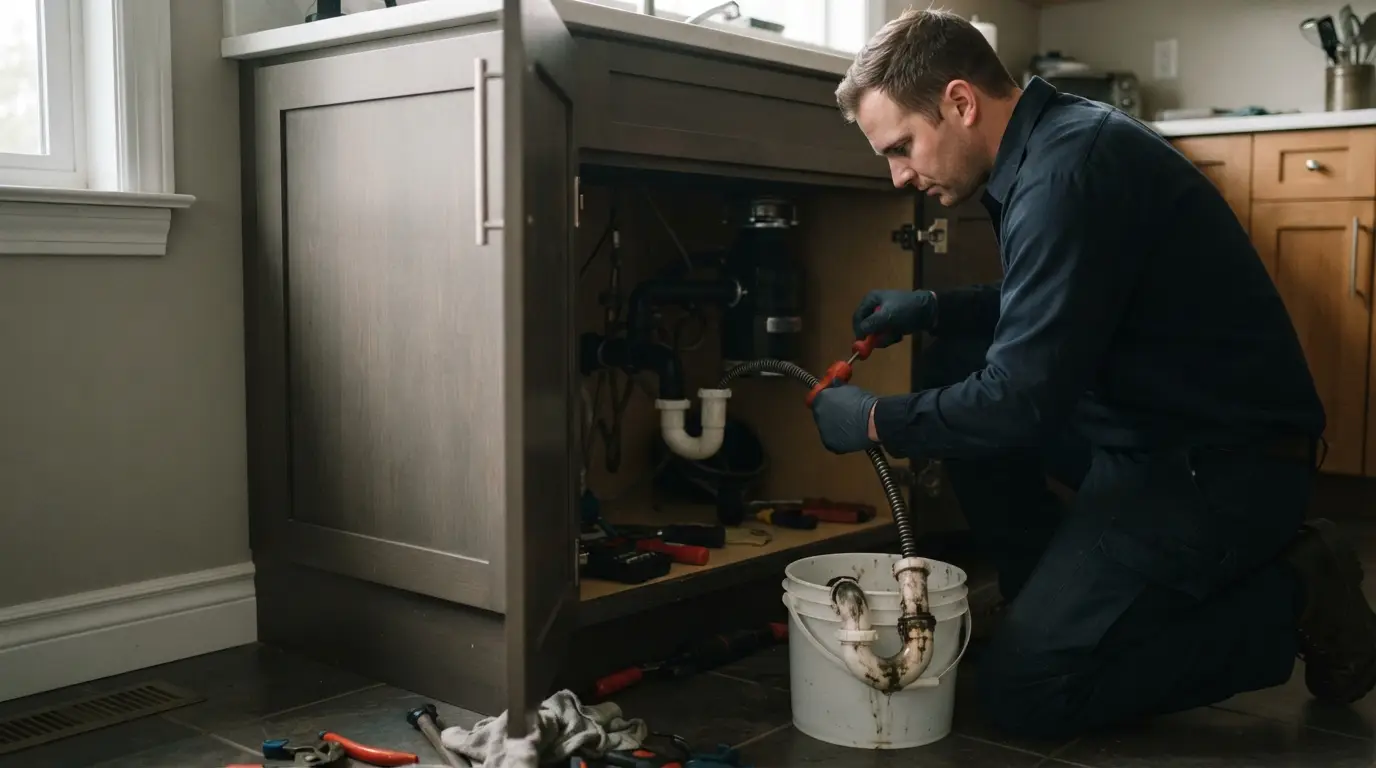
Basement floor drain backing up, or a kitchen line that clogs every month? We do drain cleaning and clog removal in District of Columbia buildings. DC drains are old and shared. Rowhouses send everything down one cast iron stack to a clay lateral under the front yard, and apartment buildings stack dozens of kitchens on the same pipe. Roots from street trees, century-old scale and grease from busy kitchens do the rest. We clear the line, inspect it with a camera when it matters and explain what caused the clog and how to keep it from returning.
The service
We clear every drain in a home or building: sinks, tubs, showers, toilets, laundry standpipes, basement floor drains, the main building drain and the lateral to the DC Water sewer. In apartment and condo buildings we clear kitchen and bathroom stacks and the horizontal mains that collect them. Our aim is a clean pipe and a clear answer about the cause.
Symptoms and what we do
Likely cause: Hair, soap or grease near the trap
How we clear it: Hand auger or small machine
Likely cause: Main line or lateral blockage
How we clear it: Cable from a cleanout, then camera
Likely cause: Clogged stack or building drain
How we clear it: Clear the stack from the roof or a cleanout
Likely cause: Grease and scale in old cast iron
How we clear it: Hydro jetting or descaling
Likely cause: Combined sewer surcharge or cracked lateral
How we clear it: Clear, camera, backwater valve
Why District of Columbia
The median DC home was built in 1958, and 52% predate 1960. Cast iron stacks and drains from those years rust into a rough, narrow channel inside, catching paper and grease.
Street trees line most residential blocks, and their roots grow into clay laterals at every joint between the house and the main.
42% of DC homes are in buildings with 20 or more units. Each kitchen on a stack adds grease, and the lowest units back up first.
Older parts of the city drain into combined sewers that carry stormwater too. In heavy rain, the system can surcharge and push water back toward basement drains.
Warning signs
Our process
Which fixtures, which floor and which units are affected tells us where the blockage sits.
We clear mains from a basement or front-yard cleanout and stacks from the roof vent or a cleanout.
Cutting heads for roots and paper; jetting or descaling for grease and scale.
For repeat clogs and old laterals, we record the pipe and mark problems.
We run water through every cleared line and tell you what we found.
Typical cost
You approve a written price before work begins.
Get a written price: (833) 733-2357A sink trap is quick; a building drain or stack takes larger equipment.
Roof access, missing cleanouts and finished basements add time.
Roots, scale and grease take longer than hair.
Jetting and descaling cost more but last longer.
Added when we need to see the pipe.
After-hours calls cost more.
Benefits
A clear building drain keeps sewage out of English basements.
Jetting removes years of grease from shared lines.
You see whether cast iron or clay needs repair.
A new cleanout makes the next visit simpler.
22% of DC homes are rowhouses or other attached homes. Most send every fixture down one stack to a single building drain under the basement floor. When that drain clogs, the basement drain or English basement bathroom is where it shows. Many rowhouses lack an accessible cleanout, so we often install one during the visit, which makes every future cleaning faster and cleaner.
In multifamily buildings, a single kitchen stack can serve a dozen or more units. We clear stacks from the top down, coordinate access to affected units with management and recommend a jetting schedule for buildings with repeat grease problems. Notices to residents about what not to pour down sinks help too.
DC restaurants, from neighborhood corridors to downtown, send heavy grease loads into kitchen lines and building drains. We jet commercial kitchen lines on a schedule, outside service hours, and work with grease interceptor maintenance so backups do not shut down a dinner service. In mixed-use rowhouse buildings, a restaurant on the ground floor can share a drain with apartments above, so keeping that line clean protects everyone.
Many DC rowhouses have English basement units with their own kitchen and bathroom at the lowest point of the plumbing. They are the first to see a backup. A cleanout, a backwater valve and regular camera checks of the building drain protect the tenant and the owner.
A plunger is fine for one slow fixture. If the basement drain is backing up, stop using water everywhere in the house, and in a building, alert management and neighbors on the same stack.
Avoid chemical drain cleaners; they rarely clear stacks or mains and can harm old cast iron. Keep children and pets away from sewage and call us.
Drain cleaning needs no permit. Lateral repair, a new cleanout in public space or a backwater valve may, from the DC Department of Buildings and, for work in public space, the transportation department. Our plumbers hold the licenses the District requires, and we pull permits when needed.
Why choose us
What you can count on every time one of our plumbers comes to your door.
Every job is handled by a plumber who holds the license your state or city requires, backed by liability insurance.
Our plumber explains the problem and the options, and you approve a written price before any work begins.
Burst pipes, sewage backups and failed water heaters get priority scheduling, including nights and weekends.
We pull permits when the job needs one and schedule the inspection, so the work holds up when you sell.
Repairs and installations come with a written warranty on labor, on top of the manufacturer's warranty on parts.
Our pages and plumbers account for your area's water, soil, climate and the age of the homes around you.
Service area
We clear drains across all of Washington, DC, in 361,014 homes from Capitol Hill to east of the river.
It depends on which line is clogged, access to a cleanout or roof vent, the cause and the method. Our plumber gives you a written price before any work begins.
For grease and scale, often yes, if a camera shows the pipe is sound enough. Badly deteriorated cast iron may need lining instead.
It is listed separately. For repeat clogs and old laterals, it shows exactly what is wrong so you only pay for needed repairs.
Usually, yes. A cleanout near where the drain leaves the house makes future cleaning faster and keeps the mess out of living space.
Yes. We clear stacks and mains and coordinate access with management.
Yes. We show you as we go and give you a copy for repairs, insurance or a sale.
Yes. Sewage carries bacteria. Stop using water, keep people out of the area and let us clear the line before cleanup.
We advise against them. They rarely clear stacks and can damage old cast iron and the people who work on it.
Many are cleared and inspected in two to three hours. Large buildings or heavy roots take longer.
Right after we finish testing. If damage was found, we tell you whether normal use is safe until the repair.
Buildings with repeat grease backups often benefit from jetting every year or two. A camera shows how fast buildup returns.
A valve on the building drain that lets wastewater leave but closes if sewage flows back during a storm.
Stop all water use in the building and call us. Main line backups get priority scheduling.
Older areas use combined sewers that carry stormwater too, and heavy rain can overload them and push water back up low drains.
One old cast iron stack and building drain serve every fixture, and scale inside the pipe catches paper and grease.