Chlorine or chemical taste
Usual cause: Disinfection by the utility
Typical treatment: Catalytic carbon filter
Chlorine taste from the tap, or spots on every glass? We install water softeners and filtration in District of Columbia homes, chosen after a water test. DC Water delivers treated Potomac River water from the Washington Aqueduct, which is safe and monitored, but residents often ask about taste, moderate hardness and the effect of old pipes inside their homes. Most DC homes need a carbon filter or a drinking water system rather than a whole-house softener. We test, explain what we find and install only what your home needs.
The service
Different equipment solves different problems. A softener removes hardness minerals that cause scale. A carbon filter removes chlorine or chloramine taste and odor. A point-of-use filter certified for lead reduction, or a reverse osmosis system at the kitchen sink, treats drinking and cooking water. In DC, the right choice usually starts with your pipes as much as your water.
Common concerns and treatments
Usual cause: Disinfection by the utility
Typical treatment: Catalytic carbon filter
Usual cause: Moderate hardness in river water
Typical treatment: Softener or conditioner, if wanted
Usual cause: Old service lines, solder or fixtures
Typical treatment: Lead-certified filter at the tap; pipe replacement
Usual cause: Disturbance in old mains
Typical treatment: Sediment filter, flushing
Usual cause: Taste and dissolved solids
Typical treatment: Reverse osmosis at the kitchen sink
Why District of Columbia
DC tap water comes from the Potomac River and is treated by the Washington Aqueduct and distributed by DC Water. Disinfection keeps it safe but leaves a taste some people notice.
River water changes with the seasons, and hardness and taste can shift through the year.
With the median DC home built in 1958, the pipes inside the house, and in some homes a lead service line, affect water quality at the tap more than the source does.
Work on aging water mains can stir up sediment, leaving water discolored for a while.
Warning signs
Our process
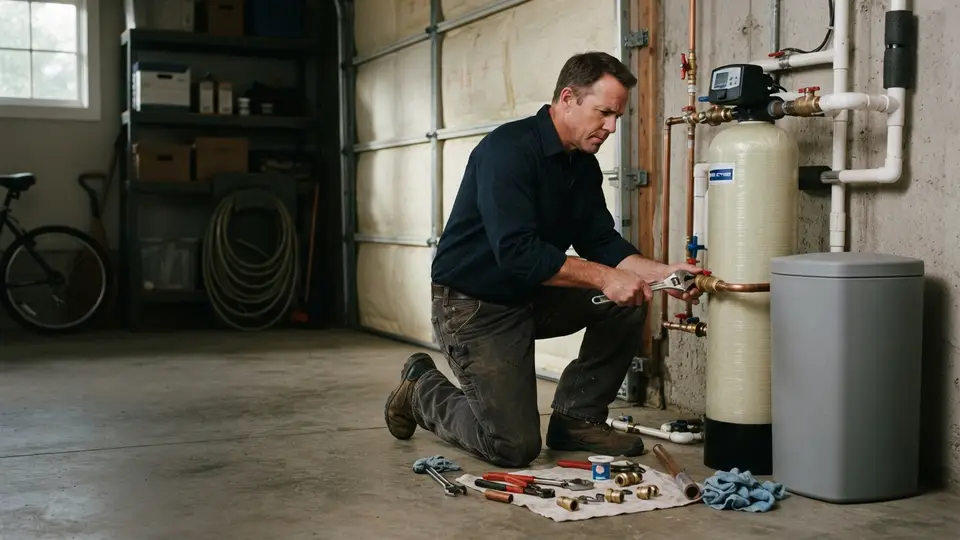
If you want soft water, we test hardness, size the softener to your household and install it at the main line in the basement with a bypass and an air-gapped drain. Many DC homeowners choose a salt-free conditioner instead to reduce scale without salt.
We install sediment and catalytic carbon filters at the main, sized to the flow your home needs, so every tap and shower gets filtered water.
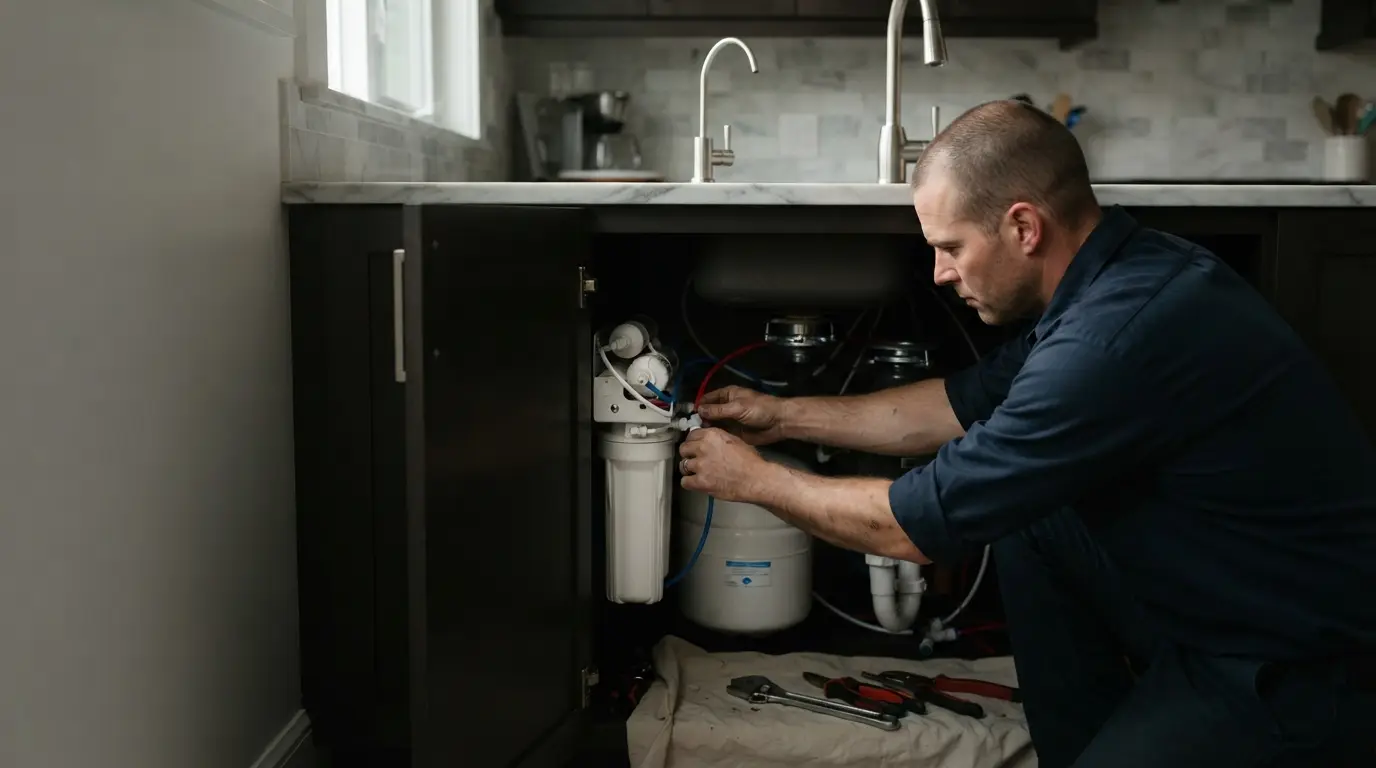
We mount the unit under the kitchen sink with a dedicated faucet and set a filter and membrane schedule. It is a good fit for condos where whole-house equipment will not fit.
Typical cost
You receive a written price and a maintenance plan before we install.
Get a written price: (833) 733-2357Taste, hardness and lead need different equipment.
Point-of-use systems cost less.
Tight basements and closets affect what fits.
Larger homes need more capacity.
Filters, membranes and salt are ongoing.
Benefits
Carbon removes chlorine and chloramine flavors.
Softeners or conditioners protect fixtures and heaters.
Certified point-of-use filters reduce lead and other contaminants.
Fewer spots and less buildup.
Lead in tap water comes from lead service lines, old solder and some older fixtures, not from the river. The lasting fix is to remove the lead: replacing the private side of a lead service line and old plumbing. In the meantime, a filter certified for lead reduction at the kitchen tap is a practical step. DC Water offers guidance and testing information; we can check your service line and price replacement.
42% of DC homes are in buildings with 20 or more units, where whole-house treatment is not possible. A reverse osmosis unit or a carbon filter at the kitchen sink and a filtered shower head improve water inside one unit. Renters should get the owner's approval before installing anything.
Moderately hard water leaves some scale in water heaters and tankless units over time. Yearly flushing usually handles it; a softener or conditioner adds protection for tankless heaters, which are more sensitive to scale.
A softener removes hardness minerals so soap lathers easily and spots disappear, but it uses salt and sends brine to the drain. A salt-free conditioner reduces scale on heaters and pipes without salt but leaves minerals in the water. With DC water only moderately hard, many owners who care mainly about protecting a tankless heater or new fixtures choose a conditioner. Those who want the full soft-water feel choose a softener. We explain both after testing, and we will tell you plainly if neither is worth it for your home.
After new pipe goes in, or a lead service line is replaced, we flush the system thoroughly. DC Water provides guidance on flushing and testing after lead line work, and a certified filter at the kitchen tap is a sensible extra step during the first weeks. Once the old pipe is gone, many homeowners find they no longer need much treatment beyond a carbon filter for taste.
Cafes and restaurants often filter water for coffee, ice and steam equipment to protect machines from scale and improve taste. We install and service these systems and their bypasses as part of our commercial work.
When DC Water works on old mains nearby, water can turn brown for a while. Running the cold tap usually clears it; homes that see it often may benefit from a sediment filter at the main.
Check DC Water records for your service line material and keep any water test results handy. Note what bothers you: taste, spots, color or lead concerns.
If water is discolored after nearby main work, run the cold tap until it clears before using it. If existing equipment is leaking, put it in bypass and call us.
Many treatment installations need no permit, though some new connections may. Our plumbers hold the licenses the District requires, and every drain connection includes an approved air gap.
Why choose us
What you can count on every time one of our plumbers comes to your door.
Every job is handled by a plumber who holds the license your state or city requires, backed by liability insurance.
Our plumber explains the problem and the options, and you approve a written price before any work begins.
Burst pipes, sewage backups and failed water heaters get priority scheduling, including nights and weekends.
We pull permits when the job needs one and schedule the inspection, so the work holds up when you sell.
Repairs and installations come with a written warranty on labor, on top of the manufacturer's warranty on parts.
Our pages and plumbers account for your area's water, soil, climate and the age of the homes around you.
Service area
We test water and install treatment throughout Washington, DC, across 361,014 homes.
It depends on what you want to treat and whether it is whole-house or one tap. We test first and give you a written price.
Most do not. DC water is moderately hard at most; many homes choose a carbon filter or drinking water system instead.
Mainly filter and membrane changes on a set schedule, which we explain at installation.
Yes. We test at your tap and look at your pipes and service line before recommending anything.
A filter certified for lead reduction can, at that tap. Replacing lead pipes removes the source.
Usually in the basement near the main shutoff, with a drain and outlet nearby.
DC Water treats and monitors it. Old pipes inside some homes can affect it; testing tells you about your tap.
A point-of-use filter often works; check with the owner first.
Point-of-use systems take an hour or two; whole-house systems take a few hours.
Taste improves immediately with carbon or reverse osmosis.
It depends on the filter and use; we set a schedule at installation.
Run the cold tap until it clears. If it does not, call DC Water and let us check your service line.
Put it in bypass and call us.
The Potomac River, treated by the Washington Aqueduct and delivered by DC Water.
Check DC Water records for your address or have us inspect where the line enters your basement.