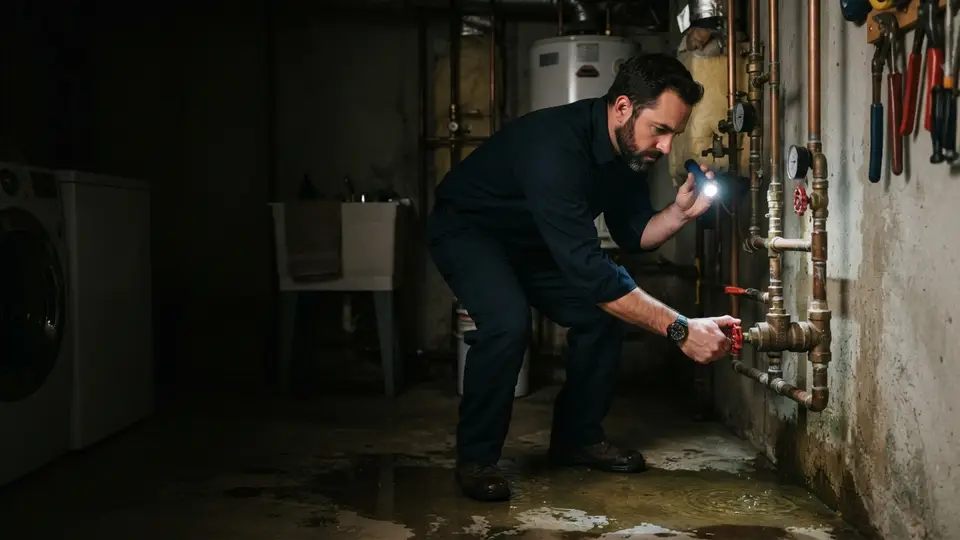
Burst pipe
Your first step: Close the fixture stop or main
What we do: Repair and check nearby pipe
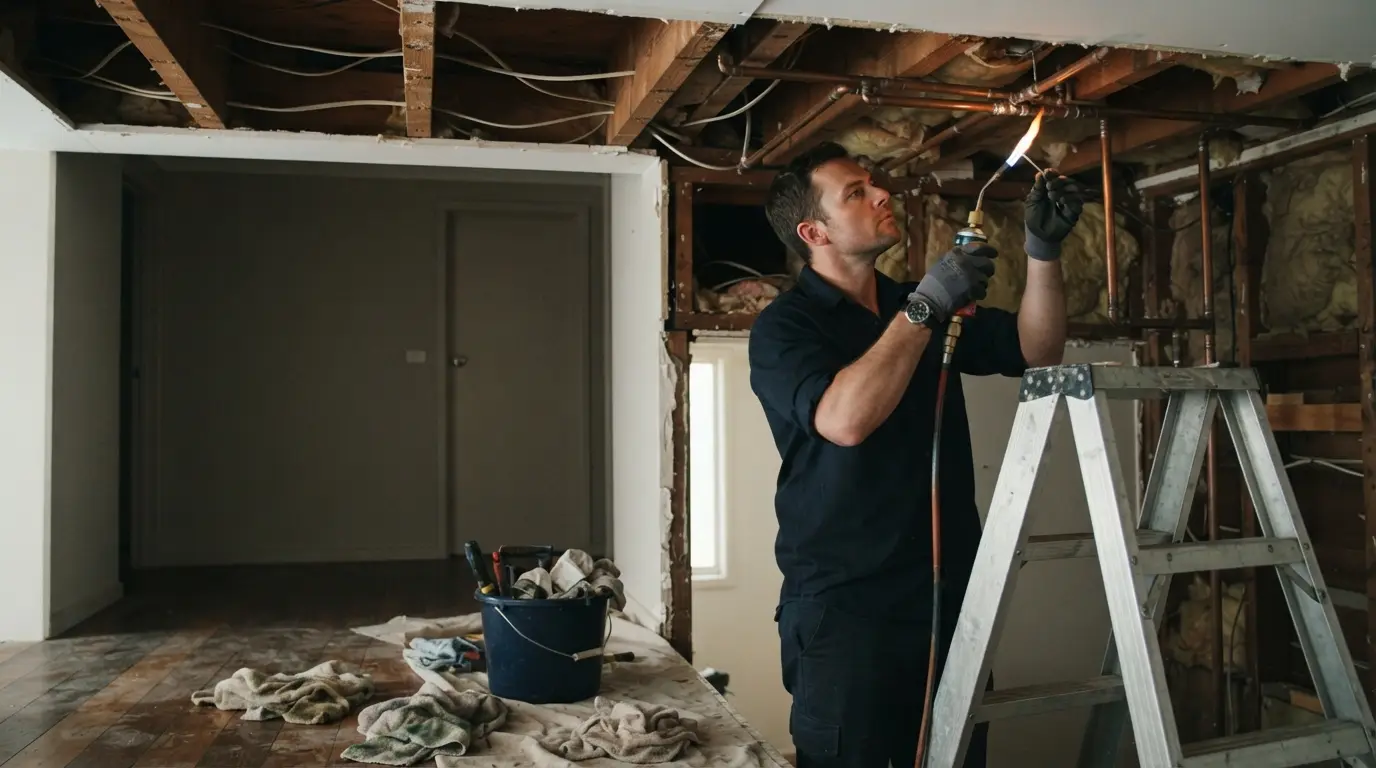
Water pouring into the unit below, or sewage rising in the basement? Call us for emergency plumbing in District of Columbia; urgent calls go to the front. In a city of rowhouses and apartment buildings, a plumbing emergency rarely stays inside one home. A burst pipe on the third floor reaches the ceiling on the first, a clogged stack backs up into the lowest unit, and a storm can push the combined sewer back into English basements. We stop the water, find the cause and repair it once you approve a written price. Here is what to do first.
The service
We treat a call as an emergency when water or sewage is damaging a home right now, there is a gas smell, or a household has no water or no working toilet. These calls move ahead of routine work, and on the phone we tell you which valve or breaker to shut off.
Emergencies and first steps
Your first step: Close the fixture stop or main
What we do: Repair and check nearby pipe
Your first step: Shut off your water; tell the unit above
What we do: Find the source and stop it
Your first step: Stop all water use
What we do: Clear the line and camera it
Your first step: Open the faucet on that line
What we do: Thaw safely and repair splits
Your first step: Leave and call the gas company
What we do: Repair the piping once safe
Your first step: Close the cold supply; cut power or gas
What we do: Repair or replace
Why District of Columbia
31% of DC homes were built before 1940. Galvanized supply lines, cast iron stacks and old valves fail suddenly, often after years of slow decline.
42% of homes are in buildings with 20 or more units and 22% are rowhouses. Leaks travel down and across to neighbors.
Heavy summer storms can overload combined sewers in older neighborhoods and push sewage back into basements.
Pipes in rear additions and exterior walls freeze during winter cold, and many split as they thaw.
Warning signs
Our process
We help you stop the water over the phone.
Emergencies go ahead of routine work, and we keep you updated on timing.
Our plumber stops the leak, backup or hazard on arrival.
We explain the cause and give a written price first.
The repair is tested, and you get notes and photos for insurance and neighbors.
Typical cost
Even in an emergency, you approve a written price before the repair.
Get a written price: (833) 733-2357Nights, weekends and holidays cost more.
A fitting is simpler than a collapsed drain.
Plaster ceilings, tight basements and other units add time.
Water heaters and pumps cost more than fittings.
Sometimes we stabilize now and finish later.
Benefits
Water spreads through floors quickly.
Humid DC summers let mold start within days.
Sewage and gas need immediate attention.
Prompt repair with photos supports claims.
We replace the failed section and check the run around it. In old galvanized systems, we tell you honestly when a repipe makes more sense than another patch.
We clear the building drain or stack, then camera it to find roots, breaks or blockages, and recommend a backwater valve where storms are the cause.
We check for frozen lines, failed valves, a broken service line or a building-wide shutoff.
The gas company responds first. Then we find the leak, repair it, test the piping and relight appliances.
In rowhouses and condos, the first sign of a leak is often a call from the neighbor below. Shut off your water, let building management know and call us. We find the source, stop it and document whether it came from a fixture in your unit or a shared pipe. That record helps owners, associations and insurers settle who is responsible.
English basement units sit at the lowest point of the plumbing, so they are first to flood when a drain clogs or the sewer surges. If sewage appears, stop using water throughout the house, keep the tenant out of the affected rooms and call us. After clearing the line, we can add a cleanout and backwater valve to protect the unit.
Many DC rowhouses and condos are owned by people who travel or rent them out. If a tenant, neighbor or manager reports a leak while you are away, have them close the main or unit valve and call us. With your permission and access arranged, we stop the damage, make the repair and send you photos and a written summary.
Policies often treat sudden bursts differently from slow leaks. Our notes and photos of the cause, the source and the repair give your insurer and your condo association what they ask for.
Many DC emergencies get worse because no one can find or turn the shutoff. We can locate, label and test the main and unit valves during any visit, and replace any valves that are seized or leaking.
Find your main shutoff now, usually in the basement where the water line enters. In a condo, know where your unit valves are. For leaks, close them and switch off the water heater. For sewage, stop using water. For gas, leave and call the gas company.
Stay away from water near outlets and ceiling lights. Move belongings and take photos. Never use a torch on pipes. Then call us.
Emergency repairs happen right away. When the work needs a permit, we file it with the DC Department of Buildings and schedule inspection as rules allow. Our plumbers hold the licenses the District requires.
Why choose us
What you can count on every time one of our plumbers comes to your door.
Every job is handled by a plumber who holds the license your state or city requires, backed by liability insurance.
Our plumber explains the problem and the options, and you approve a written price before any work begins.
Burst pipes, sewage backups and failed water heaters get priority scheduling, including nights and weekends.
We pull permits when the job needs one and schedule the inspection, so the work holds up when you sell.
Repairs and installations come with a written warranty on labor, on top of the manufacturer's warranty on parts.
Our pages and plumbers account for your area's water, soil, climate and the age of the homes around you.
Service area
We take emergency calls throughout Washington, DC, across 361,014 homes.
When you call, what failed, access and parts set the price. After the damage is stopped, you approve a written price for the repair.
Yes. After-hours work costs more, and we tell you the price before making the repair.
Sometimes. If it is safe, we stop the leak now and finish the repair during regular hours.
We help you stop the water, put you ahead of routine work and keep you updated on arrival.
Yes. You get notes on the cause, photos and an itemized invoice.
Shut off your water, tell your neighbor and management and call us. This gets priority.
Leave, avoid switches and phones inside and call the gas company or 911 from outside.
Yes. Keep everyone away, stop using water and let us clear the line before cleanup.
Immediately, by closing the stop or main. We then repair it, usually within a few hours of arriving.
Many repairs restore water the same visit; we give a timeline for larger work.
Keep heat on in rear additions and basements, insulate exposed pipes and drain outdoor spigots in fall.
Yes. Find, label and turn them yearly. Old valves often seize.
Stop the water at the fixture stop or main, switch off the water heater and call us.
Older areas have combined sewers that can surge in heavy rain; a backwater valve helps.
It depends on where it started and your building rules. We document the source to help sort it out.