Restaurants, bars and cafes
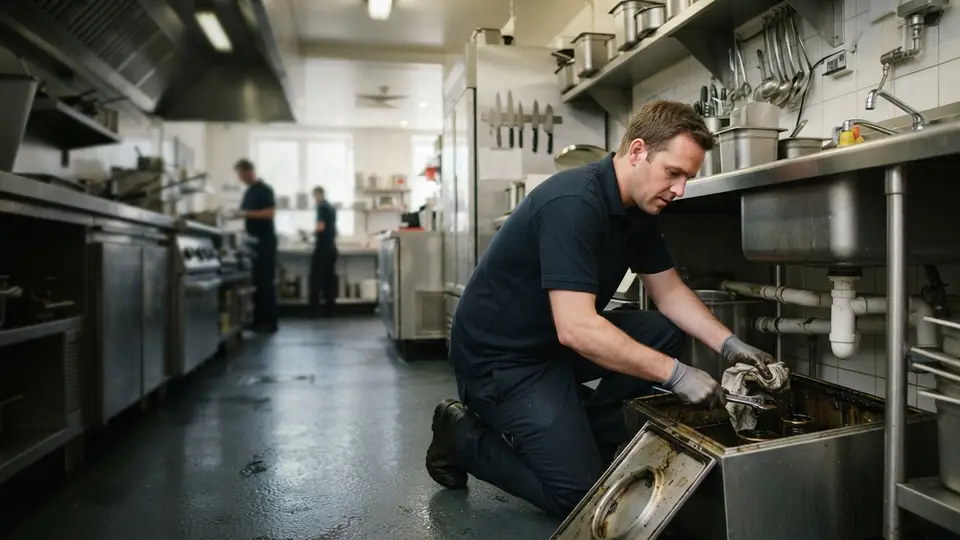
What we handle: Grease interceptors, kitchen line jetting, floor sinks, gas hookups
Grease trap backing up, or a leaking stack? We provide commercial plumbing in District of Columbia for restaurants, offices and apartments. DC commercial plumbing spans century-old rowhouse storefronts, mid-century apartment buildings, government-area office towers and new mixed-use blocks. Grease rules, DC Water backflow requirements, tight mechanical rooms, public space permits and strict building schedules all shape the work. We repair, maintain and upgrade systems, plan disruptive work around your hours and keep records ready for inspectors.
The service
Our commercial clients include restaurant and cafe owners, retail tenants, office landlords, property managers, condo associations and building engineers. The work covers urgent repairs, preventive maintenance, equipment replacement and tenant build-out plumbing.
Typical commercial work
What we handle: Grease interceptors, kitchen line jetting, floor sinks, gas hookups
What we handle: Stacks, risers, booster pumps, central water heaters, unit valves
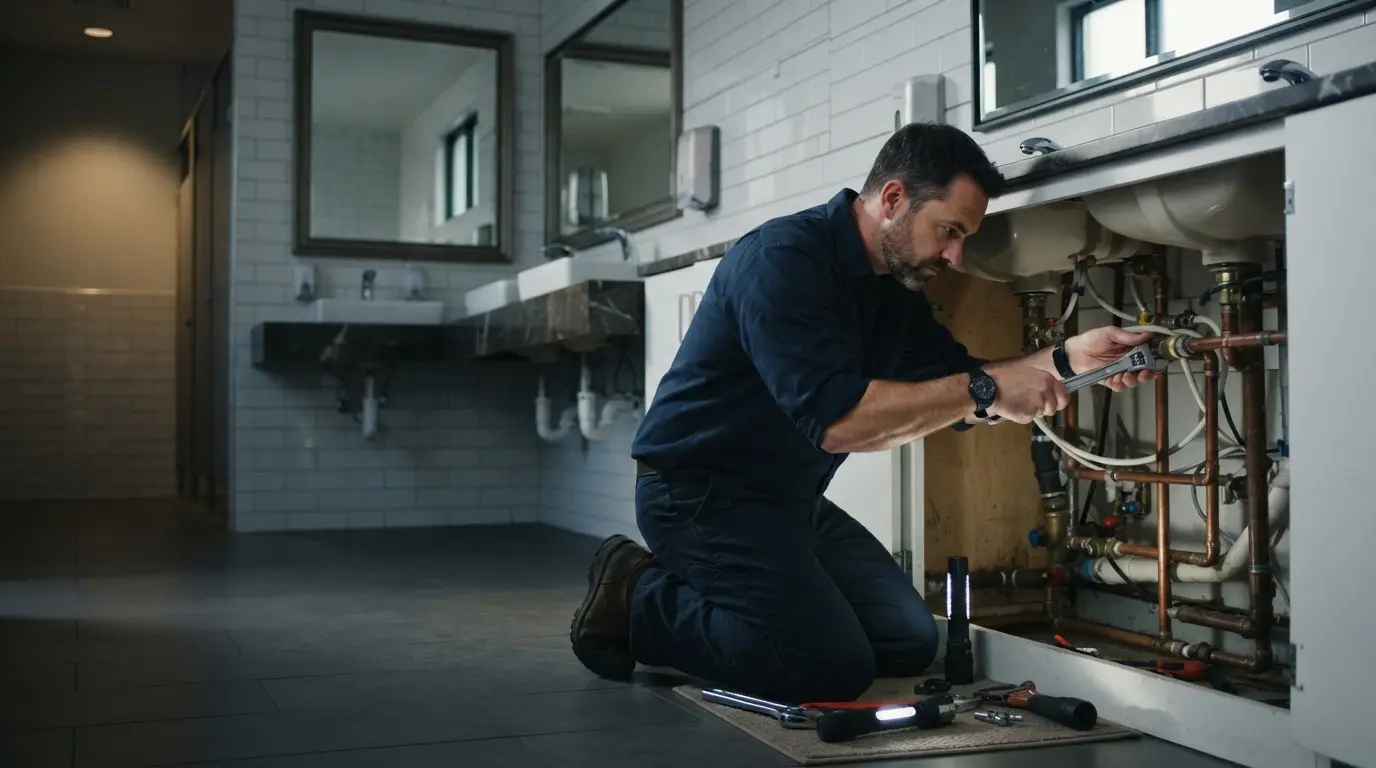
What we handle: Restroom groups, flush valves, water heaters, backflow
What we handle: Old cast iron and galvanized, shared drains with upstairs units
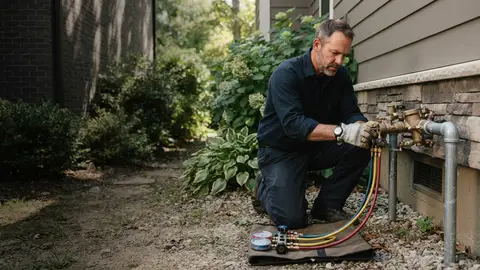
What we handle: RPZ devices, mixing valves, specialty sinks
Why District of Columbia
Busy dining corridors put heavy grease loads on kitchen lines and interceptors. Neglected interceptors back up into kitchens and can draw attention from inspectors.
42% of DC homes are in buildings with 20 or more units. Their stacks, risers, booster pumps and central heaters need regular care.
With the median home built in 1958, many storefronts and small offices sit in old rowhouses whose drains and supply lines were never meant for commercial use.
16% of DC homes were built since 2010, mostly in large mixed-use buildings now past their warranty periods and needing service.
Warning signs
Our process
We jet kitchen lines, repair and replace grease traps and interceptors, fix floor sinks and indirect waste lines and connect gas cooking equipment. Service is booked outside opening hours and records are kept for inspectors.
We repair flush valves and fixtures, replace water heaters, find leaks and test backflow devices, planning disruptive work before opening or after close.
We clear and repair stacks, replace riser and unit valves, service booster pumps and central water heaters, and coordinate notices and access with management.
Typical cost
We give a written price before work starts, and a written scope for larger jobs.
Get a written price: (833) 733-2357Older systems and more fixtures mean more work.
Work outside business hours avoids closures.
Grease, backflow and accessibility requirements add scope.
Mechanical rooms, shafts, parking and permits take planning.
Commercial heaters, interceptors and RPZ devices cost more.
Benefits
Scheduled jetting and testing prevent mid-service failures.
Grease and backflow paperwork stays in order.
Leaks and running fixtures add up across many units.
Planned riser and stack work prevents surprise outages.
Many DC storefronts share a building drain and water service with apartments above. A restaurant below can push grease into a stack that also serves residents. We trace how the systems connect, recommend separating or protecting them where practical and plan work so both the business and the tenants keep service.
When a space becomes a restaurant, salon or clinic, plumbing must change with it. We rough in restroom groups, floor sinks, grease interceptors, mop sinks and water heaters from approved plans, coordinate with the general contractor and pass inspections. Changes of use can bring fixture count, accessibility, grease and backflow requirements, which are settled during plan review.
Downtown and corridor jobs mean limited parking, loading zone rules, building access windows and sometimes public space permits for work in sidewalks or alleys. We plan around these so equipment and crews arrive when the building can receive them.
Restaurants need hot water for dish machines and hand sinks at the same time, and apartment buildings with central systems must keep up with the morning rush on every floor. We size commercial tank heaters, boilers with storage and racks of tankless units to the real peak, install thermostatic mixing valves where water must be tempered, and service recirculation pumps so residents on upper floors are not waiting for hot water. In tight basement mechanical rooms, we plan replacements so old equipment comes out and new equipment fits without major demolition.
Mid-rise and high-rise buildings rely on booster pumps to deliver water to upper floors. When a booster fails or its controls drift, upper units lose pressure. We service boosters, pressure tanks and controls, test pressure floor by floor to find restrictions in old risers, and coordinate the backflow protection DC Water expects on boosted services.
In condominiums, the association usually owns risers, stacks and mains, and owners handle fixtures inside units. When a leak crosses that line, we trace it and document whether it came from a common pipe or a unit fixture, with photos for the board and insurers. We follow association rules on work hours, notices and insurance certificates.
In older parts of the city, heavy rain can surge the combined sewer and push water up floor drains in ground-floor restaurants and shops. We install backwater valves on building drains where this happens, check sump and ejector pumps and their alarms, and label shutoffs so staff can act quickly. After a storm, we inspect, clear lines and restore service.
In historic districts, we route new pipe through existing chases and basements and open as little as possible, working with your contractor on any design review.
Make sure staff know where the main shutoff, riser valves and gas shutoffs are. For a backup, stop using affected fixtures and post signs. For a gas odor, evacuate and call the gas company from outside.
Arrange building access, have mechanical room keys ready and tell us the name of the person who can approve work.
Commercial plumbing in DC requires permits and inspections from the DC Department of Buildings, with public space permits for work in sidewalks or alleys, while DC Water sets backflow requirements. Our plumbers hold the licenses the District requires, our backflow testers are certified, and we handle permits and inspections.
Why choose us
What you can count on every time one of our plumbers comes to your door.
Every job is handled by a plumber who holds the license your state or city requires, backed by liability insurance.
Our plumber explains the problem and the options, and you approve a written price before any work begins.
Burst pipes, sewage backups and failed water heaters get priority scheduling, including nights and weekends.
We pull permits when the job needs one and schedule the inspection, so the work holds up when you sell.
Repairs and installations come with a written warranty on labor, on top of the manufacturer's warranty on parts.
Our pages and plumbers account for your area's water, soil, climate and the age of the homes around you.
Service area
We serve businesses and buildings throughout Washington, DC, a city of 361,014 homes and many commercial properties.
By scope, equipment, access, code and utility rules and scheduling. You get a written price first, and a written scope for larger projects.
Yes, but it often costs less than closing during business hours. We discuss both options.
Size, how full it is, access and frequency. Regular scheduled pumping costs less than emergency cleanouts.
Yes. We plan around access windows, loading rules and notice requirements.
Yes. We keep grease, backflow and repair records and send copies when asked.
Yes. We follow approval limits, coordinate access and document repairs.
Evacuate, avoid switches and equipment and call the gas company from outside.
Yes. Stop using affected fixtures, protect food areas and call us; the area must be cleaned before reopening.
Often a day; larger systems take longer, and we plan to limit downtime.
Most flush valve and fixture repairs are finished on the first visit.
It depends on size and kitchen volume; busy kitchens often need frequent service.
Older cast iron stacks benefit from a camera check every few years.
Call us. It is urgent and gets priority scheduling.
Generally yes, with sizing and maintenance set by local rules.
Most do. DC Water requires testable devices to be checked by a certified tester on schedule.