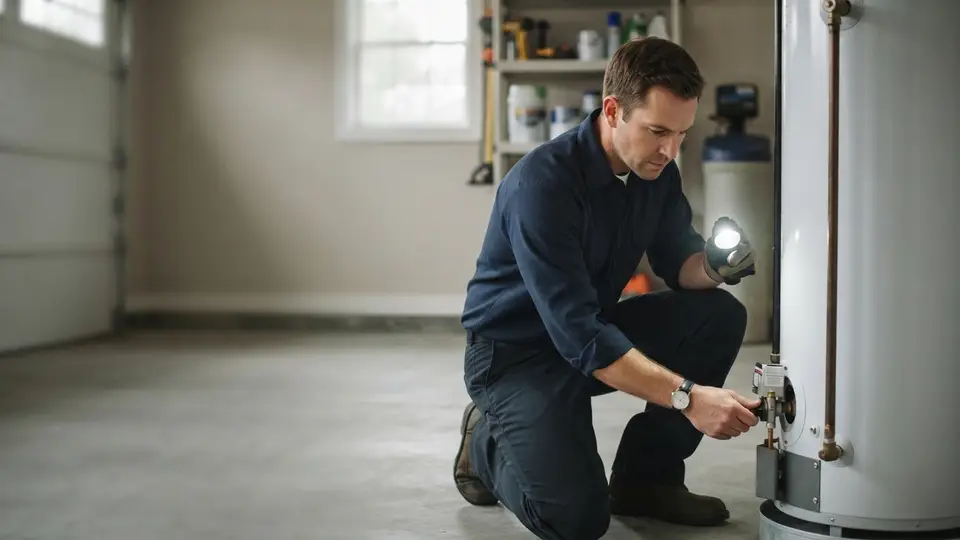
Gas tank
Where we see it: Rowhouse basements
Points to know: Needs a sound chimney liner or power vent
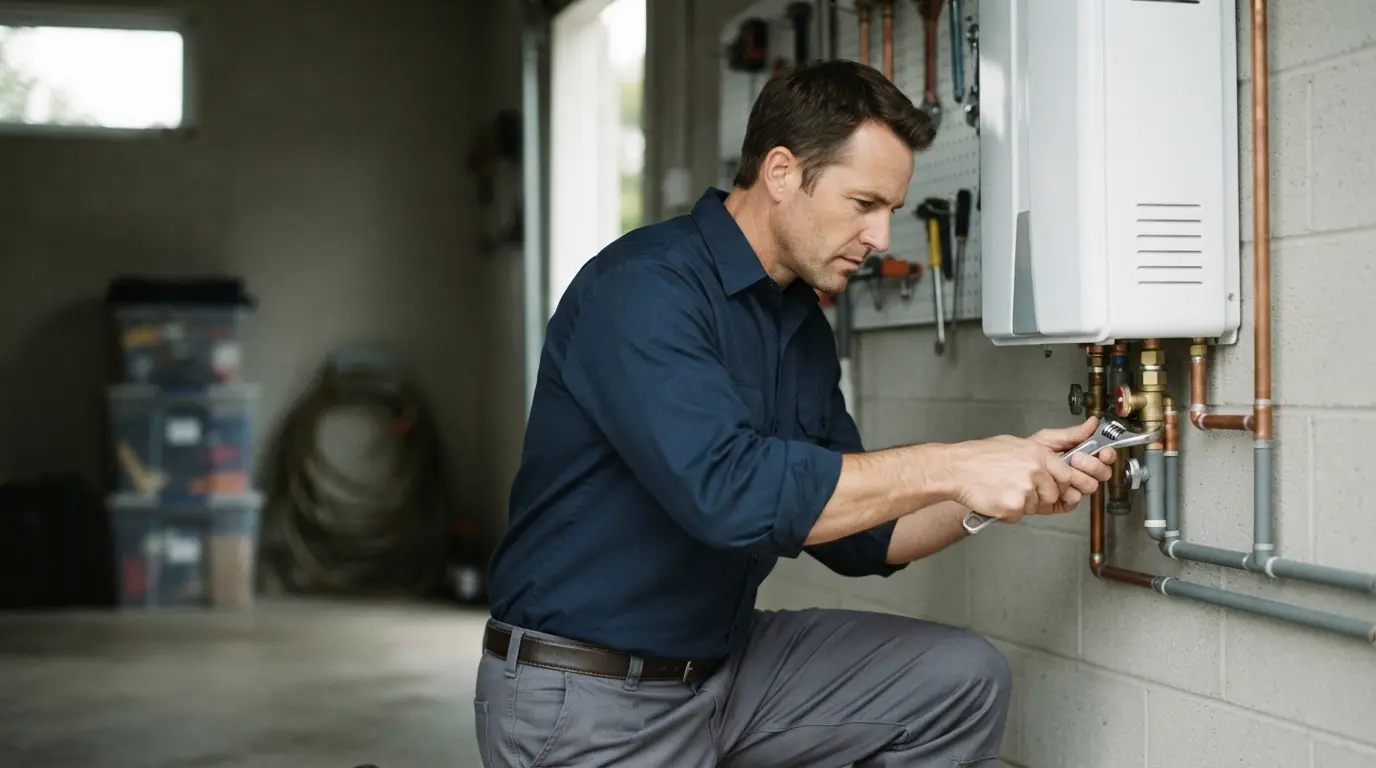
Hot water running out early, or a tank leaking in a cramped closet? We handle water heater repair and replacement in District of Columbia homes and condos. DC water heaters live in tight places: under rowhouse basement stairs, in hall closets of condos, in shared mechanical rooms of small buildings. Gas and electric are close to evenly split here. Getting a new heater in and the old one out, venting it safely and fitting it where the old one stood are often the hardest parts of the job. Here is how we handle repairs, replacements and tankless upgrades.
The service
In our Census data, 48% of DC homes heat with utility gas and 47% with electricity. Rowhouses and older homes more often have gas tank heaters in the basement, while many condo and apartment units have electric heaters in a closet. Larger buildings may have central systems serving many units.
Common setups
Where we see it: Rowhouse basements
Points to know: Needs a sound chimney liner or power vent
Where we see it: Condo and apartment closets
Points to know: Elements and thermostats are common repairs
Where we see it: Rowhouses short on space
Points to know: Needs gas capacity and wall venting
Where we see it: Basements with room for airflow
Points to know: Lower energy use; needs a condensate drain
Where we see it: Larger buildings
Points to know: Commercial heaters, recirculation, mixing valves
Why District of Columbia
With the median home built in 1958, many gas heaters vent into old masonry chimneys. When the furnace is replaced with a sealed high-efficiency unit, the chimney may no longer draft properly for the water heater, a safety issue we check every time.
Electric heaters crammed into condo closets run hot and are hard to drain and maintain, so sediment builds up and elements fail.
42% of DC homes are in buildings with 20 or more units. Shared or central systems work hard at morning peaks.
Without a working expansion tank, pressure spikes strain tanks and make relief valves drip.
Warning signs
Our process
We test thermocouples, gas valves, igniters, elements, thermostats and relief valves, check the anode rod and draft, and flush sediment.
We size the replacement to the household and the space, carry the old unit out and the new one in through narrow stairs and doors, and install it with correct venting, a relief valve line, a drain pan and an expansion tank where needed.
Tankless units free up space in tight basements. We check gas line and meter capacity, plan wall venting that meets clearance rules on narrow lots and install isolation valves for descaling.
Typical cost
You get a written price before work starts.
Get a written price: (833) 733-2357A part costs far less than a new heater.
Tankless and heat pump units cost more upfront.
Narrow stairs, tight closets and upper floors add labor.
Chimney liners or power venting may be needed.
Pans, expansion tanks and relief lines may be required.
Replacement usually requires one.
Benefits
Exhaust goes outside, not into the basement.
Pans and sensors keep leaks from reaching the unit below.
Tankless units free up room in small basements.
Correct sizing for your household.
22% of DC homes are rowhouses, and most keep the water heater in a basement reached by steep, narrow stairs. We plan the route for removing the old tank and bringing in the new one, protect stairs and floors, and choose a heater that fits the space. If the chimney is not safe for venting, we install a power-vent or tankless unit that vents through the wall.
In condos, a failed heater can flood the unit below. We install drain pans with lines to a safe location where possible, add leak sensors or automatic shutoffs, and follow building rules on work hours and access. Some associations require specific heater types or permits, which we check before ordering.
Apartment and condo buildings with central water heating rely on commercial heaters or boilers with storage tanks, recirculation pumps and mixing valves. When residents on upper floors wait a long time for hot water, a failed recirculation pump or mixing valve is often the cause. We service and replace these components and size new equipment to the building peak, working with management on scheduling and notices.
In electric homes with a basement or utility room that has enough air around it, a heat pump water heater can cut water heating costs significantly. It needs a condensate drain and a suitable circuit. We assess the space before recommending one; it is rarely a fit for a small condo closet.
When a pressure-reducing valve or backflow device closes the system, heated water has nowhere to expand and the relief valve drips. An expansion tank absorbs that extra volume. We check for one on every replacement and install it when the system needs it, which also protects fixtures and supply lines.
Renters occupy 58% of DC homes. We work with landlords on planned replacements between tenants and on fast repairs when a heater fails mid-lease.
If the tank is leaking, close the cold supply valve and switch off the breaker or turn the gas control to off. If you smell gas, leave and call the gas company from outside. In a condo, alert the unit below.
Do not cap the relief valve and do not drain a hot tank. If a carbon monoxide alarm sounds, get everyone outside and call 911. Then call us.
Water heater replacement usually requires a permit from the DC Department of Buildings, and inspectors check venting, gas connections and relief lines. Our plumbers hold the licenses the District requires, and we pull the permit and schedule the inspection.
Why choose us
What you can count on every time one of our plumbers comes to your door.
Every job is handled by a plumber who holds the license your state or city requires, backed by liability insurance.
Our plumber explains the problem and the options, and you approve a written price before any work begins.
Burst pipes, sewage backups and failed water heaters get priority scheduling, including nights and weekends.
We pull permits when the job needs one and schedule the inspection, so the work holds up when you sell.
Repairs and installations come with a written warranty on labor, on top of the manufacturer's warranty on parts.
Our pages and plumbers account for your area's water, soil, climate and the age of the homes around you.
Service area
We repair and replace water heaters throughout Washington, DC, across 361,014 homes.
Most repairs replace one part, such as a thermocouple, gas valve or element, so the part and access set the price. You get a written price before we start.
Narrow stairs, tight closets, venting changes and permit requirements add labor. We list each item in the written price.
Often, when space is tight. It may need a bigger gas line and wall venting, which we check first.
We count bathrooms and people and check the space, then choose a tank or tankless unit that fits both.
Yes, including carrying it up narrow basement stairs. Removal is in the written price.
Sometimes, if the chimney is sound and lined. If not, we install a power-vent or tankless unit that vents through the wall.
Leave, avoid switches and call the gas company from outside. We repair it once it is safe.
Get everyone outside and call 911. Once cleared, we check the heater and venting.
A standard swap takes a few hours. Tankless or venting changes can take most of a day.
Most repairs are done on the first visit, and we give you a timeline for replacements.
Once a year for most homes. Closet heaters benefit from regular attention because they are easy to forget.
Many tanks last about eight to twelve years, depending on use and maintenance.
Close the cold supply, cut power or gas, alert your neighbor and call us. This gets priority.
Some do, including approved types, pans or work hours. We check before ordering a heater.
They are close to evenly split; rowhouses tend toward gas and condos toward electric.