Lead service line
Typical era: Older homes
What we see: Health concern; replaced with copper
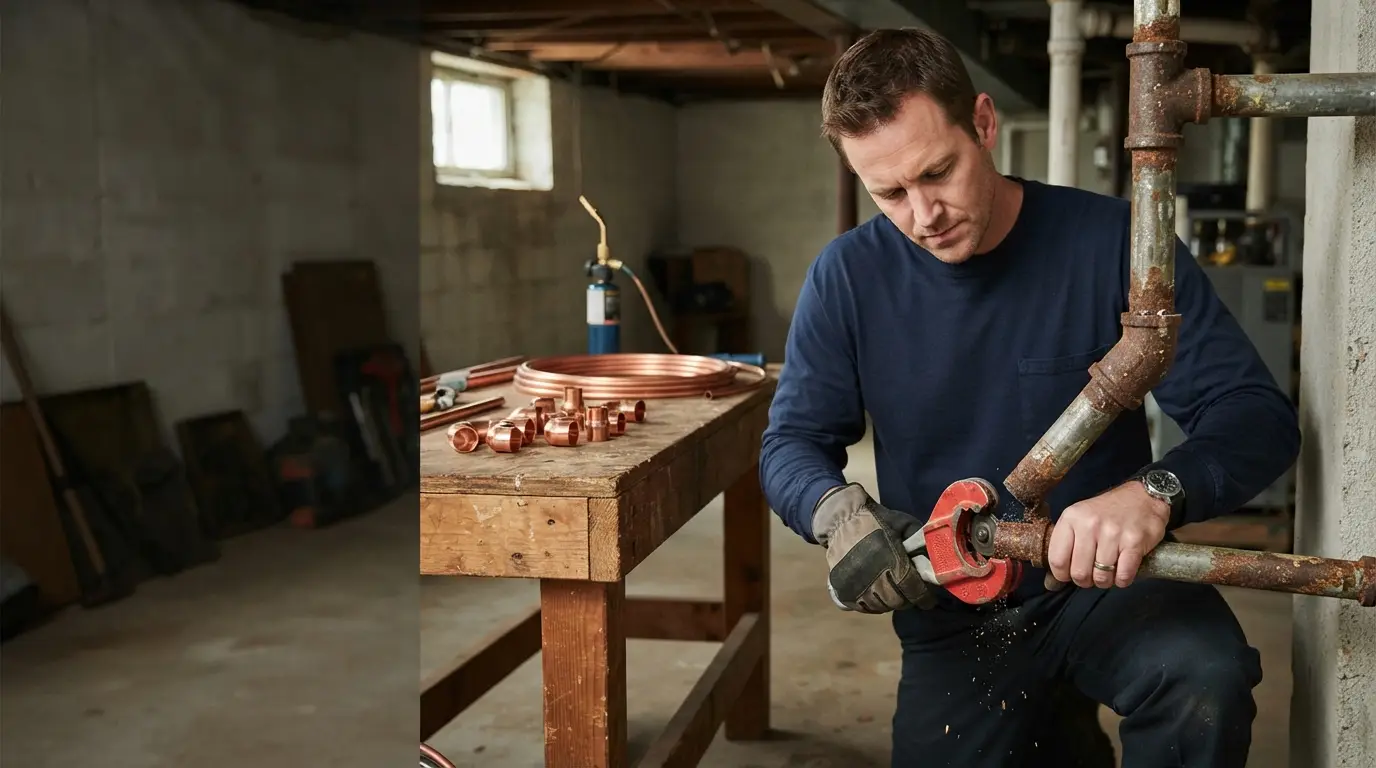
Weak pressure upstairs, or worried about an old lead service line? We handle repiping and water line replacement in District of Columbia homes. With so much of the city built before 1940, many DC rowhouses and flats still run on galvanized steel, early copper and, in some homes, lead service lines. We replace interior supply pipe through basements and existing chases with care for plaster and trim, and replace the private side of the service line from the property line to the house, coordinating with DC Water on the public side.
The service
Pipe repair replaces a damaged section. Whole-house repiping replaces every hot and cold supply line from the main shutoff to each fixture. Water line replacement covers the buried service line; in DC the public side belongs to DC Water and the private side, from the property line to the house, to the owner.
Pipe in DC homes
Typical era: Older homes
What we see: Health concern; replaced with copper
Typical era: Early to mid 1900s
What we see: Rust, low pressure, brown water
Typical era: Mid 1900s onward
What we see: Pinholes and joint leaks with age
Typical era: What we install
What we see: Durable, routed through chases and basements
Why District of Columbia
31% of DC homes were built before 1940 and the median dates from 1958. Galvanized supply pipe from those decades rusts shut inside.
Some older homes still have lead service lines or lead connectors. DC Water has worked to identify and replace them; the owner is responsible for the private side.
A century of repairs leaves galvanized, copper, brass and plastic joined together, with dissimilar metals corroding faster.
In three- and four-story rowhouses, narrowed old pipe leaves top-floor showers weak.
Warning signs
Our process
We check the pipe, the service line material, basement access and existing chases.
You approve routes, material, schedule and a written price.
We cover floors and woodwork and plan any plaster openings carefully.
The old system keeps working until we switch over.
Each fixture gets a new shutoff; the system is tested, flushed and inspected.
Openings are patched as agreed in the price.
Typical cost
You get a written price before work starts.
Get a written price: (833) 733-2357More floors and bathrooms mean more pipe and labor.
Plaster takes more care than drywall.
Length and work in public space add cost.
Separate shutoffs or lines per unit add work.
PEX often costs less than copper.
Repiping and service line work usually need one.
Benefits
Full-size pipe brings back flow upstairs.
No more rust from galvanized.
Replacing the private side removes that source.
Each fixture and unit can be isolated.
If your home has a lead service line, replacing the private side removes a source of lead. We expose the line, replace it with copper from the property line to the house, install a new main shutoff and pressure test the connection. DC Water has run programs to replace the public side and has offered assistance with the private side in some cases; check with the utility for current programs, and we coordinate timing so both sides are done together. After replacement, flushing the lines and following DC Water guidance on testing is a sensible step.
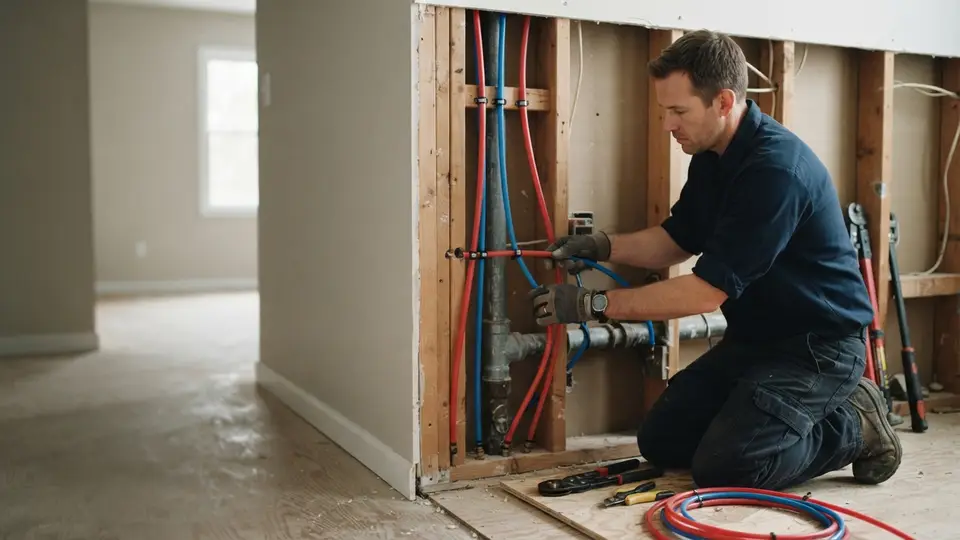
22% of DC homes are attached rowhouses, often narrow and tall, with plaster walls and original trim. We run new mains along the basement ceiling and use old pipe chases, closets and the back of cabinets for risers. Flexible PEX lets us fish lines through existing cavities, keeping openings few and easy to patch.
10% of DC homes are in buildings with two to four units, many converted rowhouses. Repiping them is a good time to give each unit its own shutoff and, where the owner wants, separate lines. We can phase the work unit by unit so occupied units keep water.
Kitchen and bath renovations, basement conversions and rear additions open walls and ceilings that hide old pipe. That is the least expensive time to replace it. We coordinate with your contractor, run new lines before drywall or plaster goes back, set valves for the new layout and can repipe the rest of the house in the same project, so the new rooms are not fed by century-old galvanized pipe.
In condo buildings, owners are usually responsible for pipe inside their unit and the association for risers. Repiping a unit means coordinating riser shutdowns, following building rules on work hours and protecting common areas. We handle the association paperwork and keep the shutdown as short as possible.
Not every house needs a full repipe. If most of the system was replaced in a past renovation and one run of galvanized remains, we replace that run and tell you so plainly.
Buyers and inspectors in DC often ask about galvanized pipe and lead service lines. A permitted repipe with documentation answers those questions; if you are buying, we can identify the pipe and price the work so you can plan.
If old pipe leaks, close the main shutoff in the basement where the service enters. Old valves can break if forced; if it will not turn, call us and DC Water.
Note which fixtures have low pressure or rusty water. If you think you have a lead line, check DC Water records for your address before our visit.
Repiping and service line replacement usually require a permit from the DC Department of Buildings, and work in public space needs a public space permit. Our plumbers hold the licenses the District requires, and we handle permits, inspections and coordination with DC Water.
Why choose us
What you can count on every time one of our plumbers comes to your door.
Every job is handled by a plumber who holds the license your state or city requires, backed by liability insurance.
Our plumber explains the problem and the options, and you approve a written price before any work begins.
Burst pipes, sewage backups and failed water heaters get priority scheduling, including nights and weekends.
We pull permits when the job needs one and schedule the inspection, so the work holds up when you sell.
Repairs and installations come with a written warranty on labor, on top of the manufacturer's warranty on parts.
Our pages and plumbers account for your area's water, soil, climate and the age of the homes around you.
Service area
We repipe homes throughout Washington, DC, across 361,014 homes from Capitol Hill to Upper Northwest.
Building height, fixture count, wall construction, the service line and permits set the price. After a survey, we give you a written price.
It depends on length, depth and public space work on the private side. Check DC Water for current assistance programs; we price our part in writing.
Usually, and it is easier to fish through old walls, so fewer openings are needed.
Yes, in most cases. Water is off only for short connection periods.
We route through basements, chases and closets wherever possible and plan openings so they are easy to patch.
Yes. A repipe is a good time to add separate shutoffs or lines for each unit.
Lead can enter drinking water from lead pipes. Replacing the line removes that source; DC Water can advise on testing.
Check DC Water records for your address, or look where the line enters: lead is dull gray and scratches shiny. We can confirm it.
Many rowhouses take three to five days, longer for multi-unit buildings, plus inspection.
Often one or two days, plus permits and coordination with DC Water.
Copper and PEX installed correctly are expected to last for decades.
Yes. Flushing clears sediment, and DC Water provides guidance after lead line replacement.
Shut off the main and call us. We fix the break, and the repipe proceeds as planned.
Old galvanized pipe narrows with rust inside, and the top floor feels it most.
Usually, yes. We pull it from the DC Department of Buildings and schedule the inspection.