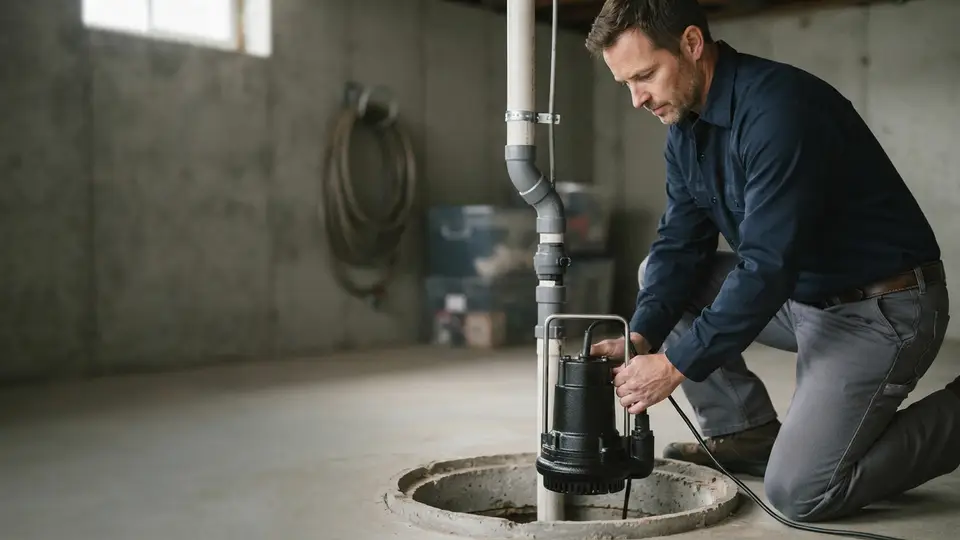
Sump pump
What it does: Removes groundwater from the pit
What we check: Float, motor, check valve, discharge
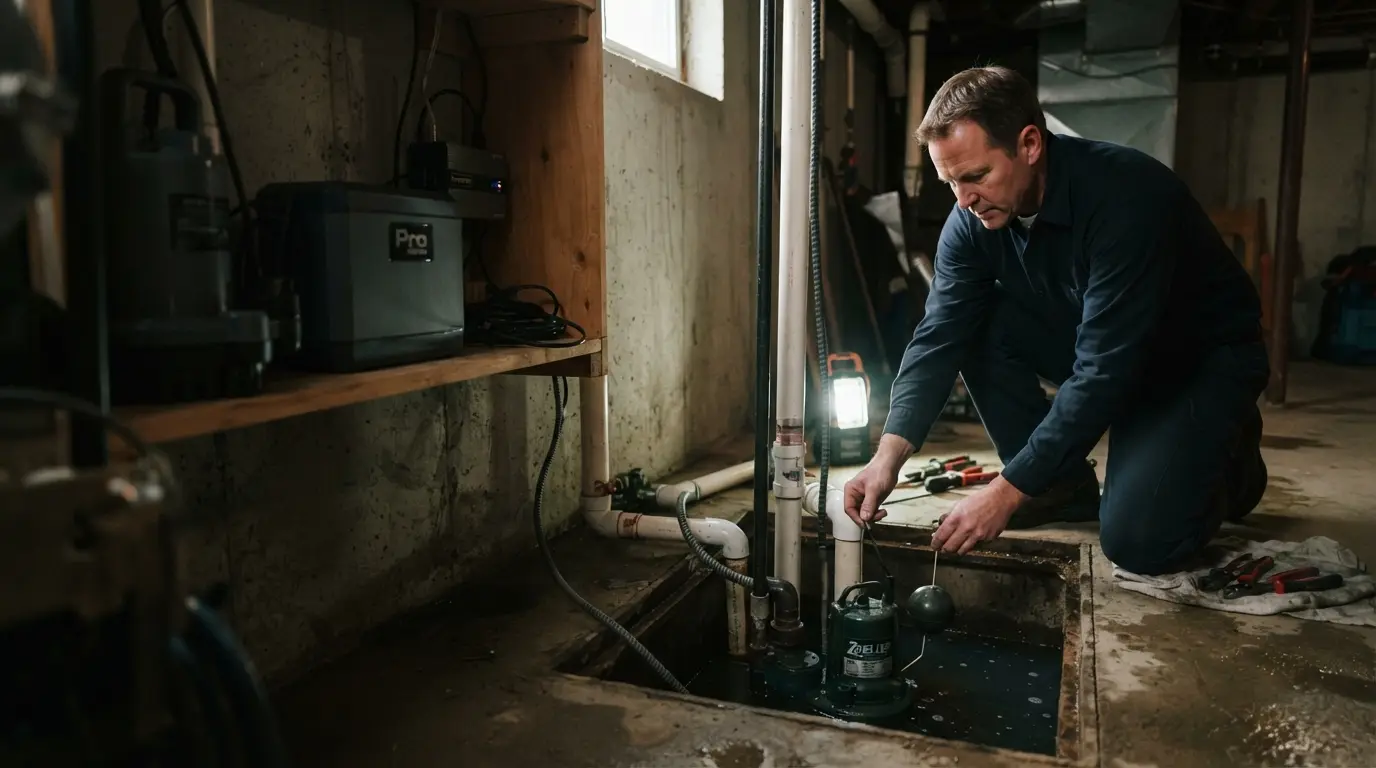
Water creeping across the basement floor after a storm? We do sump pump repair and installation in District of Columbia rowhouses and buildings. Basements are everywhere in DC, and many are now finished as English basement apartments, and groundwater, heavy summer storms and combined sewer surges all push water toward them. A sump pump removes groundwater; an ejector pump lifts sewage from fixtures below the sewer; a backwater valve keeps the sewer from pushing back. We repair, replace and install all three, with battery backups for outages.
The service
A sump pump sits in a pit at the low point of the basement. Groundwater reaches the pit through drain pipe along the foundation or under the floor; when it rises, a float switch starts the pump, which sends the water outside. A check valve keeps it from flowing back. Many DC basements that were lowered or finished in recent decades have interior drain systems feeding a sump.
Basement pump systems we service
What it does: Removes groundwater from the pit
What we check: Float, motor, check valve, discharge
What it does: Lifts wastewater from basement fixtures to the sewer
What we check: Sealed basin, pump, vent, alarm
What it does: Keeps pumping during outages
What we check: Battery, charger, alarm
What it does: Blocks sewer surges from entering the basement
What we check: Flap, seals, access
Why District of Columbia
The median DC home was built in 1958. Brick and stone rowhouse foundations were not built to keep out groundwater, and water finds every joint after heavy rain.
Many basements have been dug down to create living space. Lowering the floor puts it closer to groundwater, so these projects usually include an interior drain and sump.
Intense summer thunderstorms drop a lot of rain quickly on small yards and paved alleys, sending water toward foundations.
In older neighborhoods with combined sewers, heavy rain can push sewage back up basement drains. That is a backflow problem, solved with a backwater valve, not a sump.
Warning signs
Our process
We test the float, motor and impeller, clean the pit, replace failed check valves and inspect the discharge. Burned-out pumps are replaced with units sized to the inflow.
For a new system, we cut a pit at the low point, connect an interior drain along the foundation where needed, install the pump and check valve and route the discharge outside to an approved spot. In tight rowhouse basements, we plan the pit and discharge around stairs, mechanicals and party walls.
Storms that flood basements often cut power. A battery backup takes over when the main pump stops and sounds an alarm. We install it with a charger and show you how to test it.
Typical cost
You get a written price before work begins.
Get a written price: (833) 733-2357A float or check valve costs less than a pump.
Cutting the floor and adding drain pipe adds labor.
Ejector systems cost more than sump pumps.
Each adds equipment.
Getting water outside a rowhouse can take creative routing.
New systems usually need one.
Benefits
Tenants and rental income stay protected.
Floors, walls and furniture stay dry.
Furnaces and water heaters stay out of water.
Less moisture means less mold.
22% of DC homes are rowhouses, and many have an English basement rented as a separate unit. Water or sewage in that unit affects a tenant's home and the owner's rental. A working sump with a backup, a maintained ejector pump and a backwater valve together protect it. We service all three on one visit and give owners a simple maintenance schedule.
Basement bathrooms and kitchens below the sewer line drain into a sealed basin, and an ejector pump lifts the wastewater to the main. Wipes and grease are the usual cause of failure. We clear and repair or replace ejector pumps, check valves and alarms, and make sure the basin is sealed and vented so odors stay out.
In older neighborhoods served by combined sewers, heavy rain can push sewage back up basement floor drains and fixtures. A backwater valve on the building drain lets wastewater leave and closes when the flow reverses. We install them, usually with a cleanout nearby so the valve can be inspected and cleaned. DC Water has offered assistance programs for backwater valves in flood-prone areas at times; check with the utility for current programs.
Narrow rowhouses leave few options for a sump discharge. We route it to the rear yard or another approved spot far enough from the foundation, with a check valve and a slope that drains between cycles so it does not freeze in winter.
An open sump pit lets moisture and soil gas into a basement apartment. A sealed, gasketed cover keeps them out while the pump runs normally, and works alongside a radon mitigation system if your home has one.
A simple high-water alarm in the pit warns you before water reaches the floor, giving you time to act if the pump fails, whether you are at home or away.
Check that the pump is plugged in and the breaker or GFCI has not tripped. If sewage is coming up a floor drain, stop using water in the whole house.
Do not walk through standing water near cords or equipment. Shut off power to the basement from a dry spot if you can, move belongings and call us.
Replacing a pump in an existing pit usually needs no permit. New sump systems, ejector systems and backwater valves generally do, from the DC Department of Buildings, and groundwater may not be discharged into the sanitary sewer. Our plumbers hold the licenses the District requires, and we handle permits.
Why choose us
What you can count on every time one of our plumbers comes to your door.
Every job is handled by a plumber who holds the license your state or city requires, backed by liability insurance.
Our plumber explains the problem and the options, and you approve a written price before any work begins.
Burst pipes, sewage backups and failed water heaters get priority scheduling, including nights and weekends.
We pull permits when the job needs one and schedule the inspection, so the work holds up when you sell.
Repairs and installations come with a written warranty on labor, on top of the manufacturer's warranty on parts.
Our pages and plumbers account for your area's water, soil, climate and the age of the homes around you.
Service area
We repair and install basement pumps throughout Washington, DC, across 361,014 homes.
Many repairs, such as a float or check valve, are modest. A burned-out pump means replacement. You get a written price before we start.
It depends on cutting the pit, any interior drain, pump size and the discharge route. We price it after seeing the basement.
Yes for most basements, especially with a rental unit. Storms that bring water often cut power too.
A sump handles groundwater; a backwater valve stops sewer surges. Many DC basements benefit from both.
We measure how fast the pit fills and how far the water must go, then choose a pump with margin.
Outside to an approved spot away from the foundation, not into the sanitary sewer.
Not if electrical equipment or cords may be in the water. Shut off power from a dry spot and wait for us.
Yes. Keep people out of the area, stop using water and let us clear the line.
Usually one to two hours in an existing pit; new systems take a day or more.
Right away. Water above the rim reaches finished floors quickly.
Before storm season and a few times a year. Fill the sump pit and watch it cycle; test ejector alarms too.
Often seven to ten years, less if they run often.
Check pump power, keep away from water near electrical equipment and call us. Flooding gets priority scheduling.
Old foundations let groundwater in after heavy rain, and combined sewers can push sewage back up basement drains.
Usually, yes. A lower floor sits closer to groundwater, so an interior drain and sump are standard parts of the project.