Frozen pipes and water services
Frost can reach several feet down in a hard winter and freeze service lines as well as pipes in walls. We thaw, repair and protect them.
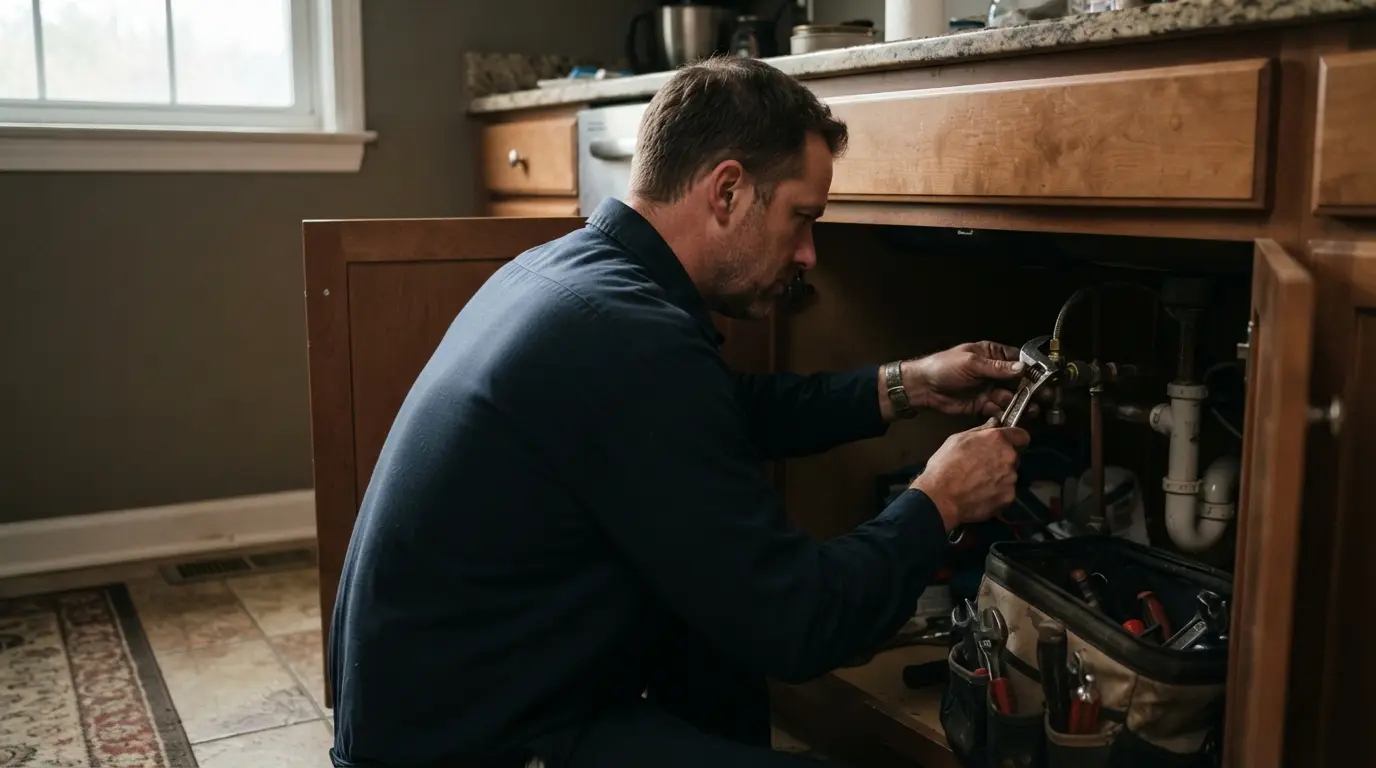
Frozen water line at twenty below, or hard water scaling every fixture? Our plumbers in Minnesota find the cause and fix it. We work across Minneapolis, St. Paul and the Twin Cities suburbs, Rochester and southern Minnesota, St. Cloud and central lakes country, Duluth and the Iron Range, and the Red River Valley. Minnesota plumbing is shaped by some of the deepest frost in the lower 48, hard groundwater, many homes on septic and wells, and a mix of century-old city housing and brand-new suburbs. Here is what we fix and where.
Plumbing in Minnesota
Our Census data covers 4,803,718 Minnesotans in 2,064,946 homes across 915 cities and places. 53% of those homes were built before 1980, but that share swings widely: 92% in Chisholm, 86% in Crystal and 78% in St. Paul, against 14% in Woodbury. 23% of Minnesota homes date from 2000 or later, and the median home in Dayton was built in 2011.
Natural gas heats 73% of homes and electricity 20%. Propane fills in where mains stop, heating 29% of homes in Ely and 21% in Hermantown. Renters occupy 31% of homes, and buildings with five or more units hold 24%, rising to 57% in Hopkins.
Counts from the U.S. Census Bureau 2024 Gazetteer.
Explore our servicesWhat our plumbers see
Frost can reach several feet down in a hard winter and freeze service lines as well as pipes in walls. We thaw, repair and protect them.
Groundwater across most of the state is hard, and many wells carry iron and manganese. We install softeners and filters.
Lake homes and rural properties rely on septic systems under state SSTS rules. We service and repair them.
Clay and cast iron laterals under Minneapolis and St. Paul boulevards fill with roots. We camera and repair them.
Snowmelt and high groundwater push water into basements each spring. We install sump pumps and backups.
Cold incoming water and hard water wear heaters out. We repair and replace them.
Our services
Each service page explains how our plumbers handle that work in Minnesota homes and businesses.
Sewer Line Repair & Replacement

Repiping & Water Line Replacement
Gas Line Repair & Installation
Water Heater Repair & Replacement

Toilet, Faucet & Fixture Repair
Sump Pump Repair & Installation
Across the state
Homes and main places: Minneapolis (209,080 homes), St. Paul (133,051 homes)
What our plumbers see: Older houses, duplexes, lead and galvanized lines
Homes and main places: Bloomington (39,261 homes), Woodbury, Lakeville, Blaine
What our plumbers see: Postwar ramblers and new subdivisions
Homes and main places: Rochester (54,492 homes), Mankato, Austin, Winona
What our plumbers see: Hard water, farm-town housing, wells
Homes and main places: St. Cloud (29,762 homes), Brainerd, Crosslake
What our plumbers see: Cabins, septic, seasonal homes
Homes and main places: Duluth (39,978 homes), Hibbing, Virginia, Ely
What our plumbers see: Extreme cold, steep lots, old housing
Homes and main places: Moorhead (19,184 homes), Bemidji, Fergus Falls
What our plumbers see: Flat land, spring floods, clay soil
Minnesota licenses plumbers and plumbing contractors through the Department of Labor and Industry (DLI), and the Minnesota Plumbing Code applies statewide. Our Minnesota work is done by plumbers holding the licenses each job requires.
Plumbing permits come from your city where it administers the code, or from DLI where it does not. Water heater replacement, repiping, sewer and water service work and gas piping generally need a permit. We pull it and schedule the inspection.
Minneapolis and St. Paul draw drinking water from the Mississippi River, while most other Minnesota cities pump groundwater from wells, which is often hard and may carry iron and manganese. Duluth draws from Lake Superior. Minneapolis, St. Paul and other cities are working to replace lead service lines; ask your utility whether your address has one. Private well owners should test their water regularly.
About a quarter of Minnesota homes use septic systems, called subsurface sewage treatment systems (SSTS), governed by state rules and administered by counties and some cities. Many counties require a compliance inspection when property is sold or when a bedroom is added. Shoreland properties face extra requirements. We coordinate with your county on repairs we perform.
Minnesota winters drive frost deep, especially in the north, and in a cold winter with little snow cover, frost can reach water services that were laid decades ago. In Duluth, where 78% of homes predate 1980, and across the Iron Range, frozen service lines are a winter routine; cities sometimes ask residents on vulnerable lines to run a pencil-thin stream of water. Our plumbers thaw frozen services, repair split pipe and relay lines deeper when that is the lasting fix.
Minneapolis and St. Paul neighborhoods are full of houses and duplexes from the early 1900s, with 52% of Minneapolis homes rented. Their plumbing often mixes galvanized supply, cast iron stacks, clay laterals under the boulevard and lead service lines. We repipe in stages, replace sewer laterals and private-side service lines, and coordinate with city programs replacing lead lines.
Richfield (median year 1959), Crystal and Bloomington filled with ramblers and split-levels after World War II. Those homes are now 60 to 75 years old, with original galvanized lines, aging water heaters and clay sewers under mature trees. We see low pressure, rusty water and rooted laterals there every week, and we fix them in an order that fits your budget.
Woodbury (median year 1997), Lakeville (1999) and Blaine (1996) grew fast in the 1990s and 2000s. Their PEX and PVC plumbing is newer, but hard water, finished basements, sump pumps and water heaters approaching the end of their life keep us busy. We install softeners, replace heaters and add battery backups to sump systems.
In Crosslake, 59% of homes are not lived in year-round in our data, and 40% in Breezy Point. Cabins across lakes country need opening in spring and careful winterizing in fall, and their septic systems sit close to the water. We blow out lines, add antifreeze to traps, open and test systems in spring and service shoreland septic systems.
Hibbing (79% of homes built before 1980), Virginia (83%) and Chisholm have older housing built during the mining boom, and they face some of the coldest winters in the country. We thaw and replace frozen lines, repair old drains and service water heaters and propane systems in homes beyond the gas mains.
Renters occupy 57% of homes in Bemidji, 50% in Mankato and 51% in St. Cloud. Student houses and apartments see heavy fixture use and frequent clogs. We work with landlords on repairs and schedule larger work during summer when buildings are quieter.
Service area
Our largest Minnesota service areas by population:
Every Minnesota place in our data, grouped by county:
Aitkin County
Anoka County
Becker County
Beltrami County
Benton County
Big Stone County
Blue Earth County
Brown County
Carlton County
Carver County
Cass County
Chippewa County
Chisago County
Clay County
Clearwater County
Cook County
Cottonwood County
Crow Wing County
Dakota County
Dodge County
Douglas County
Faribault County
Fillmore County
Freeborn County
Goodhue County
Grant County
Hennepin County
Houston County
Hubbard County
Isanti County
Itasca County
Jackson County
Kanabec County
Kandiyohi County
Kittson County
Koochiching County
Lac qui Parle County
Lake County
Lake of the Woods County
Le Sueur County
Lincoln County
Lyon County
Mahnomen County
Marshall County
Martin County
McLeod County
Meeker County
Mille Lacs County
Morrison County
Mower County
Murray County
Nicollet County
Nobles County
Norman County
Olmsted County
Otter Tail County
Pennington County
Pine County
Pipestone County
Polk County
Pope County
Ramsey County
Red Lake County
Redwood County
Renville County
Rice County
Rock County
Roseau County
Scott County
Sherburne County
Sibley County
St. Louis County
Stearns County
Steele County
Stevens County
Swift County
Todd County
Traverse County
Wabasha County
Wadena County
Waseca County
Washington County
Watonwan County
Wilkin County
Winona County
Wright County
Yellow Medicine County
How it works
What is wrong, how old the house is and what to shut off right now.
Frozen or burst pipes, sewage backups and no-water calls go ahead of routine work.
A camera, thaw test, pressure test or water test shows the cause.
We go over the options and start only after you approve.
We test the repair and schedule the city or state inspection when needed.
Have a plumbing problem in Minnesota?
Call Expert Plumber Now and tell us what is happening. We’ll send a licensed plumber.
Pricing
We price each job after we see it. These factors matter most:
Water and sewer lines buried deep take more digging, and frozen ground slows winter excavation.
Galvanized, cast iron and clay often need replacing.
Hard water and iron add treatment equipment.
SSTS repairs need county permits and design.
Finished basements and tight lots.
Evening and weekend calls cost more.
You get a written price before work begins.
Season by season
Keep heat steady, open cabinets on outside walls and run a trickle if your city warns of frozen services.
Test the sump pump before snowmelt and open cabins carefully, checking for split lines.
Schedule septic pumping and outdoor projects while the ground is open.
Shut off outdoor faucets, flush the water heater and winterize cabins before the first hard freeze.
Why choose us
What you can count on every time one of our plumbers comes to your door.
Every job is handled by a plumber who holds the license your state or city requires, backed by liability insurance.
Our plumber explains the problem and the options, and you approve a written price before any work begins.
Burst pipes, sewage backups and failed water heaters get priority scheduling, including nights and weekends.
We pull permits when the job needs one and schedule the inspection, so the work holds up when you sell.
Repairs and installations come with a written warranty on labor, on top of the manufacturer's warranty on parts.
Our pages and plumbers account for your area's water, soil, climate and the age of the homes around you.
Our plumber looks at the problem, pipe material, access and permits, then gives you a written price. Nothing starts until you approve it.
It can. Digging through frost in winter takes more equipment and time. We explain any added cost before we begin.
We ask what is happening, tell you what to shut off and schedule our plumber, with frozen pipes, backups and no-water calls first. We keep you updated on timing.
Yes. We pull permits from your city or from the Department of Labor and Industry where it administers the code, and schedule the inspection.
Leave without using switches or phones and call your gas utility or 911 from outside. We repair the piping once it is safe.
A like-for-like swap usually takes a few hours. Changes in size, fuel or venting take longer, and an inspection may follow.
Keep heat on, seal drafts where the line enters, and if your city warns of deep frost, run a small steady stream of water.
Stay away from water near outlets, stop using water if the sewer is backing up and call us. Flooding gets priority.
Yes. Our Minnesota plumbers hold licenses issued by the Minnesota Department of Labor and Industry.
In many Minnesota counties, yes. A compliance inspection is often required at sale. Your county can confirm the local rule.