Lead service line
Where we find it: Older city homes
Why replace it: Health risk; cities replacing them
Lead service line, or galvanized pipe that gives brown water? We handle repiping and water line replacement in Minnesota. Our plumbers replace worn supply piping inside the home and the water service from the curb stop to the meter. Minneapolis, St. Paul, Duluth and many smaller cities still have lead and galvanized service lines, and the state has been funding their replacement. Postwar suburbs are full of galvanized pipe closing up with rust. We plan the work so you keep water as much as possible.
The service
30% of Minnesota homes in our data were built before 1960, 78% of St. Paul homes before 1980, and in Chisholm 92%. Those homes were typically plumbed with galvanized steel inside and lead, galvanized or copper service lines outside. Galvanized pipe rusts inward until pressure fades and water discolors, and lead lines are being removed across the state.
Pipe we replace in Minnesota
Where we find it: Older city homes
Why replace it: Health risk; cities replacing them
Where we find it: Homes before about 1960
Why replace it: Rust, low pressure, leaks
Where we find it: Homes from the 1960s on
Why replace it: Pinholes, often with hard water
Where we find it: Some 1980s and 1990s homes
Why replace it: Brittle fittings
Where we find it: What we install
Why replace it: Long life, freeze tolerance (PEX)
Why Minnesota
Pipe from the early and mid-1900s is past its expected service life.
Many older cities used lead service pipe into the mid-1900s.
Minerals coat pipe and contribute to corrosion at joints.
Past freezes leave weakened joints and hairline splits.
Warning signs
Our process
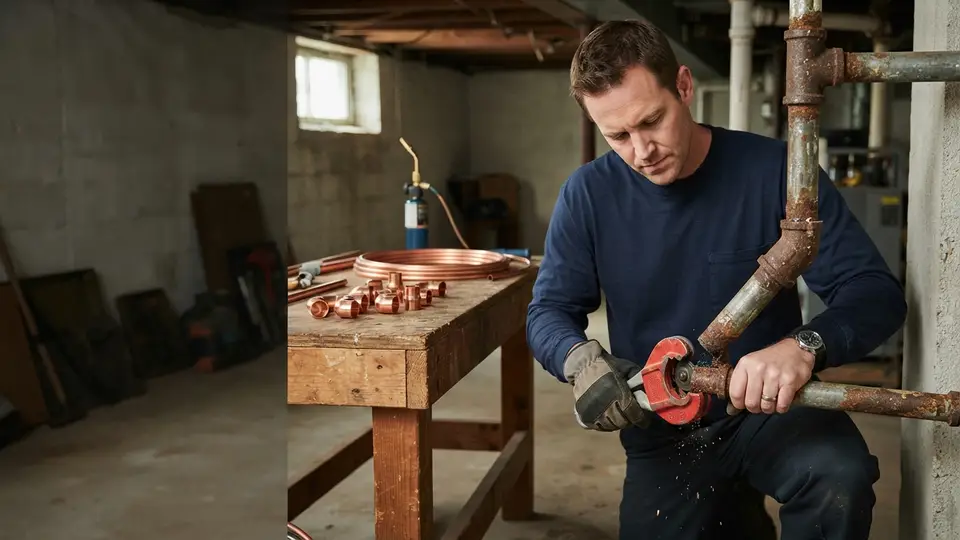
We cut out a failed section and replace it with copper or PEX using proper transition fittings.
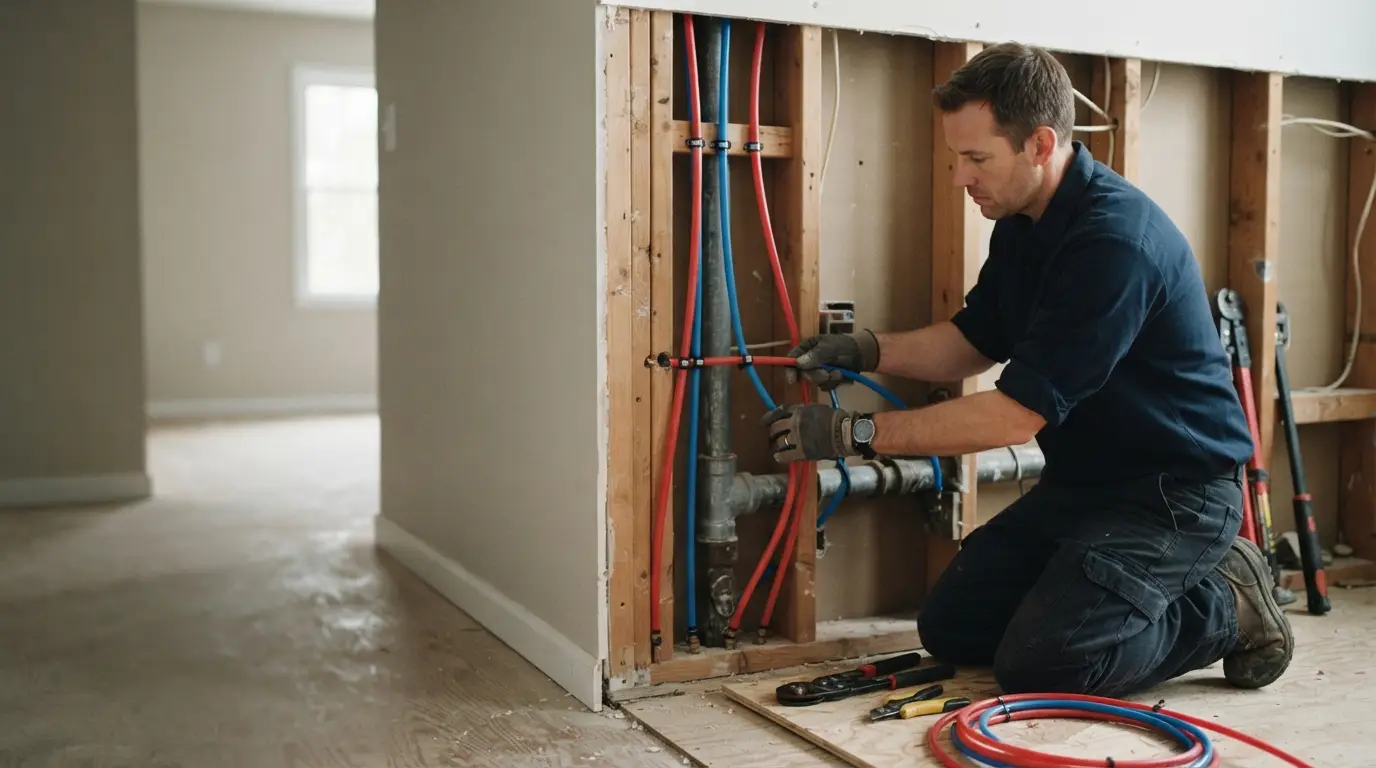
We run new mains through the basement and branches through walls and floors with small openings, then connect and test every fixture.
We locate leaks in the underground service and repair them with a targeted excavation.
We replace the service from the curb stop to the meter at the depth your city requires to stay below frost, by trench or trenchless methods.
Typical cost
Repiping prices are estimates only until we see the house. These factors matter:
You approve a written price before we begin.
Get a written price: (833) 733-2357More bathrooms and levels mean more pipe.
Unfinished basements speed the work.
Drywall and plaster to open and patch.
Deep frost-protected lines take more digging.
City lead programs may cover part of the cost.
Benefits
Fixtures run together without dropping.
No rust from galvanized pipe.
Safer drinking water.
Proper depth and insulation.
Minneapolis (209,080 homes), St. Paul (133,051 homes) and Duluth all have lead service line replacement programs, and Minnesota has committed state funding to replace lead lines statewide. City programs often cover much of the cost. We work alongside these programs on the private side and inside the home, pull permits and make sure the new service connects to clean interior piping. Ask your water utility whether your address is listed.
Richfield (median year 1959), Crystal (1959) and Brooklyn Center were built quickly after World War II with galvanized supply lines. Many still have them. Ramblers with open basements are straightforward to repipe: we run new mains in the basement and reach upstairs fixtures through walls and closets, usually in a few days.
Winona (median year 1955), Austin (1957), New Ulm and the Iron Range towns such as Hibbing and Two Harbors have many older homes with mixed plumbing: galvanized mains, copper additions and old service lines. We trace the system, find where old pipe remains and replace it in a logical order so each stage improves water pressure and quality.
Minnesota water services must be deep enough to avoid frost, which can be several feet in a hard winter and deeper in the north. In Duluth (39,978 homes), rock and steep lots complicate this. Older services sometimes sit too shallow and freeze in cold winters. When we replace a service, we bury it to local requirements and insulate where it enters the house, ending repeat freeze-ups.
Up-and-down duplexes in Minneapolis and St. Paul share one service and often one set of mains. Repiping them with tenants in place takes planning. We schedule shutoffs ahead, keep water on to one unit where possible and can add separate shutoffs and meters if the owner wants them.
Craftsman bungalows, foursquares and Victorian houses in St. Paul, south Minneapolis and Duluth often have plaster walls, original woodwork and built-in cabinets that owners want to protect. We plan pipe routes through closets, chases, laundry chutes and the basement so the fewest walls are opened. Where plaster must be cut, we make clean, square openings that a plasterer can patch, and we protect floors and trim while we work. PEX helps here, because it can be fished through existing cavities without long runs of rigid pipe.
Homes built from the 1960s onward usually have copper supply lines. Most last a long time, but some develop pinhole leaks, often tied to water chemistry, high velocity or poor original workmanship. When pinholes keep appearing in different places, repairing them one at a time becomes expensive and risky. We look at the pattern, check your water and tell you honestly whether spot repairs or a repipe is the better choice.
If a pipe is leaking, close the main valve at the meter. If you suspect lead, flush the tap and use a certified filter or bottled water for drinking, cooking and formula.
Clear space near the meter and mains and note which fixtures are weak or discolored. Then call us.
Repiping and service replacement need a plumbing permit from your city or the state, and street work needs city approval. We file them and schedule inspections. Our plumbers hold Minnesota plumbing licenses.
Why choose us
What you can count on every time one of our plumbers comes to your door.
Every job is handled by a plumber who holds the license your state or city requires, backed by liability insurance.
Our plumber explains the problem and the options, and you approve a written price before any work begins.
Burst pipes, sewage backups and failed water heaters get priority scheduling, including nights and weekends.
We pull permits when the job needs one and schedule the inspection, so the work holds up when you sell.
Repairs and installations come with a written warranty on labor, on top of the manufacturer's warranty on parts.
Our pages and plumbers account for your area's water, soil, climate and the age of the homes around you.
Service area
We repipe homes and replace service lines in 915 Minnesota communities, including Hibbing (8,373 homes), Brooklyn Center (11,572 homes) and Two Harbors (1,785 homes). Find yours:
It depends on house size, fixtures, access and pipe material. You get a written price after we see the home.
Both work. PEX costs less, bends through walls and tolerates freezing better; copper is rigid and long-proven.
Minneapolis, St. Paul, Duluth and others have programs that cover much of the cost. Ask your utility; we handle any work inside.
We route pipe through the basement, closets and chases and make small openings where needed.
Yes. We schedule shutoffs ahead and keep one unit in water where possible.
Yes. We replace the private side and coordinate with the city on the public side.
Yes, especially for children and during pregnancy. Use a certified filter or bottled water until it is replaced.
Rust is mostly a nuisance, but old galvanized can hold lead from past connections. Replacing it removes the risk.
Many homes take two to five days. Finished spaces and larger homes take longer.
Mostly yes, with short scheduled shutoffs while we connect new lines.
It must be buried below frost and insulated where it enters. We do both when we install it.
If your water is very hard, a softener protects new pipe, fixtures and appliances.
Close the main and call us. We fix the break and fold it into the plan.
Lead is dull gray and soft, and a magnet will not stick. Your utility may also have records.
Yes. We pull the plumbing permit and schedule the inspection.