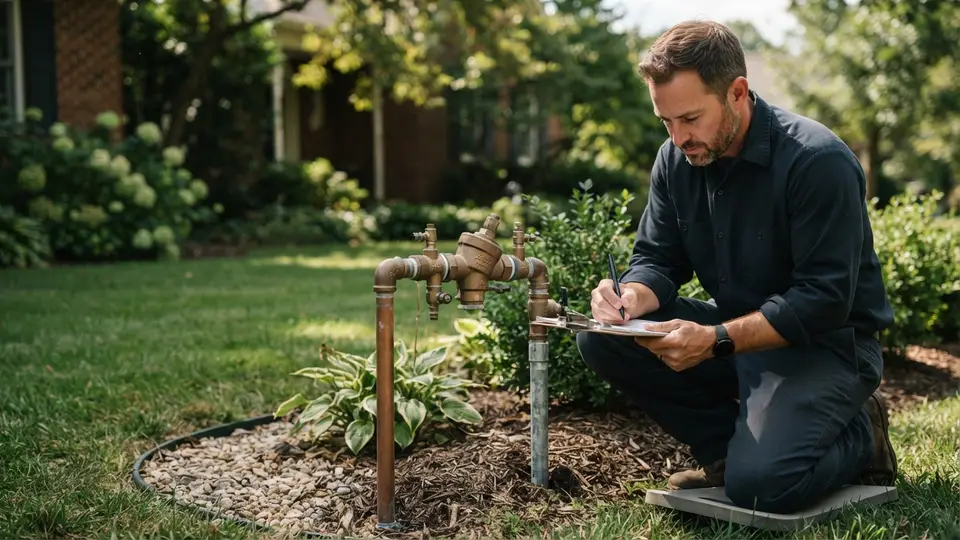
Reduced pressure zone (RPZ)
Common use: Boilers, commercial and medical equipment
Hazard level: High
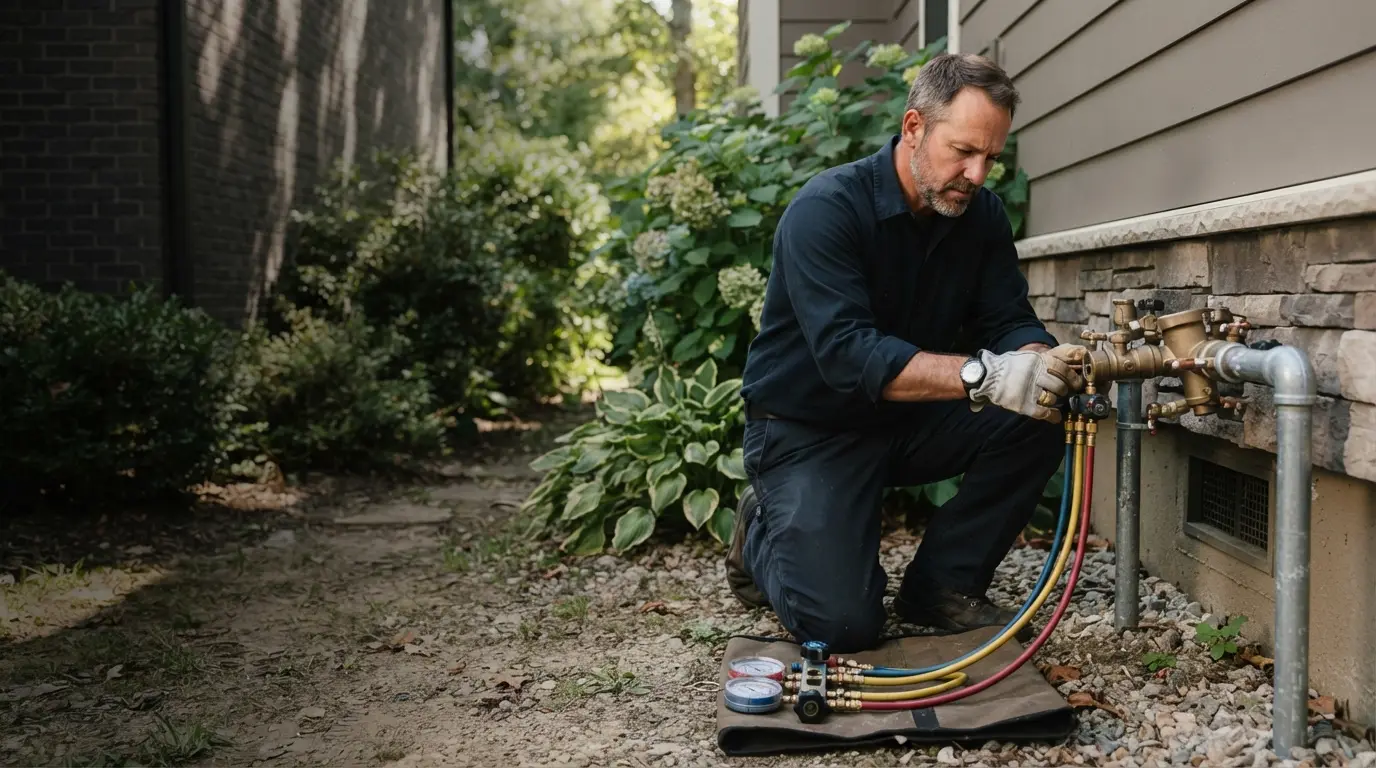
Annual RPZ test due, or a sprinkler backflow device cracked by frost? We handle backflow testing and prevention in Minnesota. Our certified testers inspect, install and repair backflow preventers on lawn irrigation, boilers, fire sprinklers and commercial equipment. Minnesota's plumbing code requires testable devices to be checked at least once a year, and in this climate, outdoor devices must also be drained before winter. We test on schedule, file results and repair failures quickly.
The service
Backflow is water flowing the wrong way, from a building back into the public water supply. It can happen when pressure in the street drops during a main break or firefighting, or when equipment pushes water backward. A backflow preventer stops lawn chemicals, boiler water, fire sprinkler water or process fluids from reaching drinking water. Minnesota requires certain devices to be tested by a certified tester, and water suppliers track them.
Backflow devices we work on
Common use: Boilers, commercial and medical equipment
Hazard level: High
Common use: Fire sprinklers, some services
Hazard level: Low to moderate
Common use: Lawn irrigation
Hazard level: Irrigation
Common use: Outdoor faucets
Hazard level: Basic, not testable
Why Minnesota
The Minnesota Plumbing Code requires testable backflow devices to be tested annually by certified testers.
Suburban lawn sprinklers are widespread and can carry fertilizer and soil water.
Hydronic heating, common in Minnesota, uses treated water that must stay separate.
Devices left full of water over winter crack and fail.
Warning signs
Our process
We test each device with calibrated gauges, record readings for every check and relief valve and submit results to your city or water supplier.
We select the right device for the hazard, install it where it can be tested, drained and kept from freezing, and get it approved.
We rebuild failed devices with new checks, springs and seals, or replace damaged bodies, then retest and file the passing report.
Typical cost
Prices are estimates only until we see the device. These factors matter:
You approve a written price before we start.
Get a written price: (833) 733-2357Several in one visit lower the cost of each.
Large RPZs take longer.
Rebuild kits or replacement bodies.
New devices, piping and enclosures.
Fall drain-down and spring startup.
Benefits
For you and your neighbors.
Reports filed on time.
Seasonal devices handled properly.
Every device and due date tracked.
Irrigation systems are common in Maple Grove (median year 1991), Eden Prairie, Plymouth and Woodbury. Each needs a backflow device, usually a PVB outside. In Minnesota, that device must be drained or removed before the first hard freeze and reinstalled and tested in spring. A PVB left full will crack. We combine fall blowout, spring startup and testing in one schedule so nothing gets missed.
Boilers heat many Minnesota homes and most older apartment buildings in Minneapolis (209,080 homes), St. Paul and Duluth. The boiler fill line connects drinking water to a closed loop that may contain antifreeze or chemical treatment. A backflow preventer on that line protects the supply. When we service a boiler fill or feed valve, we check the protection and upgrade it if needed.
Rochester (54,492 homes) has a large concentration of medical facilities, and Eagan, Eden Prairie and the core cities have offices, labs and restaurants with many cross-connections: boilers, chemical feeders, ice machines, dental and lab equipment. We keep a list of every device, test on time and repair failures so the building stays in compliance.
Buildings with five or more units hold 57% of homes in Hopkins and 45% in St. Louis Park. These buildings have fire sprinkler connections, boilers and sometimes booster pumps that need protection. We test devices for managers and associations, give residents notice of brief shutoffs and keep reports for inspectors.
Minnesota winters will crack any backflow device left full of water outdoors or in an unheated space. Commercial RPZs installed outside need insulated, heated enclosures, and indoor devices near overhead doors can still freeze. A split RPZ can flood a mechanical room. We install devices where they stay warm, add heat and insulation where needed and replace devices damaged by frost.
Most failures come from debris lodged in a check valve or worn rubber parts, not from contaminated water. Main flushing and construction stir up grit that lands in devices. We carry rebuild kits for common models and often repair and retest on the same visit. If a device is obsolete or cracked, we price a replacement first.
Fire sprinkler systems in schools, warehouses, offices and apartment buildings in Woodbury (29,990 homes), Eagan and the core cities connect to the public main through a double check or RPZ assembly. Testing these larger devices briefly takes the sprinkler system out of service, so it has to be coordinated with the owner, the fire protection contractor and sometimes the fire department or alarm monitoring company. We schedule the test, give notice to everyone who needs it and restore the system promptly.
Find your test notice and note the device location and serial number. Clear access to the device and its shutoff valves.
If an RPZ is discharging heavily, close the valves on each side if you can do it safely. Then call us.
Installing a backflow device generally needs a plumbing permit, and testing must be done by a certified tester. We handle permits and filing. Our plumbers hold Minnesota plumbing licenses, and our testers hold backflow certification.
Why choose us
What you can count on every time one of our plumbers comes to your door.
Every job is handled by a plumber who holds the license your state or city requires, backed by liability insurance.
Our plumber explains the problem and the options, and you approve a written price before any work begins.
Burst pipes, sewage backups and failed water heaters get priority scheduling, including nights and weekends.
We pull permits when the job needs one and schedule the inspection, so the work holds up when you sell.
Repairs and installations come with a written warranty on labor, on top of the manufacturer's warranty on parts.
Our pages and plumbers account for your area's water, soil, climate and the age of the homes around you.
Service area
We test and repair backflow devices in 915 Minnesota communities, including St. Paul (133,051 homes), Duluth (39,978 homes) and St. Cloud (29,762 homes). Find yours:
It depends on how many devices you have and their type. Testing several in one visit lowers the cost of each, and you get a written price first.
Rebuilding is usually cheaper when the body is sound. A device cracked by frost or too old for parts needs replacing.
Yes. We submit the results to your city or water supplier in the format it requires and give you a copy for your records.
We attach calibrated gauges to the test cocks, measure how each check and relief valve holds pressure and record every reading.
Yes. We install the correct device where it can be tested and drained, and we handle approval with your city.
Yes. We drain or remove them in fall and reinstall and test them at spring startup, so frost never reaches them full.
Yes. Without a working device, fertilizer, boiler chemicals or stagnant water can be drawn back into the supply.
Stop drinking it, call your water supplier and have us check your backflow devices for a failure.
Usually under an hour per device, with water off for a short time while we test.
At least once a year for testable devices under the state plumbing code. Some suppliers may set additional requirements.
Have it drained before the first hard freeze. A device left full of water will split in a Minnesota winter.
Yes. In Minnesota, outdoor RPZs need insulated and usually heated enclosures to survive the winter.
Close the shutoffs on both sides if you safely can and call us. It usually needs a repair or rebuild.
The state plumbing code sets the requirement, and cities and water suppliers track devices and send reminders.
Homes with lawn sprinklers, boilers or fire sprinklers often have testable devices. Your city will notify you if yours is tracked.