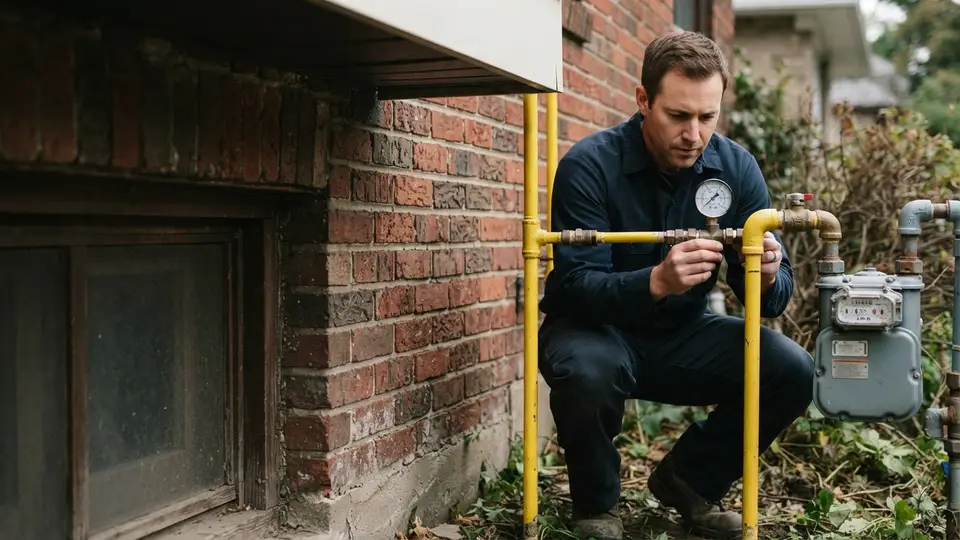
Leak repair
Includes: Find and fix leaking joints, valves, connectors
Final check: Pressure test
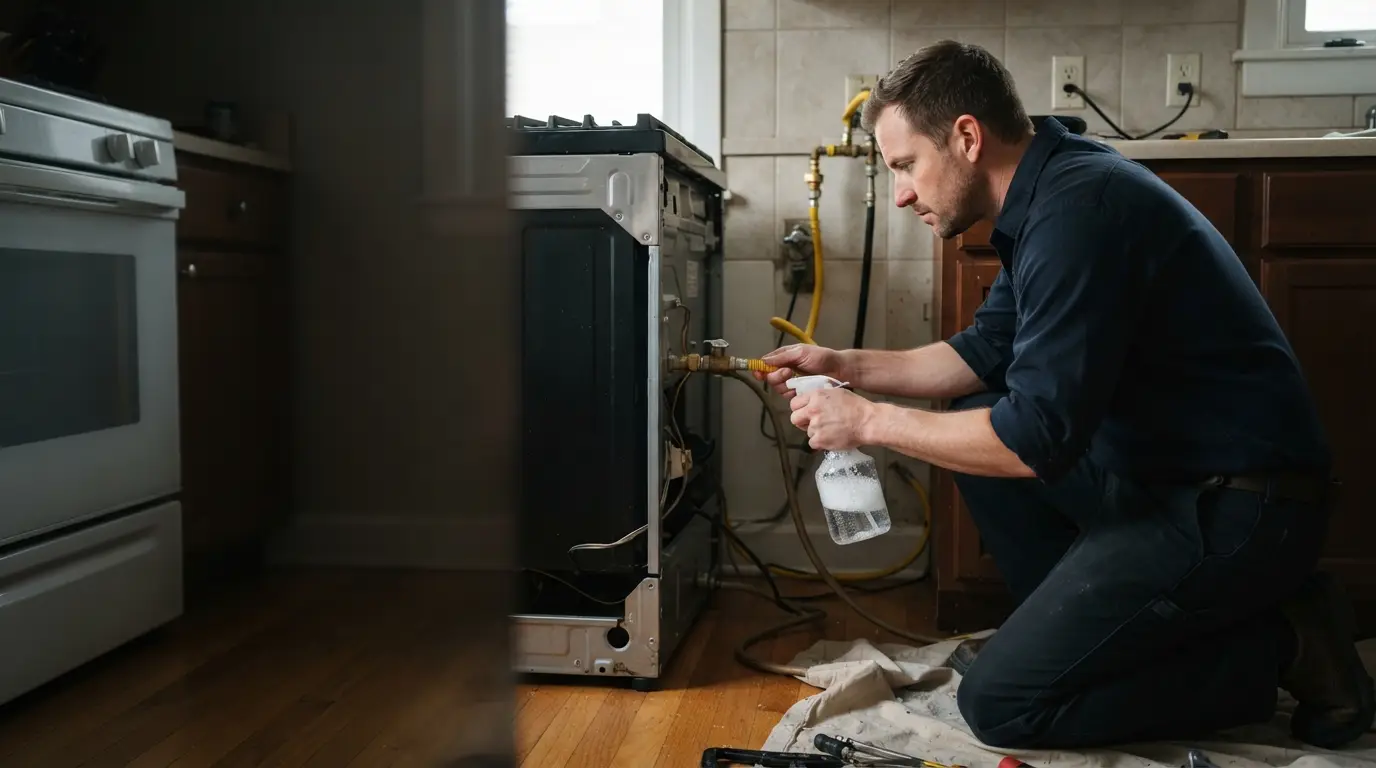
Gas smell near the furnace, or a new range or generator that needs a line? We handle gas line repair and installation in Minnesota. Gas heats nearly three in four Minnesota homes, and when the furnace stops in January, a family cannot wait. Our licensed technicians repair leaking piping, run new lines for ranges, dryers, fireplaces, garage heaters and generators, and connect appliances safely. Every job is pressure tested and inspected. We work on natural gas and propane systems alike.
The service
Natural gas heats 73% of Minnesota homes in our data, 89% in Andover and 87% in Savage. Outside the mains, propane takes over: it heats 49% of homes in Rice Lake, 39% in Nowthen and 31% in Coleraine. Gas piping runs from the meter or tank regulator to the furnace, water heater, range, dryer and often a garage heater, and in older homes it has usually been extended many times.
Gas work our technicians handle
Includes: Find and fix leaking joints, valves, connectors
Final check: Pressure test
Includes: Size and run pipe to a new appliance
Final check: Permit and inspection
Includes: Range, dryer, furnace, heater, fireplace
Final check: Leak and flame check
Includes: Line and connection for a unit heater
Final check: Inspection
Includes: Pipe sized for standby generator
Final check: Permit and inspection
Why Minnesota
Long winters mean furnaces run hard, and undersized lines show their limits in a cold snap.
Older uncoated flexible connectors can crack and should be replaced.
Garage heaters, generators and tankless heaters add load to old piping.
Ice and falling snow can damage meters, regulators and exposed pipe.
Warning signs
Our process
Once the utility has made the area safe, we find the leak with electronic detectors and leak solution, replace the failed part and pressure test the system.
We calculate total load, size and run black iron or approved flexible pipe, add shutoffs and arrange inspection before use.
We connect furnaces, water heaters, ranges, dryers, fireplaces and garage heaters with proper connectors and sediment traps, then test.
Typical cost
Prices are estimates only until we see the piping. These factors matter:
You approve a written price before we begin.
Get a written price: (833) 733-2357Longer lines mean more pipe and labor.
Generators and garage heaters may need larger pipe.
Finished ceilings and walls slow the work.
One fitting or several sections.
Mechanical permits and inspection.
Benefits
Tested and inspected piping.
Appliances get the gas they need in a cold snap.
Correct connections and pressure.
Useful at resale.
Heated garages are popular in Minnesota for good reason. A gas unit heater needs a properly sized line, a shutoff, a sediment trap and correct venting and clearances. Running a line through an attached garage also has to follow rules about protection from vehicles. We size and install the line, connect the heater and coordinate inspection, so you can start the car without scraping in January.
Winter storms and summer derechos can cut power for days, and a Minnesota house without heat in January is dangerous. Many owners in Edina (24,071 homes), Rochester and rural areas install standby generators. A generator can draw more gas than the furnace, so the line and sometimes the meter must be upsized. We calculate the load, run the line and work with your electrician and utility.
Propane heats 29% of homes in Ely and 21% in Hermantown in our data, and it is common at cabins and farms statewide. Propane runs at different pressures than natural gas and needs different orifices. We pipe from the second-stage regulator to each appliance, convert appliances between fuels and leak test the system. Your supplier owns and services the tank.
Older homes in Minneapolis (209,080 homes), St. Paul and Hibbing often have gas piping that has been extended many times, with abandoned stubs, missing shutoffs and dated connectors. We trace the system, cap dead lines properly, replace old connectors and add appliance shutoffs so one appliance can be serviced without shutting gas off to the whole house.
As gas mains extend into growing exurbs, many homeowners switch from propane. The utility installs the service and meter, but every appliance must be converted and the house piping may need resizing for lower natural gas pressure. We handle the house side of the switch, convert each appliance, test the system and coordinate with the utility and your propane supplier.
Snow sliding off roofs and ice building up on meters and regulators can damage them or block the regulator vent, which can affect pressure inside. Utilities ask customers to keep meters clear by hand, without chipping at ice with tools. If a meter or riser is damaged, call the utility; once they repair their side, we check and repair the house piping.
If you smell gas, leave and call the utility or 911 from outside. Do not look for the leak yourself.
For a planned job, clear the path to the meter and appliances and have model numbers ready. Then call us.
Gas piping in Minnesota requires a permit and inspection before gas is turned on. We pull the permit from your city or the state and schedule the inspection. Our technicians hold the Minnesota licenses required for gas work.
Why choose us
What you can count on every time one of our plumbers comes to your door.
Every job is handled by a plumber who holds the license your state or city requires, backed by liability insurance.
Our plumber explains the problem and the options, and you approve a written price before any work begins.
Burst pipes, sewage backups and failed water heaters get priority scheduling, including nights and weekends.
We pull permits when the job needs one and schedule the inspection, so the work holds up when you sell.
Repairs and installations come with a written warranty on labor, on top of the manufacturer's warranty on parts.
Our pages and plumbers account for your area's water, soil, climate and the age of the homes around you.
Service area
We repair and install gas lines in 915 Minnesota communities, including St. Paul (133,051 homes), Rochester (54,492 homes) and Hibbing (8,373 homes). Find yours:
It depends on run length, pipe size, access and the permit. We give you a written price that covers all of it before work begins.
They often need larger pipe and longer runs, and sometimes a meter upgrade from the utility to supply enough gas.
Yes. Gas work in Minnesota needs a permit and inspection, and we include both in the written price.
After the utility makes the area safe, we check joints and fittings with electronic detectors and leak solution until we pinpoint the source.
Yes. We install a shutoff and an approved connector, test for leaks and confirm the burners light and run correctly.
Yes. We size and run the line, connect the heater with proper clearances and venting and arrange the inspection.
Get everyone outside, call 911 or the utility and stay out until it is cleared. Then we check your appliances and venting.
Older uncoated brass connectors can crack with age. We replace them with current approved connectors during any appliance work.
A simple appliance line often takes a few hours. Generator and garage heater lines may take a day, plus the inspection.
Once it passes the pressure test and the inspector signs off. We schedule the inspection as soon as the work is ready.
Once a year, ideally in early fall before heating season, along with a check of the water heater and venting.
Yes, gently by hand or with a broom. Do not chip at ice, which can damage the regulator and piping.
Call the utility first so they can make the area safe. Once they do, we repair the piping as a priority.
Yes. We install conversion kits, adjust regulators and test each appliance when you switch fuels.
Gas piping must be done by properly licensed technicians with a permit. Our team meets both requirements on every job.