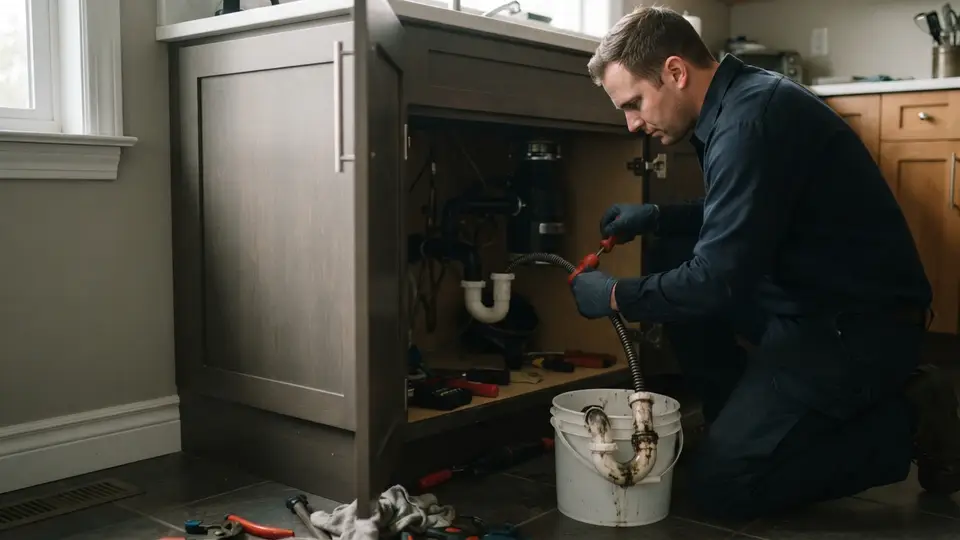
Hand auger
Where it is used: Sinks, showers and toilets
Purpose: Removes hair and small blockages
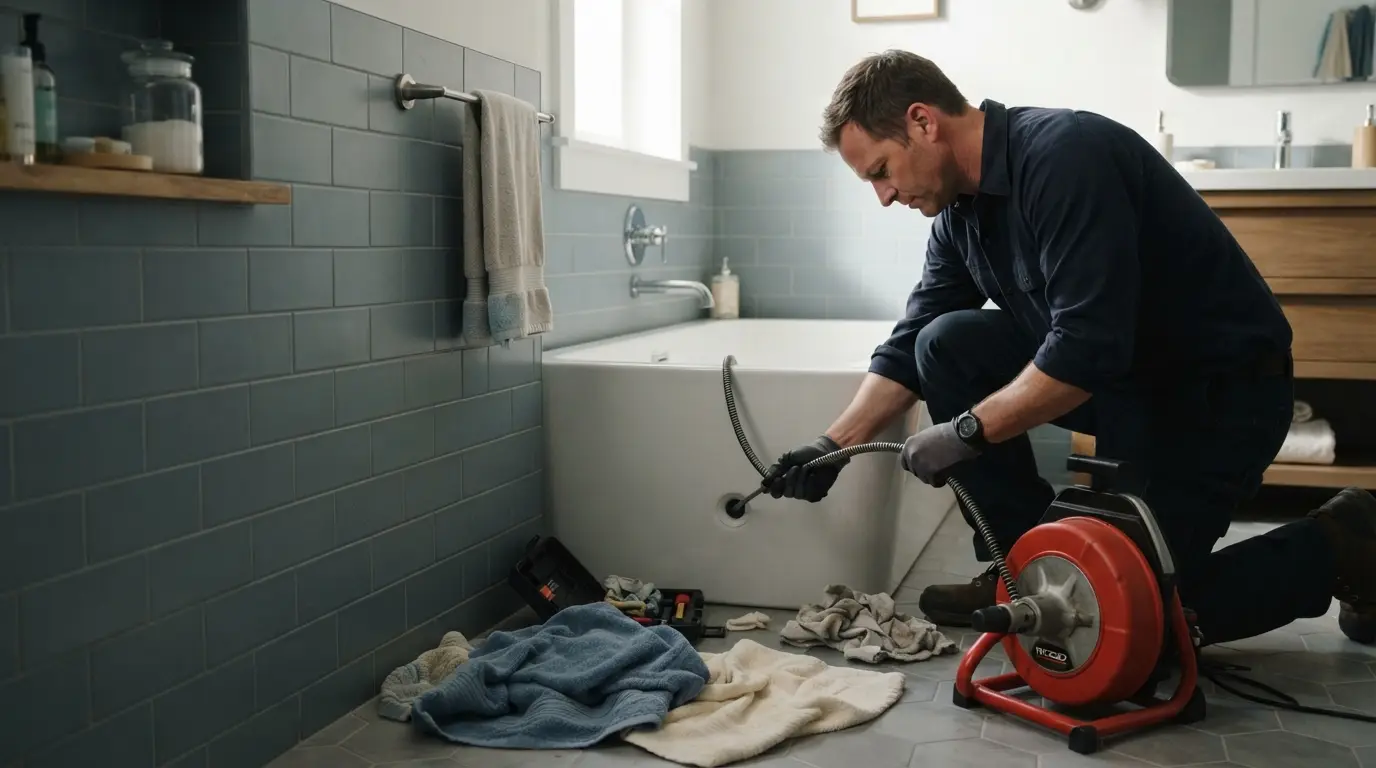
Basement floor drain backing up, or a sink that will not empty? We handle drain cleaning and clog removal in Minnesota. Our plumbers clear sink, tub, toilet, laundry and main sewer lines in houses, duplexes, apartment buildings and restaurants. Minnesota drains collect roots from boulevard trees in old clay laterals, scale from hard water and grease that sets up fast in cold basement pipes. We clear the line, look inside with a camera and tell you what caused it and whether it will return.
The service
Our Minnesota data counts 2,064,946 homes, 53% of them built before 1980. In St. Paul 78% of homes predate 1980, in Richfield 76% and in Crystal 86%. Houses of that age usually have cast iron drains inside and clay sewer pipe running under the boulevard to the street. In newer suburbs such as Woodbury, with a median build year of 1997, PVC drains still clog from grease, wipes and hair.
Most Minnesota homes have a basement with a floor drain near the furnace and water heater. When the main line slows, that drain is usually the first place water appears.
Tools our plumbers bring
Where it is used: Sinks, showers and toilets
Purpose: Removes hair and small blockages
Where it is used: Mains and floor drains
Purpose: Cuts roots and hard clogs
Where it is used: Grease and scale buildup
Purpose: Washes the pipe wall clean
Where it is used: Repeat or unknown clogs
Purpose: Finds roots, cracks and bellies
Why Minnesota
Ash, maple and linden trees along older streets push roots into clay sewer joints.
Mineral-rich groundwater adds scale inside drain lines and traps.
Fats cool and harden quickly in pipes running through chilly basements.
Decades of corrosion roughen the inside of stacks so waste catches.
Warning signs
Our process
We open the line at the closest cleanout or floor drain, run a properly sized cable and flush until the line carries a full load.
When clogs return, we camera the line and fix the broken joint, root entry point or sag that keeps catching waste.
High-pressure water strips grease and scale from the pipe wall. We check fragile cast iron on camera first.
Typical cost
Drain cleaning prices are estimates only until we see the line. These factors set the price:
We explain your options and you approve a written price first.
Get a written price: (833) 733-2357Fixture drains cost less than mains.
Missing cleanouts mean working through a toilet or floor drain.
Jetting and camera work add to cabling.
Damaged pipe needs repair.
After-hours visits cost more.
Benefits
Roots and scale come out with the clog.
The floor drain stays clear.
Camera footage shows the cause.
Built-up sludge flushed out.
Buildings with five or more units hold 57% of homes in Hopkins and 45% in St. Louis Park, and up-and-down duplexes are common in the core cities. Shared stacks collect waste from several kitchens and bathrooms. We clear building stacks and branch lines, give owners camera footage of what we found and set up periodic jetting for lines that clog every year.
Restaurant kitchens in Minneapolis, Rochester (54,492 homes) and Duluth send grease, starch and food waste down their drains all day. We jet kitchen lines and floor drains, clear lines from grease interceptors and book the work outside of service hours so the dining room stays open.
Renters occupy 50% of homes in Mankato and 51% in St. Cloud. Houses shared by several students clog more often, mostly from hair, food and wipes. We clear lines for landlords during the year and can jet mains between leases in summer.
Around Brainerd (6,760 homes) and across lakes country, many homes and cabins drain to septic systems. When every drain slows at once, the tank or drainfield is often the cause. We check the tank before cleaning the house line, so you do not pay for drain cleaning when the system needs pumping or repair.
In deep cold, drain lines in garages, crawl spaces and exterior walls can freeze, and roof vents can close with frost. A frozen vent makes drains gurgle and run slowly even though the pipe is clear. We thaw frozen drains before cleaning them, so we do not crack old pipe, and we check vents when slow drains appear only in the coldest weeks.
Many Minnesota washers empty into a laundry tub in the basement. Lint and soap build up in its short drain, and the tub overflows when the washer pumps out. A lint catcher on the hose helps. If the tub and floor drain back up together, the main is the problem, so we start there.
Stop using water, including the washer and dishwasher. Close the valve behind a toilet that is rising.
Do not pour chemical cleaners into a backed-up drain. Keep children and pets away from dirty water, then call us.
Drain cleaning does not need a permit. Pipe replacement usually does, and we file it with your city or the Minnesota Department of Labor and Industry. Our plumbers hold Minnesota plumbing licenses.
We clear drains in 915 Minnesota communities, including Duluth (39,978 homes). Find yours:
Why choose us
What you can count on every time one of our plumbers comes to your door.
Every job is handled by a plumber who holds the license your state or city requires, backed by liability insurance.
Our plumber explains the problem and the options, and you approve a written price before any work begins.
Burst pipes, sewage backups and failed water heaters get priority scheduling, including nights and weekends.
We pull permits when the job needs one and schedule the inspection, so the work holds up when you sell.
Repairs and installations come with a written warranty on labor, on top of the manufacturer's warranty on parts.
Our pages and plumbers account for your area's water, soil, climate and the age of the homes around you.
Service area
Minneapolis (209,080 homes) and St. Paul (133,051 homes) have thousands of early 1900s houses and duplexes. Their sewers often leave through the front basement wall, run under the boulevard and connect to the main in the street. After a century, roots and broken clay are common. We clear the line, camera it to the main and tell you whether the trouble is near the house, under the boulevard or at the city connection.
That depends on where the blockage is, how we get to it and which tool it needs. A sink costs much less than a main, and you approve a written price first.
When grease or scale keeps closing the same line. Jetting cleans the full pipe wall, so the drain stays open much longer than after cabling.
Yes, it is a separate item. On older clay and cast iron it often saves money by showing exactly what needs repair.
We go in from a cleanout or the floor drain, run a cutting head out to the street and flush the line to confirm full flow.
Yes. After cleaning we camera the line, show you the roots, cracks or sags and can share the recording.
Yes, through a toilet or the floor drain. A new cleanout makes future cleanings quicker and cleaner.
We advise against them. They can damage old pipe and leave caustic water that can burn whoever opens the line.
It can carry sewage bacteria. Keep people and pets away and do not run water until the line is cleared.
Most fixture drains take under an hour. Mains with jetting and camera work can take a few hours.
We schedule promptly and put sewage backups ahead of slow drains, and we keep you updated on timing.
Often every year or two. If roots return faster, a repair or liner can cost less over time.
Usually a dry floor drain trap. Pour water in it. If the smell continues, we check for a cracked trap or vent issue.
Yes. Frost can close a roof vent in deep cold, causing gurgling and slow drains. We check vents when that happens.
Many older homes do. Clay was standard for decades, and those lines often take in roots under the boulevard.
Hard groundwater leaves mineral deposits in drains and traps over time, which catch waste and narrow the pipe.