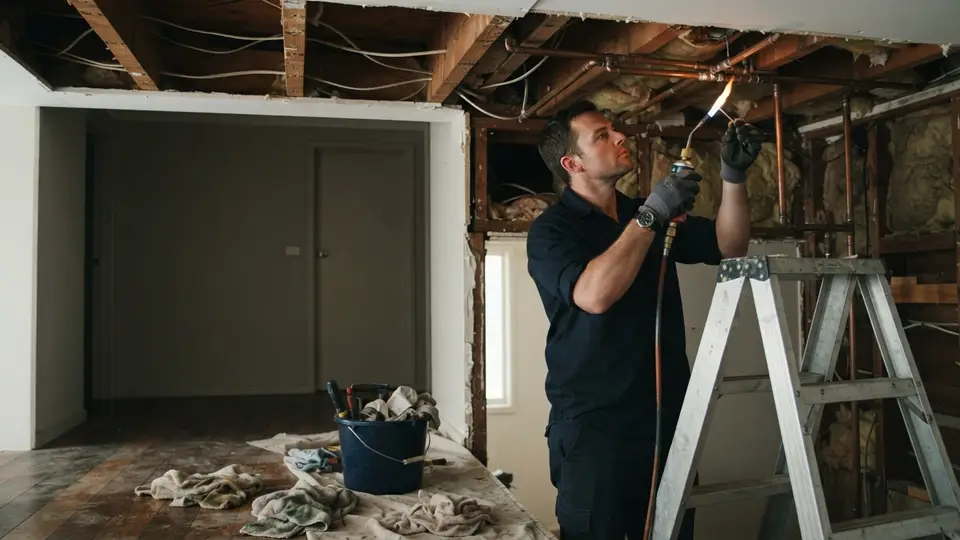
Burst pipe
What you do first: Close the main valve near the meter
What we do: Stop the flow and replace the split
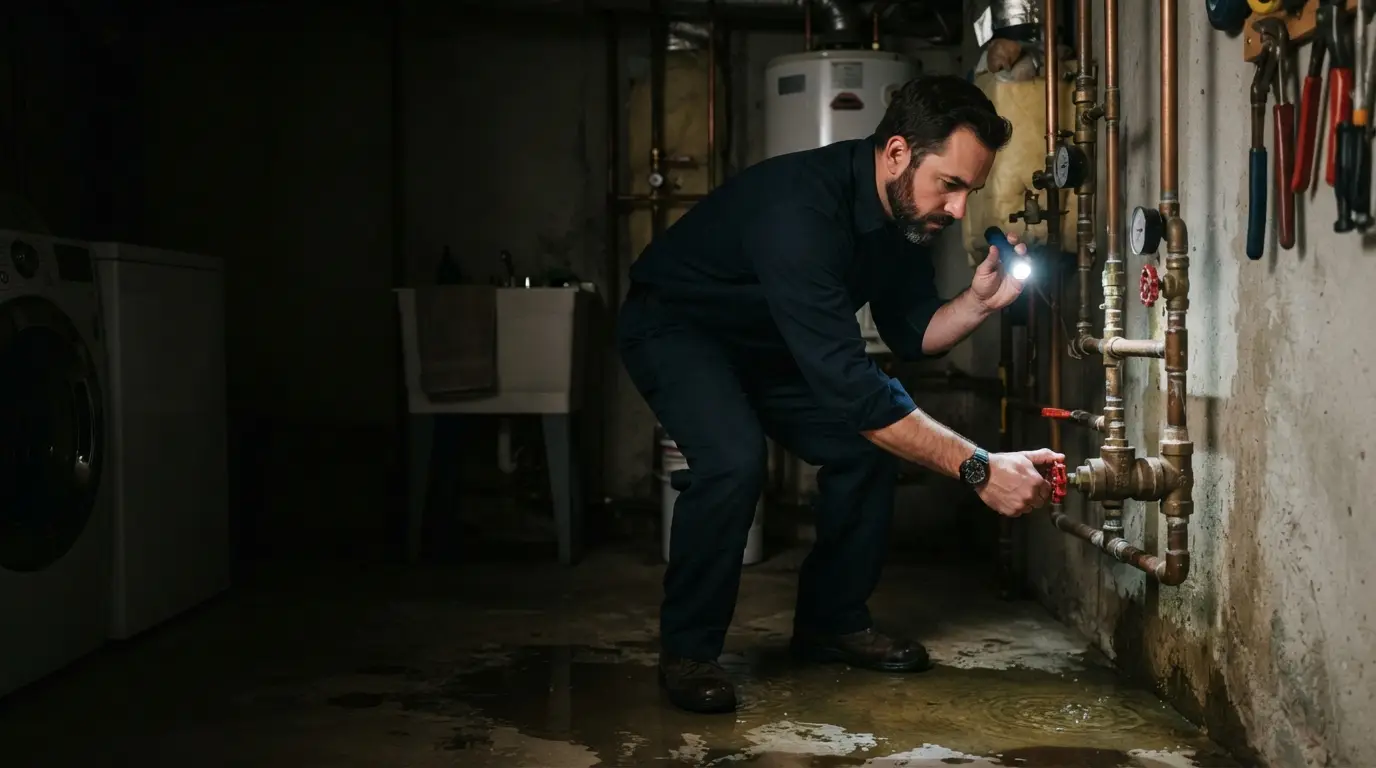
Water service frozen solid, or sewage rising in the basement? We handle emergency plumbing in Minnesota. A split pipe pouring into a lower level, a floor drain spilling sewage, a house with no water at twenty below or a gas odor are all calls we move to the top of the list. In Minnesota, the cold drives most of them. Our plumbers walk you through the right valve or breaker on the phone, then come to stop the damage and fix the cause, keeping you posted on timing.
The service
Call it an emergency when water is damaging the home right now, sewage is coming in, the house has no water or anyone smells gas. Minnesota homes keep furnaces, water heaters and electrical panels in the basement, so a flood there threatens the heat as well as the floor. With 53% of homes in our data built before 1980, a lot of pipe is old enough to fail under winter stress.
Minnesota emergencies at a glance
What you do first: Close the main valve near the meter
What we do: Stop the flow and replace the split
What you do first: Check with neighbors and the city
What we do: Thaw the line and check for damage
What you do first: Stop all water use
What we do: Clear the main and find the cause
What you do first: Lift items, avoid wet outlets
What we do: Repair or replace the pump
What you do first: Leave, call the utility from outside
What we do: Repair piping once it is safe
Warning signs
Typical cost
Emergency prices are estimates only until we see the situation. These factors matter:
After the danger is controlled, you approve a written price for the rest.
Get a written price: (833) 733-2357Nights, weekends and holidays cost more.
A split pipe costs less than a frozen service or new heater.
Water inside finished walls adds work.
Excavating in winter takes extra time.
Gas, heater and sewer repairs often need one.
Benefits
Lower levels dry sooner.
Furnaces and heaters kept out of water.
Gas and electrical hazards handled properly.
The cause is repaired as well as the leak.
When frost runs deep, water services freeze underground and the whole house goes dry. International Falls, Virginia and Duluth (39,978 homes) see it most winters, and it reaches the Twin Cities in hard years. Some cities ask residents on known trouble spots to keep a small stream running. If yours freezes, we thaw it with equipment designed for buried lines, check for splits and talk through relaying it deeper if it keeps happening.
Older houses in Minneapolis (209,080 homes) and St. Paul have pipes near rim joists, in exterior walls and in porches that freeze when temperatures drop well below zero. Virginia, where 83% of homes were built before 1980, faces it every winter. The break usually shows as the pipe thaws. We stop the water, replace the split, check the rest of the run and recommend insulation or rerouting.
A backup usually starts at the basement floor drain. In older neighborhoods, roots and broken clay are typical causes; in spring and during big storms, high flows in city sewers can play a part. We clear the main, camera it and explain whether the fix is cleaning, a repair or a backwater valve where the city allows one.
Snowmelt and spring rains raise groundwater fast, and sump pumps that sat idle all winter may fail in the first big thaw. In Moorhead (19,184 homes) and other river towns, high water adds to the pressure. When a basement starts flooding, we repair or replace the pump, get water moving out and suggest a battery backup for next spring.
In our data, 59% of homes in Crosslake and 40% in Breezy Point are not lived in year-round. A furnace failure in an empty cabin can freeze every pipe in it, and the damage is found only when someone checks. We respond to calls from owners and caretakers, stop the damage, repair what froze and suggest remote temperature and leak alerts.
A furnace or boiler failure in January quickly becomes a plumbing emergency, because pipes start freezing within hours in a cold house. While the heating contractor works on the furnace, keep cabinet doors open, use safe space heaters away from anything flammable and let faucets drip. If pipes have already frozen, call us, and we will thaw them before they split.
Gas heats most Minnesota homes, so gas odors are handled carefully. The utility responds first and shuts off gas if needed. Once they have made it safe, our technicians find and repair the leaking joint or connector, test the system and coordinate with the utility to restore service under the required permit.
What is happening, where and whether anyone is in danger.
Which valve, breaker or appliance to shut off now.
Emergencies go ahead of routine work, and we keep you updated on timing.
We control the problem first, then explain the fix and give you a written price.
Close the main valve, usually near the meter on the basement wall facing the street. If water is near the panel or furnace, stay away and cut power only from dry ground.
For a backup, stop all water use; for gas, get out. For frozen pipes, keep the house warm and open the faucets they feed. Take photos for insurance and call us.
Emergency work that replaces heaters, gas piping, water services or sewer lines usually needs a permit. We stop the damage first, then file with your city or the state. Our plumbers hold Minnesota licenses.
Why choose us
What you can count on every time one of our plumbers comes to your door.
Every job is handled by a plumber who holds the license your state or city requires, backed by liability insurance.
Our plumber explains the problem and the options, and you approve a written price before any work begins.
Burst pipes, sewage backups and failed water heaters get priority scheduling, including nights and weekends.
We pull permits when the job needs one and schedule the inspection, so the work holds up when you sell.
Repairs and installations come with a written warranty on labor, on top of the manufacturer's warranty on parts.
Our pages and plumbers account for your area's water, soil, climate and the age of the homes around you.
Service area
We respond to plumbing emergencies in 915 Minnesota communities, including Rochester (54,492 homes), Bloomington (39,261 homes) and St. Cloud (29,762 homes). Find yours:
It depends on when you call, what failed and how far the water spread. Once the danger is under control, you get a written price for the full repair.
Yes. Nights, weekends and holidays are billed at a higher rate, and we tell you what it is on the phone before we head out.
No. We stop the immediate problem, explain the options and let you decide on the larger repair with a written price.
We make the home safe by confirming water, gas or power is off where needed, then stop the leak or backup and trace the cause.
Yes. We use equipment built for buried lines, then check for splits once the water is flowing again.
We provide photos, notes on the cause and an itemized invoice. Coverage depends on your policy, so check it.
Yes, if water reaches the panel, outlets or the furnace. Stay out of it and cut power only from dry ground.
Leave the house, leave switches alone and call the utility or 911 from outside. We repair the piping once they clear it.
Emergencies move ahead of routine work. We give you our best timing when you call and update you if anything changes.
Many take a few hours. Frozen services, sewer breaks and heater replacements can take longer, especially in frozen ground.
Usually on the basement wall facing the street, next to the meter. Find it and make sure it turns before you need it.
Drain and winterize it, or keep the heat on with temperature and leak alerts. We can handle the winterizing for you.
Stop all water use, keep everyone away from it and call us. Sewage backups are treated as emergencies.
Keep cabinets open, use safe space heaters and drip faucets while the heating contractor works. Call us if pipes have frozen.
If your city advises it for your line, yes. A small steady stream keeps an at-risk service from freezing.