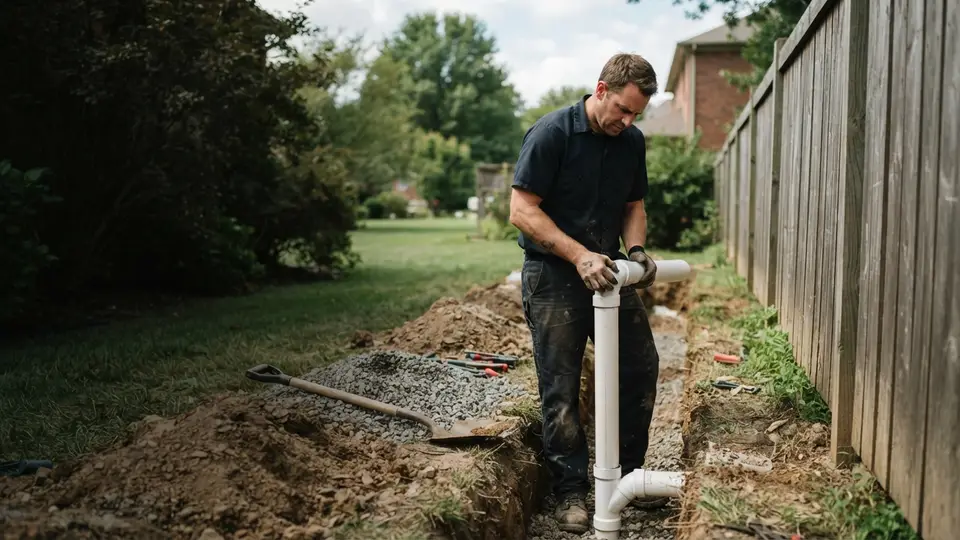
Clay tile
Typical age: Pre-1970s homes
Common failure: Roots at joints, cracking, offsets
Roots in the sewer under the boulevard, or a backup that keeps returning? We handle sewer line repair and replacement in Minnesota. Our plumbers camera the line, mark the damage from above and repair it with the smallest dig the job allows, or without digging where trenchless methods fit. Minnesota sewers are buried deep to stay below frost, and many in older cities are clay pipe laid generations ago. Roots, frost heave and settling have worked on them for decades.
The service
The building sewer runs from your basement to the city main or septic tank. In most Minnesota cities the owner is responsible for the whole service, including the part under the boulevard and sometimes the street connection. With 30% of Minnesota homes built before 1960, many of these lines are clay tile or cast iron.
Sewer pipe we see in Minnesota
Typical age: Pre-1970s homes
Common failure: Roots at joints, cracking, offsets
Typical age: Inside basements and older services
Common failure: Rust, scale, a rotted bottom
Typical age: Some postwar homes
Common failure: Deforming and collapse
Typical age: Newer homes and repairs
Common failure: Bellies in settled soil
Why Minnesota
Boulevard trees planted with the neighborhoods have grown into old joints.
Deep frost and spring thaw move soil and shift pipe sections.
Heavy soils in many areas swell and settle, stressing pipe.
Lines from the early and mid-1900s are near the end of their life.
Warning signs
Our process
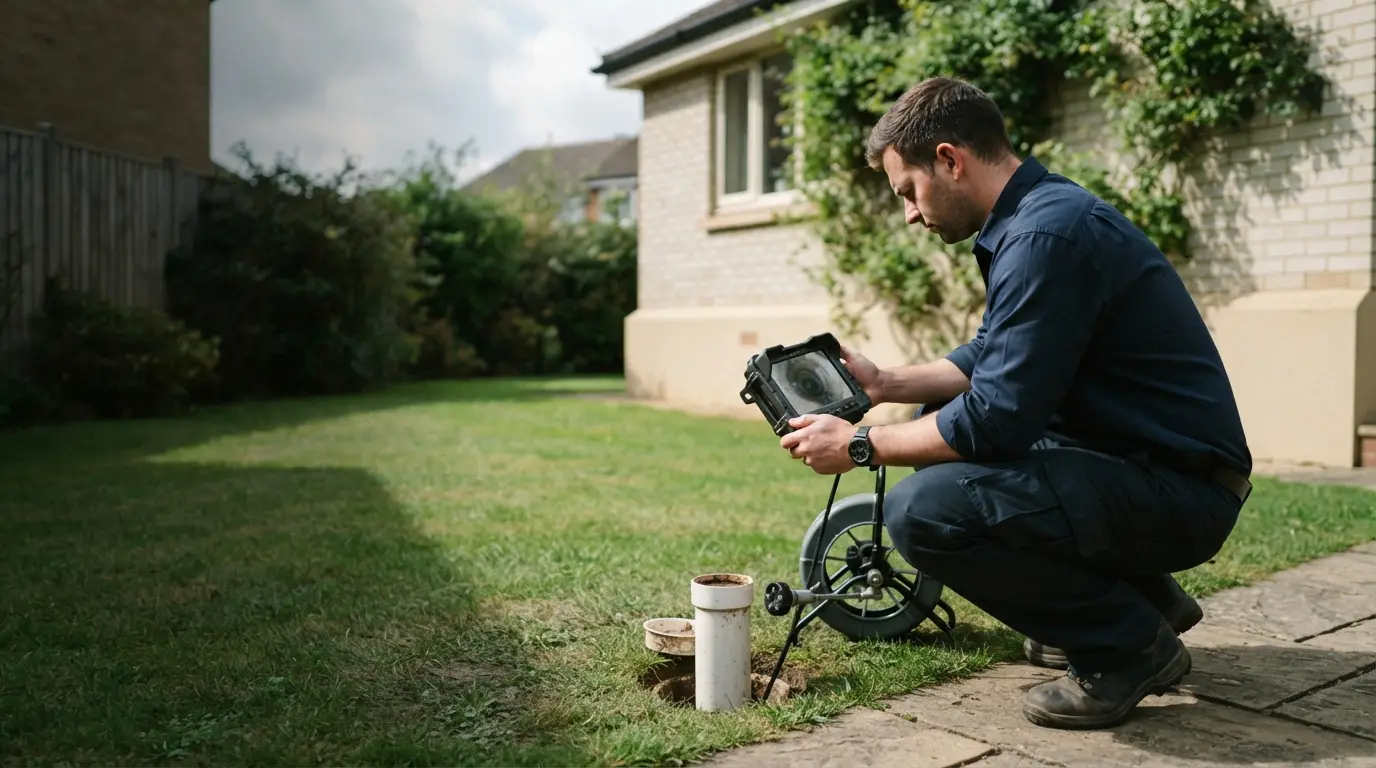
We send a camera through the line, record it and use a locator to mark the depth and position of each problem on the surface.
For damage in one place, we excavate at that point, remove the failed pipe and install new pipe with shielded couplings and good bedding.
When the line is failing throughout, we replace it by trench or by bursting or lining where the route allows, then camera the new pipe.
Typical cost
Sewer prices are estimates only until we camera the line. These factors matter:
You approve a written price before we dig.
Get a written price: (833) 733-2357Deep frost-protected lines need more excavation.
Spot repair, lining, bursting or full trench.
Boulevards, sidewalks, driveways and trees.
Frozen ground adds time in winter.
Right-of-way permits and restoration.
Benefits
Sound pipe stops roots.
Waste flows out as it should.
Trenchless options spare boulevards.
Video for future buyers.
Richfield (76% of homes built before 1980), Crystal (86%), Brooklyn Center (82%) and Roseville were built out after World War II, mostly with clay sewers. Those lines are now 60 to 75 years old. We see roots near the house, cracked sections under driveways and, in some homes, failing fiber pipe. A camera shows which fix makes sense.
Sewer lines do not wait for spring to fail. Digging through frozen ground takes extra equipment and time, and sometimes ground thawing first. When a line fails in January, we clear it to restore service, then plan the repair. If it cannot wait, we dig in winter; if it can, we may recommend scheduling the full repair once the frost leaves. Trenchless methods help here because they need only small access pits.
Duluth (39,978 homes) is built on steep hillsides with bedrock close to the surface in many places. Sewer lines there may run steeply, wrap around rock or sit shallower than ideal. We plan routes carefully, use trenchless repair where rock makes trenching difficult and make sure repairs keep proper slope.
Austin (median year 1957), Albert Lea (1960) and other southern towns have older housing on heavy soils. Spring thaw and heavy rain can saturate the ground and load old sewers. We repair rooted and broken laterals and help owners decide whether a backwater valve fits where the city allows one.
Home inspections rarely include the sewer. In older neighborhoods of Rochester (54,492 homes), Edina and the core cities, a sewer camera inspection before buying can reveal roots, breaks or fiber pipe that would be costly to fix. We record the line and give you a clear summary.
Many Minnesota cities are working to keep groundwater and rainwater out of the sanitary sewer, because that clear water overloads treatment plants during spring melt and storms. Cracked laterals let groundwater in, and old homes sometimes still have sump pumps or footing drains tied to the sewer. Some cities inspect private services at sale or ask owners to fix leaking laterals and disconnect sump pumps. When we repair a lateral, we seal it against groundwater and can reroute an illegal sump connection to a proper discharge.
A share of homes built in the 1950s and 1960s, in suburbs like Fridley (median year 1968) and Brooklyn Center, have bituminous fiber sewer pipe. It deforms into an oval and eventually blisters and collapses. It is easy to identify on camera and cannot be reliably patched, so we replace the run from the foundation to the city connection. Catching it before it collapses avoids an emergency dig in frozen ground.
Stop using water if sewage is backing up. Do not open a cleanout under pressure; it can release sewage into the basement.
Note when backups happen and clear access to the floor drain and cleanout. Then call us.
Sewer repairs need a plumbing permit, and work in the street or boulevard needs a right-of-way permit from the city. We pull them and schedule inspections. Our plumbers hold Minnesota plumbing licenses. In Fridley (median year 1968) and other suburbs, we confirm the city's connection rules before work begins.
We repair sewer lines in 915 Minnesota communities, including Roseville (16,666 homes) and Edina (24,071 homes). Find yours:
Why choose us
What you can count on every time one of our plumbers comes to your door.
Every job is handled by a plumber who holds the license your state or city requires, backed by liability insurance.
Our plumber explains the problem and the options, and you approve a written price before any work begins.
Burst pipes, sewage backups and failed water heaters get priority scheduling, including nights and weekends.
We pull permits when the job needs one and schedule the inspection, so the work holds up when you sell.
Repairs and installations come with a written warranty on labor, on top of the manufacturer's warranty on parts.
Our pages and plumbers account for your area's water, soil, climate and the age of the homes around you.
Service area
Minneapolis (209,080 homes) and St. Paul (133,051 homes) have old clay sewers running under boulevards lined with mature trees. Repairs there often need a city permit for work in the right-of-way, along with utility locates and restoration of the boulevard, sidewalk or street. We arrange permits and restoration so the repair is completed and inspected in one project.
It depends on depth, length, method and what is above the line. After a camera inspection, we give you a written price for each option.
Often, because it avoids large excavations and restoration, especially under boulevards and driveways. Collapsed pipe may still need a trench.
Yes. It pinpoints damage so you pay only for the repair the line needs.
A transmitter in the camera head lets us locate it from the surface and mark its depth.
Permits, utility locates, excavation or trenchless setup, new pipe, testing, inspection and restoration of the surface.
Yes, if the rest of the pipe is sound. The camera tells us whether a spot repair will last.
Yes. Leaking sewage carries bacteria into soil and basements. Stop using water during a backup.
We shore deep trenches and fence or cover openings until the line is buried.
Often one to three days. Winter digging, street work and inspections can add time.
Yes, though frozen ground adds time. We restore service first and may suggest timing the full repair after thaw.
Keep trees away from the line and have clay pipe checked regularly. Lining or replacing rooted joints stops them.
Every few years, and always before buying an older home.
Stop using water, avoid the sewage and call us. We clear the line and then plan the repair.
In most Minnesota cities, the homeowner owns the service to the main. Your city can confirm.
To stay below frost, which can reach several feet in a hard winter.