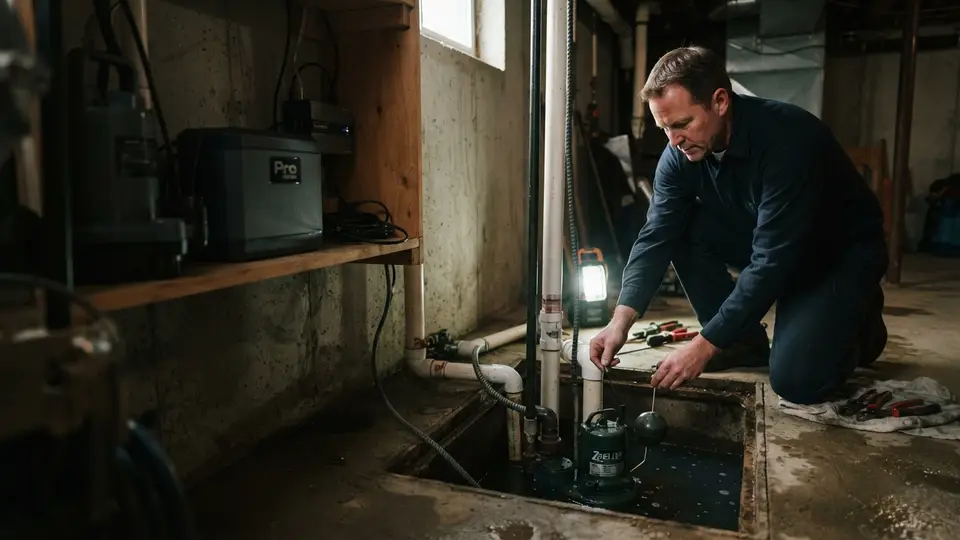
Submersible pump
How it works: Sealed motor sits in the basin
Best for: Most basements
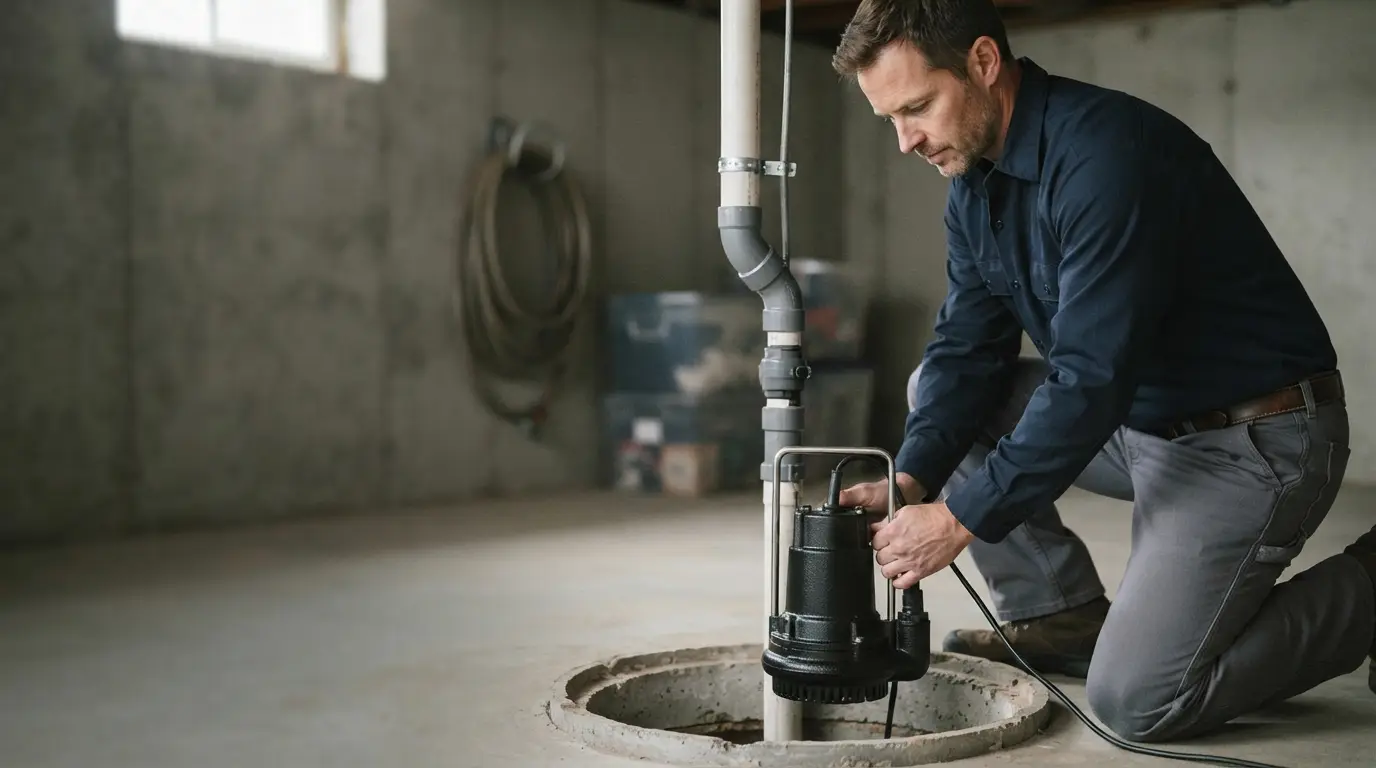
Water seeping in during snowmelt, or a pump that never shuts off? We handle sump pump repair and installation in Minnesota. Spring thaw, high groundwater and summer storms push water against basement walls across the state, and most newer homes depend on a sump pump to stay dry. Our plumbers repair failed pumps, install pits and pumps sized for your basement and add battery backups and alarms, so a power outage or stuck float does not flood your lower level.
The service
A sump pump collects water from drain tile around the foundation in a basin and pumps it outside. Since the 1970s most Minnesota homes have been built with drain tile and a sump. With 23% of homes in our data built since 2000, many of them in suburbs like Woodbury (median year 1997), a large share of the state now relies on these pumps every spring.
Sump pump options we install
How it works: Sealed motor sits in the basin
Best for: Most basements
How it works: Motor above the basin
Best for: Small or shallow basins
How it works: Second pump on a battery
Best for: Storm outages
How it works: Primary and backup together
Best for: Finished basements
How it works: Runs on city water pressure
Best for: Homes on city water
Why Minnesota
Melting snow cannot soak into still-frozen soil and runs toward foundations.
Low ground near lakes, wetlands and rivers keeps basins filling for weeks.
Intense rain overwhelms gutters and drain tile, often with outages.
Heavy soils hold water against walls instead of letting it drain away.
Warning signs
Our process
We test the float, switch and motor, clean the basin and intake and check the check valve and discharge line.
We size the pump for flow and lift, set it securely in the basin, install a check valve and route the discharge away from the house.
We add a battery-powered second pump with a charger and alarm, so the basin keeps draining during outages or if the primary fails.
Typical cost
Prices are estimates only until we see the basement. These factors matter:
You approve a written price before we begin.
Get a written price: (833) 733-2357A switch costs less than a new pump.
Breaking concrete and digging add labor.
Higher flow costs more.
Battery or water-powered.
Length, burial and freeze protection.
Benefits
Water removed before it rises.
Backups keep running.
Less moisture and mold.
Alarms warn you first.
Blaine (median year 1996), Coon Rapids and Andover sit on the Anoka Sand Plain, where sandy soils drain fast but groundwater is close to the surface in many neighborhoods. Sump pumps there can run for long stretches in spring. We use pumps rated for heavy duty, check valves that prevent recycling water and backups for outages.
Moorhead (19,184 homes) and the Red River Valley are flat with heavy clay, and spring flooding is a known risk. Basements here face groundwater pressure during the thaw. We size pumps for high inflow, add backups and alarms and make sure discharge goes far enough from the house that it does not cycle back.
Homes in Lakeville (median year 1999), Plymouth and Maple Grove often have finished lower levels with carpet and drywall. One sump failure can cost far more than a backup system. We recommend a quality primary pump, a battery backup and a Wi-Fi alarm, and we seal basin lids to limit moisture and radon entering living space.
Minnesota cities generally prohibit sump pumps from discharging into the sanitary sewer, and some inspect for illegal connections. Water should go to the yard or a storm system where allowed. In winter, a discharge line can freeze, so the pump runs but nothing leaves. We pitch lines to drain, add freeze-relief fittings near the house and can redirect a sewer-connected pump to a legal outlet.
Some Minnesota sump pumps keep running even in January because groundwater stays high. That is normal in some areas, but it means the discharge line is at risk of freezing and the pump is wearing faster. We check that the line drains completely, add a winter discharge option where suitable and recommend replacement before a heavily used pump fails during spring melt.
Mankato (19,529 homes), St. Cloud and towns along the Minnesota, Mississippi and Red rivers see high water most springs. Even homes outside flood zones feel it, because rising rivers raise the groundwater under nearby neighborhoods. Basins that are dry most of the year can fill several times an hour in April. We size pumps for those peak weeks, not for an average day, and we recommend a backup in any home that has had water in the basement during a past spring.
A sump pump usually fails without warning: a float catches on the basin wall, a GFCI outlet trips in a storm, or the motor simply wears out after years of spring duty. A high-water alarm sounds before water reaches the floor, and Wi-Fi monitors send a phone alert if the pump stops, runs too long or loses power. These are inexpensive compared with replacing carpet and drywall. We install them with the pump and test them before we leave, and they are especially worth it for cabins and for families who travel in spring.
Check that the pump is plugged in and the breaker or GFCI has not tripped. Lift the float gently to see if the pump runs.
Move belongings off the floor and avoid standing water near electrical equipment. Then call us.
Replacing a sump pump usually needs no permit, but changing discharge connections or plumbing may. Many cities restrict where pumps discharge. We check local rules and pull permits when needed. Our plumbers hold Minnesota plumbing licenses.
Why choose us
What you can count on every time one of our plumbers comes to your door.
Every job is handled by a plumber who holds the license your state or city requires, backed by liability insurance.
Our plumber explains the problem and the options, and you approve a written price before any work begins.
Burst pipes, sewage backups and failed water heaters get priority scheduling, including nights and weekends.
We pull permits when the job needs one and schedule the inspection, so the work holds up when you sell.
Repairs and installations come with a written warranty on labor, on top of the manufacturer's warranty on parts.
Our pages and plumbers account for your area's water, soil, climate and the age of the homes around you.
Service area
We repair and install sump pumps in 915 Minnesota communities, including Rochester (54,492 homes), St. Cloud (29,762 homes) and Fergus Falls (7,072 homes). Find yours:
It depends on pump size, basin condition and discharge. You get a written price before we start.
For most Minnesota basements, yes. Storms and spring melt often coincide with power outages.
Breaking concrete and digging add labor compared with a pump swap. We price it clearly.
We look at how fast the basin fills, lift height and discharge length, then match capacity.
We prepare the basin, set the pump, install the check valve and discharge and test it with water.
Minnesota cities generally prohibit it. We redirect pumps to a legal outlet.
Yes, if water reaches outlets or appliances. Stay out and cut power only from dry ground.
Only after unplugging the pump, and never while standing in water.
A replacement takes a few hours; a new basin usually takes most of a day.
Often seven to ten years, less if they run constantly.
Before spring thaw and before summer storm season.
Water left in a flat or shallow line freezes. We pitch it to drain and add a freeze-relief fitting.
Move items up, stay away from water near outlets and call us. Flooding is a priority.
High groundwater in some areas keeps basins filling year-round. We make sure discharge stays clear.
An open pit can. We install sealed lids, which also cut moisture.