Spot repair
What we do: Open the floor at the leak and replace pipe
Best when: A single leak in sound pipe
Damp carpet in the lower level, or a warm strip across the floor? We handle slab leak repair in Minnesota. Nearly every Minnesota home has a basement or slab floor with pipe under or in it: the water service rising through the floor, drains under the basement slab, in-floor radiant heat and lines in slab additions and townhomes. When one of them leaks, our plumbers locate it precisely and repair it through a small opening, or reroute the line so the concrete stays intact.
The service
A slab leak is a leak in any pipe beneath or inside concrete. In Minnesota, that is most often a cast iron or PVC drain under the basement floor, the water service where it enters through the slab, a supply line in a walkout or slab townhome, or in-floor heat tubing. Radiant floor heat is especially common here because it keeps basement and garage floors comfortable through long winters.
How we fix leaks under concrete
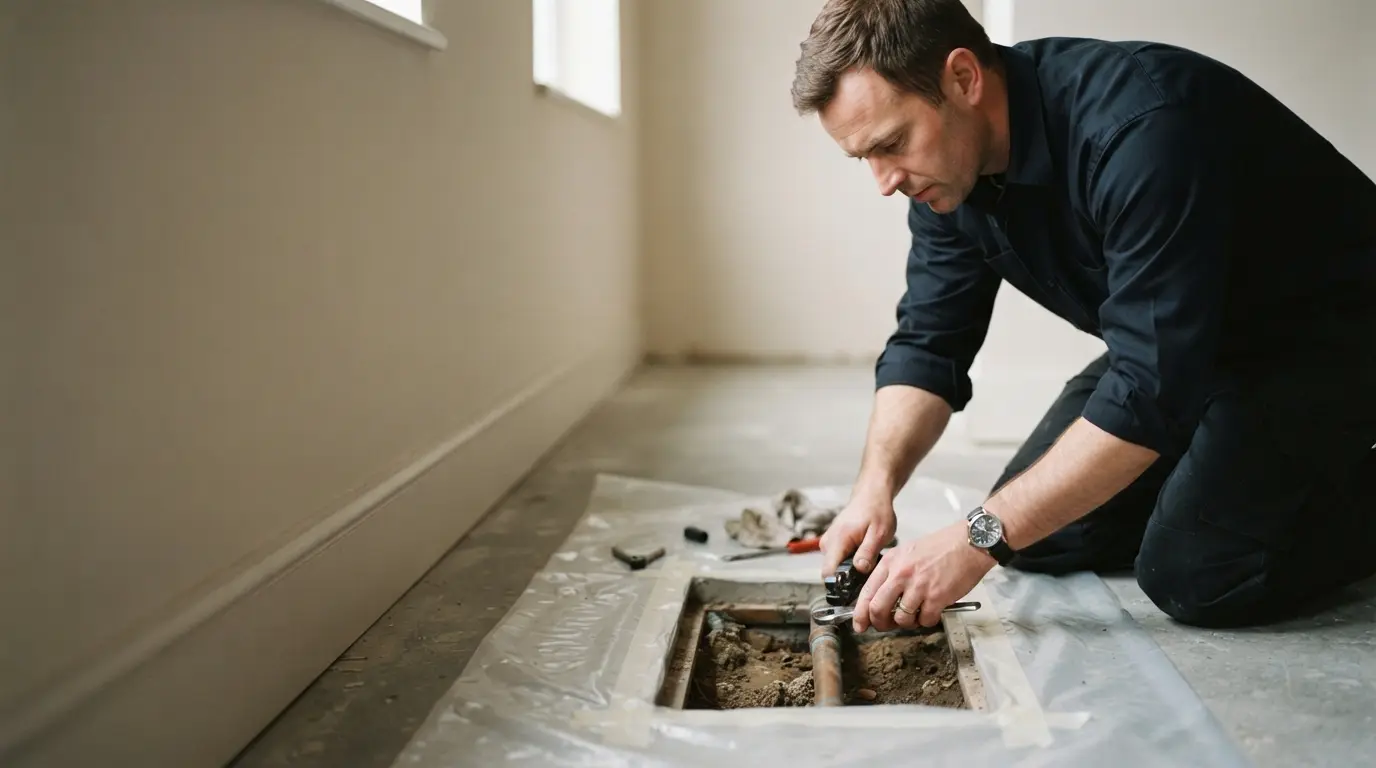
What we do: Open the floor at the leak and replace pipe
Best when: A single leak in sound pipe
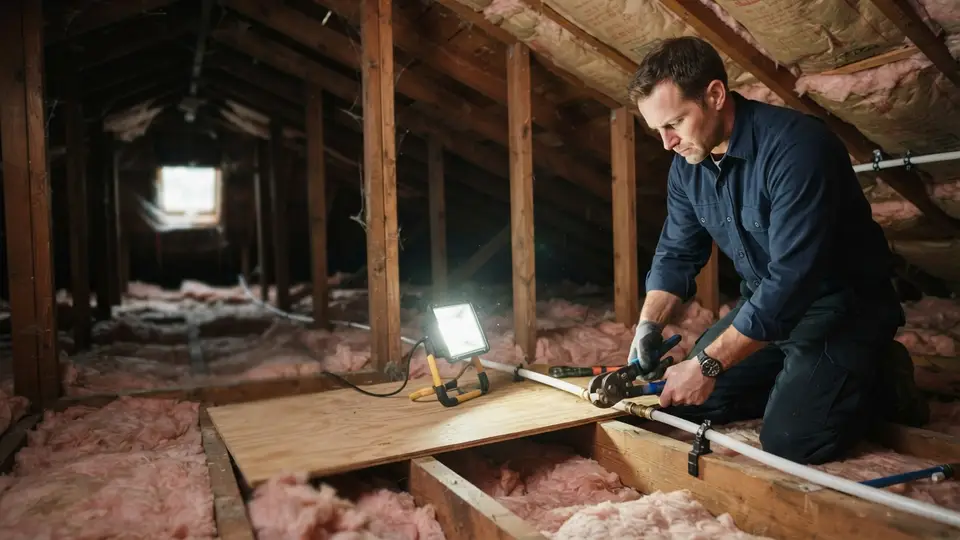
What we do: Run new supply overhead or in walls
Best when: Old pipe or repeat leaks
What we do: Replace a broken section under the slab
Best when: Cracked or rotted drains
What we do: Fix or isolate a leaking loop
Best when: In-floor heating systems
Why Minnesota
Frost near foundations and settling fill shift pipe under slabs.
Copper touching concrete or rock wears thin with expansion and contraction.
Older drains under basement floors rust through along the bottom.
Tubing nicked during construction or later anchoring can leak.
Warning signs
Our process
We isolate hot, cold and heating lines, then use ground microphones and thermal imaging to mark the leak on the floor.
We cut a small opening, excavate to the pipe, replace the damaged section, test it and patch the concrete.
When the buried pipe is old or has leaked before, we abandon it and run new PEX or copper through walls and joists to the fixtures.
Typical cost
Slab repair prices are estimates only until we locate the leak. These factors matter:
You get written prices for each option before we start.
Get a written price: (833) 733-2357Tile, wood and carpet affect opening and restoration.
Rerouting avoids concrete but needs new runs.
Supply, drain or radiant tubing.
Old pipe may have more than one.
And flooring repair afterward.
Benefits
We open only where needed.
Moisture stops building up.
Radiant floors back in service.
Rerouting removes old pipe from concrete.
Newer homes in Woodbury (median year 1997), Lakeville (1999) and Savage (1997) often have in-floor heat in basements and garages. A leak shows as a boiler losing pressure, a constantly filling feed valve or a damp spot. We map warm loops with a thermal camera, find the leak and repair it, or isolate that loop so the rest of the system keeps running through winter.
In older Minnesota homes, the most common under-slab problem is a cracked or rotted drain. Wastewater seeps into the soil, sewer gas rises into the basement and the floor drain may back up. A camera shows the break. We cut a narrow trench, replace the damaged section and test it before patching. When much of the under-floor drain is failing, replacing the whole run at once usually costs less than repeated patches.
Townhome developments in Eagan, Shakopee (median year 1999) and Blaine include slab-on-grade units with supply lines under the floor. When one leaks, the association may also be involved. We locate the leak, document it and reroute through walls or ceilings where possible to avoid tearing up flooring.
Most Minnesota water services come up through the basement floor near the front wall. Movement of the slab, frost near the foundation and age can damage the pipe where it passes through concrete. The first sign is often a damp ring of concrete around the pipe or a slow seep along the wall. We open around the entry, replace the damaged section, sleeve it properly and reseal the floor.
Moorhead (19,184 homes) and the Red River Valley sit on heavy clay that swells when wet and shrinks when dry. That movement cracks basement floors and stresses pipe under them. We see broken drains under slabs more often here. We repair them with flexible couplings where suitable and check that the surrounding drain is not sagging.
Many homes in Prior Lake (median year 1998), Cottage Grove and other suburbs have walkout lower levels with bathrooms, wet bars and laundry rooms on the slab. Supply and drain lines to those rooms run under the concrete. A leak there can soak carpet and drywall along the whole lower level before anyone sees it. We use moisture mapping to find the wet area, then acoustic tools to pinpoint the pipe, and we usually suggest rerouting supply lines through the ceiling above so the finished floor is not disturbed again.
Insurance adjusters and townhome associations want to know what failed, where and for how long. We photograph the leak location, the damaged pipe and moisture readings, and note whether the cause was corrosion, abrasion or a construction defect. That record helps you file a claim or settle responsibility with an association. Coverage depends on your policy, so check it, but clear documentation makes the conversation easier.
Close the main valve if water is surfacing or the meter shows a big leak. For a radiant leak, note the boiler pressure reading.
Pull back rugs, move furniture off wet spots and keep electrical items away. Then call us.
Rerouting supply or drain lines generally needs a plumbing permit from your city or the state, and we file it and schedule inspection. Our plumbers hold Minnesota plumbing licenses.
Why choose us
What you can count on every time one of our plumbers comes to your door.
Every job is handled by a plumber who holds the license your state or city requires, backed by liability insurance.
Our plumber explains the problem and the options, and you approve a written price before any work begins.
Burst pipes, sewage backups and failed water heaters get priority scheduling, including nights and weekends.
We pull permits when the job needs one and schedule the inspection, so the work holds up when you sell.
Repairs and installations come with a written warranty on labor, on top of the manufacturer's warranty on parts.
Our pages and plumbers account for your area's water, soil, climate and the age of the homes around you.
Service area
We repair leaks under concrete in 915 Minnesota communities, including Rochester (54,492 homes), Plymouth (33,552 homes) and St. Cloud (29,762 homes). Find yours:
It depends on the leak location, floor finish and whether we repair or reroute. You get a written price once we locate it.
Sometimes. Rerouting avoids concrete and flooring work but adds new pipe runs. We price both.
Many policies cover access and resulting damage but not the pipe. Check your policy; we document the cause.
We isolate the line with pressure tests, then pinpoint the spot with ground microphones and thermal imaging.
Usually small, often around two feet square, depending on depth. We patch the concrete afterward.
Often. We trace loops with thermal imaging, then repair the leak or isolate the loop.
It can damage finishes, feed mold and create a shock risk near cords and outlets. Shut off water and keep electronics away.
Long-running leaks can wash out soil under the slab. Stopping them early limits damage.
A spot repair often takes a day. Reroutes may take one to three days.
Only while we work on the line. Water returns once the repair passes a pressure test.
Keep pressure normal, treat aggressive water and consider rerouting old copper.
Yes. A steady drop in a radiant system often means a leak in the floor.
Close the main and call us. If it is groundwater, a sump pump may be the answer.
Drain leaks under basement floors and radiant tubing leaks are fairly common; supply line slab leaks are less so.
Expanding and shrinking clay can crack floors and stress pipes, especially in the Red River Valley.