Water softener
Treats: Calcium and magnesium hardness
Common for: Groundwater cities and wells
Scale on every faucet, or orange iron stains in the tub? We handle water softeners and filtration in Minnesota. Most of the state drinks groundwater that is hard, and many wells also carry iron and manganese. Our plumbers test your water, then install softeners, iron and manganese filters, whole-house carbon filters and reverse osmosis systems sized for your household. We also set softeners to use salt efficiently, which matters in a state working to reduce chloride in its lakes and streams.
The service
Minneapolis and St. Paul draw from the Mississippi River and soften their water at the treatment plant, and Duluth uses Lake Superior, which is naturally soft. Most other Minnesota cities pump groundwater from wells, and it is often hard, sometimes very hard, with iron and manganese common. Private wells vary widely. The Minnesota Department of Health has also flagged manganese as a concern in some wells. A water test tells us what your home actually needs.
Treatment systems we install
Treats: Calcium and magnesium hardness
Common for: Groundwater cities and wells
Treats: Orange and black staining
Common for: Private wells, some cities
Treats: Chlorine taste and odor
Common for: City water
Treats: Dissolved solids, nitrates, arsenic
Common for: Drinking water at the sink
Treats: Sand and grit
Common for: Wells
Why Minnesota
Groundwater dissolves calcium and magnesium from limestone, dolomite and glacial till.
Both are common in Minnesota groundwater and stain fixtures and laundry.
Some shallow wells in agricultural regions have elevated nitrate.
Wells in parts of western and central Minnesota can have naturally occurring arsenic.
Warning signs
Our process
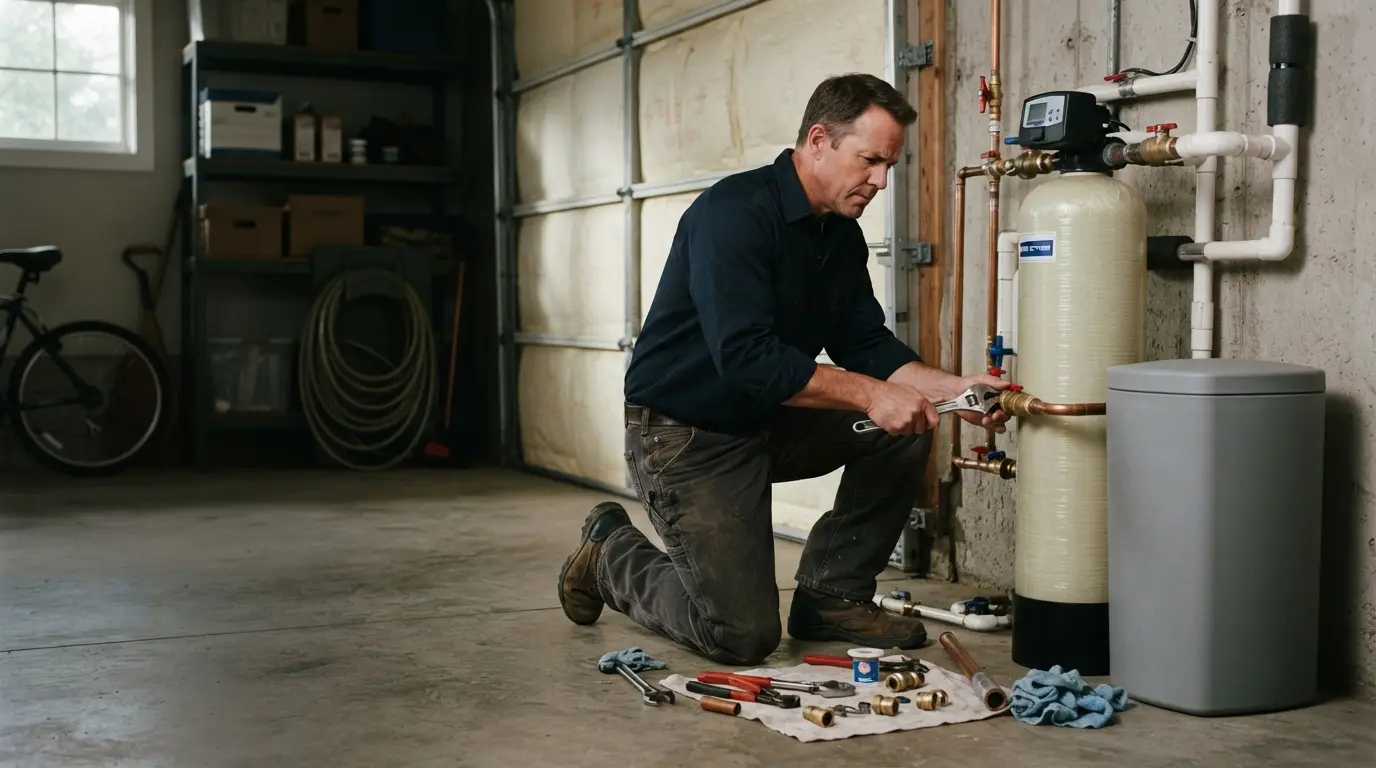
We test hardness and iron, size the softener, install it with a bypass and drain and program efficient, demand-based regeneration.
We install sediment, iron, manganese and carbon filters in the right order at the point of entry.
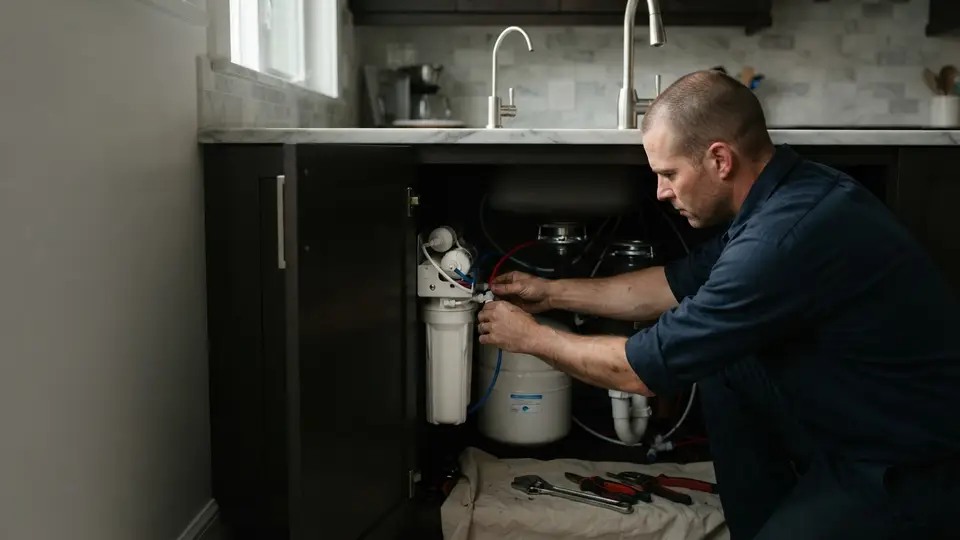
We install an under-sink reverse osmosis system with a dedicated faucet and explain filter and membrane changes.
Typical cost
Prices are estimates only until we have test results. These factors matter:
You approve a written price before we begin.
Get a written price: (833) 733-2357Hardness, iron, manganese and other contaminants.
Larger homes need larger systems.
Filter, softener and RO combinations.
Basement layout and drain access.
Salt and cartridges.
Benefits
Cleaner fixtures and glassware.
Iron and manganese removed.
Less scale in heaters and machines.
Efficient settings protect lakes.
Minnesota has identified water softener salt as a significant source of chloride in wastewater, which treatment plants cannot remove and which harms lakes and streams. Older softeners that regenerate on a timer use far more salt than needed. Modern demand-based units, set correctly for your hardness, use much less. When we install or service a softener, we set it to your water and use, so you get soft water without wasting salt. Some communities have offered incentives for upgrades; check locally.
Homes in Minneapolis (209,080 homes), St. Paul (133,051 homes) and Duluth (39,978 homes) receive water that is already moderately soft or naturally soft. Most do not need a softener. Owners there more often want a carbon filter for taste or a reverse osmosis system for drinking water, especially in older homes where pipes may affect quality. We install filters and can check for lead service lines at the same time.
Fast-growing cities like Dayton (median year 2011), Otsego (2008), Victoria and Carver draw from groundwater that is often hard and carries iron. Builders usually leave a softener loop but no equipment. We install a softener and, if needed, an iron filter that fits the loop and the mechanical room.
Moorhead (19,184 homes) and western towns can have water with high hardness and dissolved solids, and some rural wells carry arsenic or sulfate. Reverse osmosis is often the best answer for drinking water there, alongside a softener for the whole house. We test, explain the results and install a system that fits.
Hard water shortens the life of water heaters, dishwashers and washing machines, and tankless heaters are especially sensitive. Many manufacturers specify water hardness limits for their warranties. When we install a new heater in a hard-water home, we recommend treatment at the same time.
Lake cabins often have their own wells, and water quality can change between seasons. Equipment that sits idle all winter needs to be drained or protected from freezing, and softener resin and filters can foul if they sit wet for months. We set up treatment that suits a cabin used part of the year, winterize it with the plumbing in fall and restart and sanitize it in spring, so the first glass of water at the lake is a good one.
If you are on a well, get a certified lab test and keep the results handy. Note where you see scale, stains or odor.
Clear space near where the water line enters, and find the nearest drain and outlet. Then call us.
Installing treatment on the main water line generally requires a plumbing permit in Minnesota, and water conditioning work must be done by properly licensed installers. We pull permits when required. Our plumbers hold Minnesota plumbing licenses.
We install softeners and filters in 915 Minnesota communities, including St. Cloud (29,762 homes), Mankato (19,529 homes) and Willmar (8,860 homes). Find yours:
Why choose us
What you can count on every time one of our plumbers comes to your door.
Every job is handled by a plumber who holds the license your state or city requires, backed by liability insurance.
Our plumber explains the problem and the options, and you approve a written price before any work begins.
Burst pipes, sewage backups and failed water heaters get priority scheduling, including nights and weekends.
We pull permits when the job needs one and schedule the inspection, so the work holds up when you sell.
Repairs and installations come with a written warranty on labor, on top of the manufacturer's warranty on parts.
Our pages and plumbers account for your area's water, soil, climate and the age of the homes around you.
Service area
Rochester (54,492 homes), St. Cloud, Mankato and Willmar supply hard groundwater, and many suburbs on wells are similar. Some cities soften centrally; many do not. Your utility's annual water quality report lists hardness. We help you read it and decide whether a softener makes sense, and what size.
It depends on your hardness, iron level and household size. After we review a water test, we give you a written price for the right system.
A softener handles low iron. Higher iron or manganese needs a dedicated filter installed ahead of it, and your test results tell us which.
A modern demand-based softener set for your hardness uses far less than an old timer model. We set it to avoid waste.
We start with a water test, then design treatment stages in the correct order for what is actually in your water.
Yes. We install under-sink systems with a dedicated faucet and can connect the refrigerator line too.
Usually not, because both cities soften water at the plant. Some owners still add a carbon filter for taste.
Only testing can tell. Test regularly for bacteria, nitrate, arsenic and manganese with a certified lab.
The Minnesota Department of Health has flagged it, especially for infants. Testing tells you whether treatment is needed.
A single system usually takes a few hours. Multi-stage systems may take most of a day.
Every year for bacteria and nitrate, and every few years for arsenic, manganese and other contaminants.
Sediment and carbon cartridges often need changing every few months, depending on water quality and use.
Chloride from softener discharge passes through treatment plants into lakes and streams. Efficient settings reduce it.
On city water, call your utility. On a well, stop drinking it and call us to check the well and treatment.
Yes. Hard water scales tankless heat exchangers quickly, and treatment helps keep the warranty valid.
Yes. Iron filters or softeners rated for iron remove the staining once sized to your test results.