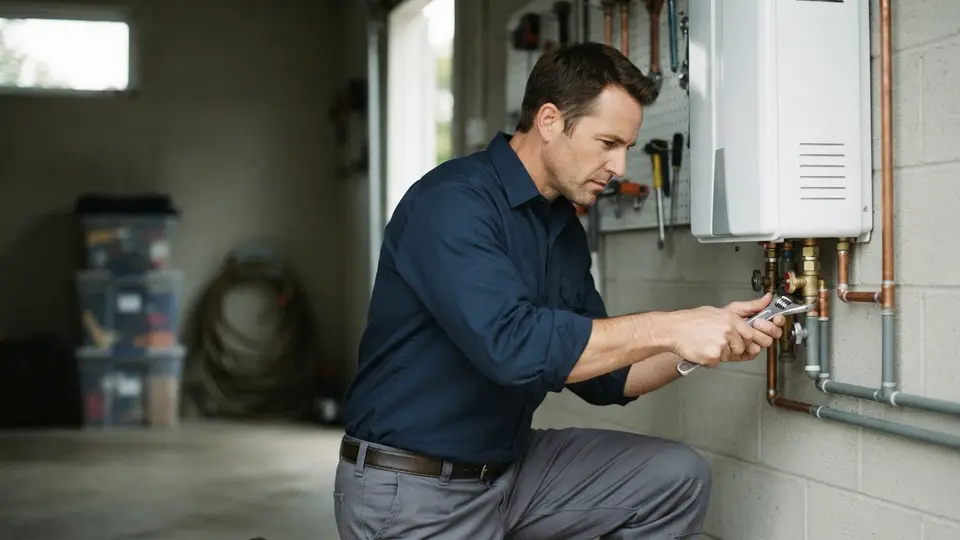
Atmospheric tank
Fuel: Gas or propane
What to know: Vents up a chimney; common in older homes
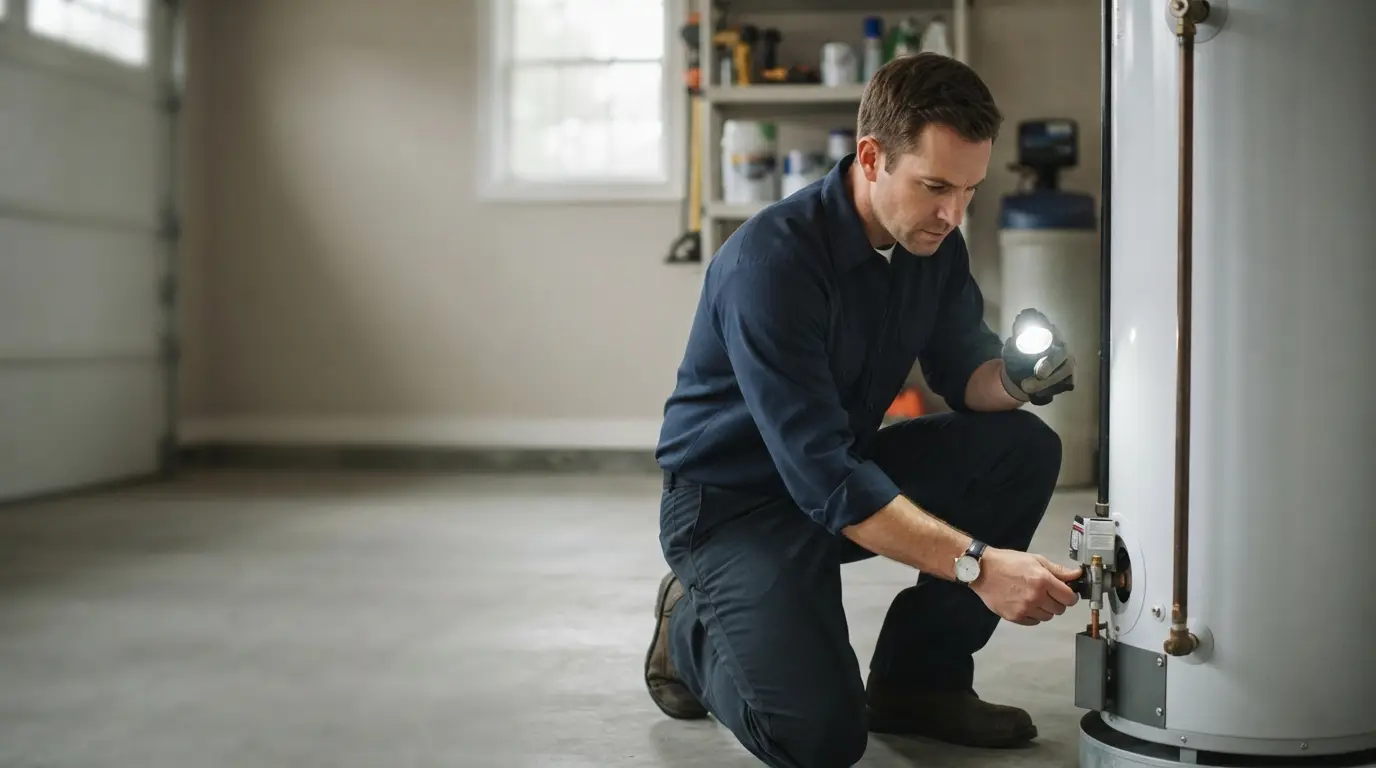
Hot water gone in a deep freeze, or a tank rumbling with scale? We handle water heater repair and replacement in Minnesota. Our plumbers service gas, propane and electric tank heaters, power-vent and direct-vent models, tankless units, heat pump water heaters and boiler-fed indirect tanks. Incoming water in a Minnesota winter is close to freezing and often very hard, so heaters work long hours and fill with sediment. We repair the failed part when the tank is sound and replace it when it is not.
The service
Natural gas heats 73% of Minnesota homes in our data, 89% in Andover and 86% in Maple Grove, so most water heaters burn gas. Beyond the mains, propane is common: it heats 29% of homes in Ely and 39% in Nowthen. Electric heaters are common in apartments and some rural homes, and boiler-heated homes often use an indirect tank.
Water heaters we service
Fuel: Gas or propane
What to know: Vents up a chimney; common in older homes
Fuel: Gas or propane
What to know: Vents through the wall; needs clearances
Fuel: Electricity
What to know: Simple; higher operating cost
Fuel: Gas or propane
What to know: Endless hot water; needs descaling
Fuel: Electricity
What to know: Efficient; best in a basement above freezing
Fuel: Boiler
What to know: Efficient with a hydronic system
Why Minnesota
Winter water arrives near freezing, so burners and elements run much longer.
Minerals settle in tanks and scale tankless heat exchangers.
Wall vents can frost over or be buried in drifting snow.
A new high-efficiency furnace can leave the heater alone in an oversized chimney.
Warning signs
Our process
We test thermocouples, flame sensors, gas valves, igniters, elements, thermostats and vent fans, flush sediment and replace what failed.
We size the heater, set it with proper venting, gas or electric service, an expansion tank where needed and a code-compliant relief line, then test for leaks and draft.
We check gas supply and venting, install the unit with service valves and set it up for your water hardness.
Typical cost
Prices are estimates only until we see the setup. These factors matter:
You approve a written price before we begin.
Get a written price: (833) 733-2357A part costs much less than a heater.
Tank, tankless, heat pump or indirect.
Liners or new wall vents.
Bigger households need more.
City or state inspections.
Benefits
Sized for cold inlet water.
Exhaust leaves the home properly.
Efficient models save fuel.
A new tank ends the risk of a flood.
Power-vent, direct-vent and tankless heaters exhaust through the wall, and in extreme cold their intakes and exhausts can frost over or be buried by drifting snow. The heater shuts down with an error just when you need it most. We install vents at proper heights and clearances, add protection where drifting is common and show you which pipes to keep clear after a storm.
Most Minnesota cities outside Minneapolis and St. Paul pump hard groundwater, and private wells are often harder still. In St. Cloud (29,762 homes), Rochester and Moorhead, sediment builds quickly. Yearly flushing helps tanks last, and a softener protects tanks and tankless units alike. We flush tanks during service and recommend treatment when we see heavy scale.
Heat pump water heaters work well in Minnesota basements that stay above about 40 degrees, using a fraction of the electricity of a standard electric tank and drying the air as a bonus. They need space, a condensate drain and a dedicated circuit. Utilities in Minnesota have offered rebates on them; check current programs. We help you decide whether your basement is a good fit.
In Minneapolis (209,080 homes) and St. Paul (133,051 homes), water heaters often share a brick chimney with the furnace. When the furnace is upgraded to a sidewall-vented model, the heater may not draft properly alone. We test draft, line the chimney when appropriate or switch to a power-vent heater so exhaust leaves the house safely.
In Bemidji (7,232 homes), Duluth and rural areas, propane and electric water heaters are common, and incoming well water can be extremely cold. Larger tanks or properly sized tankless units help. Propane heats 49% of homes in Rice Lake in our data. We service propane heaters, convert appliances when fuels change and replace heaters damaged by frozen lines.
Many Minnesota homes have a check valve or pressure-reducing valve at the meter, which creates a closed system. When water heats, it expands with nowhere to go, raising pressure, wearing the relief valve and stressing the tank. A properly sized expansion tank absorbs that. We check pressure and install or replace expansion tanks as part of every heater replacement where they are needed.
Renters occupy 51% of homes in St. Cloud and 57% in Bemidji. A house shared by five students empties a 40-gallon tank before the last shower, and tenants call the landlord when hot water runs out. We size heaters for real occupancy, replace failed units quickly for owners and managers and can schedule planned replacements in summer, before a heater fails in January.
For a leak, close the cold water valve and turn the gas control to off or switch off the breaker. Catch water with towels or a pan.
For a power-vent or tankless unit with an error, check that outdoor vents are clear of snow. Do not tamper with the relief valve. Then call us.
Water heater replacement in Minnesota generally requires a permit from your city or the state, and gas and venting are inspected. We pull the permit and schedule the inspection. Our plumbers hold Minnesota licenses.
Why choose us
What you can count on every time one of our plumbers comes to your door.
Every job is handled by a plumber who holds the license your state or city requires, backed by liability insurance.
Our plumber explains the problem and the options, and you approve a written price before any work begins.
Burst pipes, sewage backups and failed water heaters get priority scheduling, including nights and weekends.
We pull permits when the job needs one and schedule the inspection, so the work holds up when you sell.
Repairs and installations come with a written warranty on labor, on top of the manufacturer's warranty on parts.
Our pages and plumbers account for your area's water, soil, climate and the age of the homes around you.
Service area
We repair and replace water heaters in 915 Minnesota communities, including Rochester (54,492 homes), Moorhead (19,184 homes) and Duluth (39,978 homes). Find yours:
It depends on type, fuel, size and venting changes. We give you a written price including the permit before work starts.
When the chimney is unsuitable, yes. They vent safely through the wall and solve draft problems.
If the tank is dry and under about ten years old, repair often makes sense. A leaking tank needs replacing.
We account for very cold inlet water along with household size and peak use, then choose capacity.
Yes, in basements that stay above about 40 degrees. They use much less electricity than standard electric tanks.
We remove the old unit, set the new one, connect water, fuel and venting, add safety parts, test and schedule inspection.
It can flood the basement and damage wiring. Shut off water and fuel and call us.
Leave, avoid switches and call the utility or 911 from outside. We repair it once it is safe.
A standard swap takes a few hours. Venting changes or tankless installs take longer.
Many last eight to twelve years. Hard water and heavy use shorten that.
Once a year, or twice a year with very hard well water.
Often a frosted or snow-blocked vent. Clear it carefully, and call us if the error returns.
Call us. No hot water in winter is a priority, and we keep you updated on timing.
If your home has a check or pressure-reducing valve at the meter, usually yes. We check during service.
Generally yes, from your city or the state. We handle it.